
 EN
EN
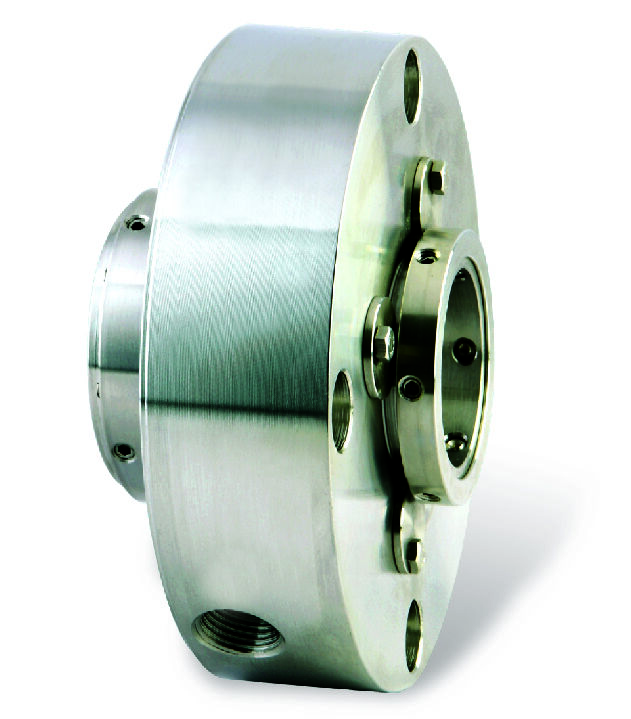
Hermetic Sealing: How Welded Metal Bellows Achieve True Zero-Leak Performance
Helium Leak Rate 1×10 scc/sec: The Industry Benchmark Validated by Welded Construction
Metal bellows that are welded together typically reach helium leak rates of around 1×10⁻¹¹ scc/sec or better, which is considered the gold standard for creating airtight seals in critical systems. Their strength comes from being made as one solid piece through careful welding of metal discs into a continuous structure. Mechanical fasteners or gaskets just don't compare because they create points where leaks can happen. The manufacturing process involves things like electron beam or laser welding done in controlled environments to make sure there are no tiny holes or cracks in the seams. Testing according to ASTM E499 and ISO 15848 shows these bellows stay leak-free after over 100 thousand pressure changes at temperatures reaching 350 degrees Celsius something rubber seals simply cannot handle. For industries like semiconductor manufacturing and space exploration fuel systems, where even the smallest leak could ruin entire batches or endanger people, these welded bellows become absolutely necessary components.
Eliminating Gasket Interfaces: Why Monolithic Welded Metal Bellows Outperform Formed or Rolled Alternatives
Traditional bellows typically depend on gasketed flanges or threaded connections at their ends. These connection points are actually pretty weak spots prone to problems like creep relaxation over time, damage from chemicals, stress from repeated heating and cooling cycles, and corrosion when different metals touch each other. The solution comes in welded metal bellows which get rid of all those potential issues completely. By combining the bellows convolutions with the end fittings into a single piece, manufacturers create something much more robust. This solid construction basically eliminates three main places where leaks could happen. What makes this approach so valuable is that it addresses multiple failure risks at once rather than just patching individual problems as they arise.
- Permeation through porous elastomeric or polymer gasket materials
- Compression set and rebound inconsistency during thermal transients
- Electrochemical degradation at dissimilar-metal junctions
Tests comparing different construction methods reveal that monolithic welded units can handle burst pressures five times greater than their rolled counterparts, plus last three times longer before showing signs of fatigue. When operating at extreme cold temperatures as low as minus 269 degrees Celsius, these units keep their seals intact while standard rubber components become brittle and eventually crack under stress. The reason engineers choose this single-piece design for applications requiring absolutely no emissions? Look no further than pharmaceutical facilities running sensitive bioreactor processes or oil refineries moving dangerous hydrocarbon mixtures through pipelines. These environments demand reliability where failure isn't an option.
Engineered Flexibility: Axial, Angular, and Lateral Compensation Without Compromising Seal Integrity
Metal bellows that are welded together offer flexibility across multiple axes, absorbing things like axial compression and extension, dealing with angular misalignment problems, and handling lateral offsets too, all while keeping everything sealed tight thanks to their solid, one-piece construction without any gaskets. Sliding seals and packed glands just don't cut it in comparison since they tend to wear down over time and eventually leak. The way welded bellows work is actually pretty clever - they move by bending the metal itself rather than relying on separate sealing components. This makes them really dependable for compensating in piping systems and other motion applications where there's thermal expansion happening, constant vibrations, or dynamic loads being applied, and best of all, there's no need for regular maintenance or worry about losing containment at the molecular level either.
Dynamic Stroke Range and Spring Rate Control: Optimizing Flexibility for Precision Motion Systems
For precision motion systems, we need components that show consistent and repeatable deflection properties. Welded metal bellows can reach specific stroke ranges around ±15 mm axially and about ±3 degrees angularly. They offer adjustable spring rates between roughly 5 to 50 Newtons per millimeter. This comes from careful design choices regarding the shape of convolutions, how thick the walls are, and what materials get used. Common options include cold worked stainless steel, Inconel®, or various titanium alloys. The way these elements come together creates stable force vs deflection relationships when subjected to changing loads. This stability supports extremely accurate positioning down to microns in things like semiconductor lithography equipment and aerospace actuation systems. What makes this particularly valuable is that seals don't degrade over time. Helium leaks stay at or below 1×10^-7 standard cubic centimeters per second even after hundreds of thousands of full stroke movements. That's way beyond the basic requirement of just 50,000 cycles for ultra high vacuum semiconductor manufacturing tools. Another benefit worth mentioning is the lack of layered seams which means no risk of cracks starting from fatigue points. This is something that often happens with formed bellows when they're put through repeated stress cycles.
Reliability in Action: Pressure Testing, Fatigue Life, and Real-World Validation of Welded Metal Bellows
Cyclic Pressure and Vacuum Testing Protocols Proving Long-Term Leak-Tight Dynamic Performance
To check if something will last for years, we need to speed up time through special testing methods that mimic what happens over many decades of real world use. The standards followed here are pretty strict - they align with both ASME BPVC Section VIII, Division 1 and ISO 15848 guidelines. These tests put welded bellows through thousands upon thousands of pressure changes from complete vacuum conditions right up to pressures exceeding 100 psi. Throughout these tests, technicians keep a close eye on how much helium leaks out by measuring it with mass spectrometry equipment. For a unit to actually qualify as reliable, it needs to maintain leak rates at or below 1e-7 scc/sec throughout every single cycle of testing. That's incredibly tight control over potential failures.
To get a handle on fatigue life, engineers typically combine analysis with actual testing. Finite element models help predict where strains will concentrate locally, but nothing beats real world testing to check if those predictions hold water when subjected to actual operating conditions. Take semiconductor vacuum tools for instance most manufacturers guarantee at least 50 thousand full stroke cycles before failure. Looking at data collected from aerospace actuators tells another story though these components often last around 15 years in service even though they experience extreme temperature swings every day going from minus 65 degrees Celsius all the way up to 200 degrees Celsius without missing a beat.
Three interdependent factors underpin this proven reliability:
- Material science: Aerospace-grade alloys resist work hardening and retain ductility after repeated flexing
- Welding integrity: Electron beam welding in vacuum eliminates porosity and ensures full-penetration seams
- Design validation: Strain-controlled testing bridges simulation accuracy with physical performance
This integrated verification process ensures welded metal bellows deliver zero-leak flexibility where failure is not an option.
Critical Applications Demanding Both Leak-Free Sealing and High-Fidelity Flexibility
Semiconductor Vacuum Systems, Aerospace Actuation, and Hermetically Sealed Medical Devices
Welded metal bellows just can't be beat when we need both extreme containment levels and precise movement at the same time. Take semiconductor manufacturing for instance these little components keep those ultra high vacuum environments going strong below about 1e-10 Torr which is absolutely necessary for things like photolithography work and depositing those thin films. Without them, particles would get everywhere and whole batches could go bad from contamination issues. The way these bellows handle leaks is pretty impressive too. They typically have helium leakage rates around or better than 1 times 10 to the minus seven standard cubic centimeters per second. That's well beyond what the SEMI F27-0212 standards demand for maintaining molecular level integrity in those super clean ultra high vacuum tools used throughout the industry.
The aerospace industry relies on hydraulic and pneumatic actuators for their ability to handle both flight vibrations and thermal expansion across thousands of pressure cycles at over 15,000 psi while enduring massive temperature fluctuations. These same actuators find critical applications in medical technology too. Implantable devices like insulin pumps or chemotherapy delivery systems depend on this corrosion resistant material's flexibility to prevent any biological fluid leakage during their expected service life of about 10 to 20 years straight. The materials must meet strict ISO 10993 standards for biocompatibility and also comply with cleanroom protocols outlined in ISO 14644 specifications.
This unique convergence of hermetic sealing, fatigue resistance, and high-fidelity motion control makes welded metal bellows irreplaceable—where elastomer-based alternatives would introduce unacceptable risk of contamination, leakage, or functional failure.
Frequently Asked Questions (FAQ)
Q1: Why is the helium leak rate important for welded metal bellows?
The helium leak rate is crucial because it measures the airtightness of the bellows. A rate of 1×10⁻¹¹ scc/sec indicates exceptional sealing, essential for critical applications where even small leaks could be detrimental.
Q2: What advantages do welded metal bellows have over traditional bellows?
Welded metal bellows offer superior leak-proof performance by eliminating weak points such as gaskets. Their monolithic design reduces the risk of compression set, electrochemical degradation, and permeation through porous materials.
Q3: What materials are common in the construction of welded metal bellows?
Common materials for welded metal bellows include cold worked stainless steel, Inconel®, and titanium alloys, known for their durability, flexibility, and resistance to harsh conditions.
Q4: How do welded metal bellows support precision motion systems?
They provide consistent deflection properties and can handle specific stroke ranges, maintaining helium leak rates below 1×10^-7 scc/sec even after extensive use, which is crucial for precision in semiconductor and aerospace applications.
Table of Contents
-
Hermetic Sealing: How Welded Metal Bellows Achieve True Zero-Leak Performance
- Helium Leak Rate 1×10 scc/sec: The Industry Benchmark Validated by Welded Construction
- Eliminating Gasket Interfaces: Why Monolithic Welded Metal Bellows Outperform Formed or Rolled Alternatives
- Engineered Flexibility: Axial, Angular, and Lateral Compensation Without Compromising Seal Integrity
- Dynamic Stroke Range and Spring Rate Control: Optimizing Flexibility for Precision Motion Systems
- Reliability in Action: Pressure Testing, Fatigue Life, and Real-World Validation of Welded Metal Bellows
- Critical Applications Demanding Both Leak-Free Sealing and High-Fidelity Flexibility
- Frequently Asked Questions (FAQ)