
 EN
EN
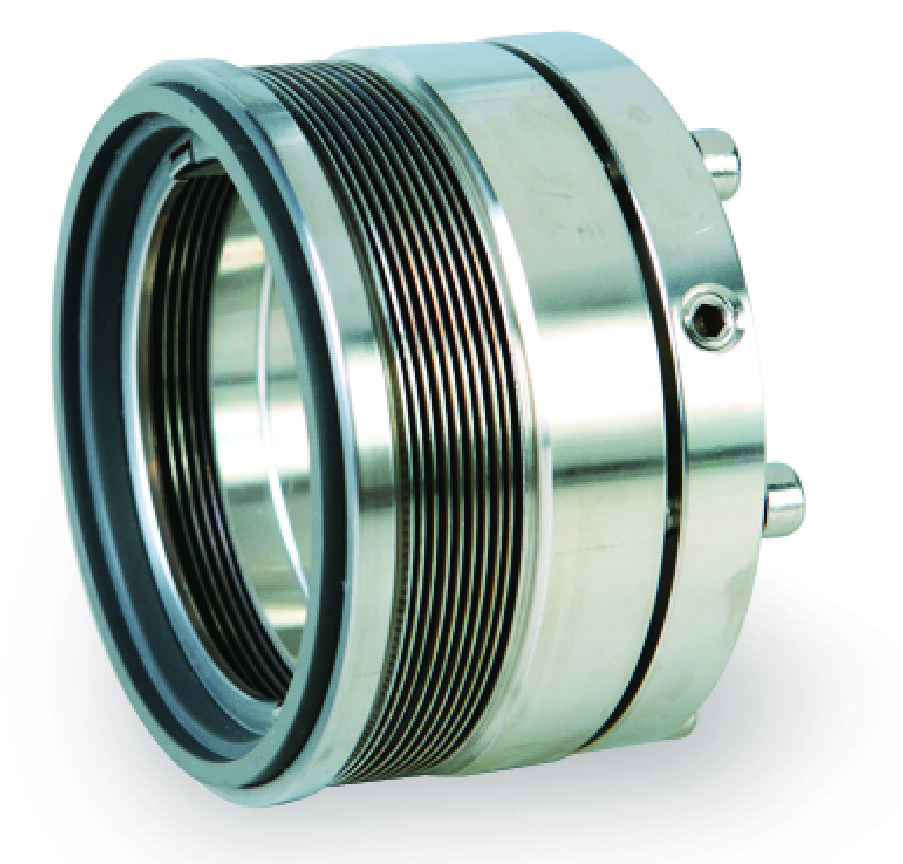
Working Principle of Bellows Mechanical Seals
Dynamic Sealing Mechanism That Prevents Fluid Leakage
Bellows mechanical seals replace traditional spring systems with metal bellows units that keep constant pressure between the moving and fixed parts of the seal. What this does is create an extremely narrow space, usually around 0.6 to 1.5 microns wide, which acts as a barrier against leaking fluids during operation. Standard rubber seals just can't match this performance. The metal bellows actually bends along its length when faced with machine vibrations or temperature changes, yet still maintains a good seal. Best part? There's no need for extra dynamic seals like we see in other designs. This makes them particularly useful in harsh industrial environments where reliability matters most.
Metal Bellows Design and Its Role in Maintaining Consistent Seal Face Contact
Metal bellows are made by welding thin sheets of stainless steel or Hastelloy together into one solid piece, which means there's no need for O-rings or those extra sealing parts that can fail over time. The way these bellows are constructed actually helps prevent leaks through tiny gaps that might otherwise form between components. When it comes to performance, edge welded bellows maintain about 98% even contact across their surface when operating at pressures as high as 500 psi. That's pretty impressive compared to older style pusher seals that rely on moving parts for sealing action. These traditional systems typically manage around 82% uniformity at best, making them less reliable in critical applications where consistent sealing matters most.
Balanced vs. Unbalanced Configurations for Optimized Pressure Handling
| Configuration | Pressure Range | Hydraulic Load Ratio | Use Case |
|---|---|---|---|
| Balanced | 0–750 psi | 0.65–0.85 | High-pressure pumps, compressors |
| Unbalanced | 0–150 psi | 1.05–1.20 | Low-pressure mixers, reactors |
Balanced configurations reduce hydraulic loading on the seal face by redirecting process pressure, minimizing distortion and extending service life by 40–60% in cyclical operations. Unbalanced designs, while more sensitive to pressure fluctuations, provide higher face contact force at low pressures, improving sealing performance in less demanding applications.
Superior Leakage Prevention in High-Pressure and Corrosive Environments
Effective Sealing Under Extreme Temperature and Pressure Conditions
Welded metal bellows are built to handle extreme conditions, working reliably even when temperatures go above 400 degrees Celsius and pressures reach as high as 100 bar. These seals have axial flexibility that keeps their faces in contact throughout temperature changes and sudden pressure shifts. This constant contact means there's no space left for leaks to happen. When we look at how they perform compared to traditional compression packing seals, the difference is staggering. Bellows mechanical seals cut down on fluid loss by about 99 percent according to recent industry data from Pump Industry in 2023. For systems where performance matters most, these seals just make sense.
Corrosion and Wear Resistance in Aggressive Chemical Applications
Made using corrosion resistant materials like Hastelloy or stainless steel coated with PTFE, these special seals can handle really tough stuff including things like sulfuric acid, chlorine solutions, and salt water brines which tend to eat away at regular rubber seals pretty quickly. Bellows type seals work differently because they don't need those extra parts like O rings that are so prone to failure. This means there's fewer places where corrosive chemicals can get inside and cause problems. Some recent research back in 2024 looked at pumps used in chemical processing plants and discovered something interesting about bellows based sealing systems. They actually cut down on seal related breakdowns by around 80 percent when operating in super acidic conditions where pH drops below 2. That makes a huge difference for plant operators dealing with aggressive chemical environments day after day.
Enhanced Safety and Environmental Protection Through Zero-Leak Performance
Bellows mechanical seals built with full welds stop those pesky fugitive emissions and take away the hassle of adjusting gland packing which operators often mess up. These seals basically don't leak at all, making them great for meeting those tough EPA rules about VOCs that keep getting stricter every year. Plants that switched to bellows seals have seen around 60 percent fewer incidents involving dangerous materials according to recent OSHA stats from 2023. That means safer working conditions for staff and better protection for the surrounding environment too.
Extended Service Life and Operational Cost Savings
Durability under Thermal Cycling and Mechanical Stress
Metal bellows seals hold up well through extreme temperatures ranging from minus 40 degrees Celsius all the way up to 400 degrees Celsius, plus they withstand lots of stress over time because they're built from strong metals. Regular rubber seals tend to crack or get stiff when exposed to these temperature changes, but stainless steel and Hastelloy parts last about 10 to maybe even 20 percent longer in things like centrifugal pumps and industrial mixers according to some research from McKinsey back in 2023. The durability of these metal seals means factories experience roughly 30 to 50 percent fewer unexpected shutdowns when dealing with harsh materials containing abrasives or particles suspended in liquid.
Long-Term Cost-Effectiveness Compared to Traditional Seals
Although initial costs are 15–25% higher, bellows seals deliver a return on investment within 3–5 years through:
- 40% lower maintenance expenses (U.S. DOE 2025)
- 60% reduction in seal replacements
- 8–12% energy savings from reduced friction
By eliminating failure-prone elements like gland packing, these seals also cut annual lubrication costs by 18–22% in high-speed rotating machinery.
Case Study: Seal Longevity in Chemical Pumps
A major fluid equipment company ran tests on bellows seals used in pumps that handle sulfuric acid over a three year period. These special seals lasted an impressive 28,000 hours before showing any sign of wear on their faces, which is almost triple what regular spring loaded seals manage. The longer lifespan meant big money savings too. Each pump saved around $74k every year on maintenance costs alone. Plus, workers didn't have to spend those extra 450+ hours fixing breakdowns that happen so often with standard seals.
Accommodation of Misalignment and Dynamic Equipment Movements
Bellows mechanical seals are uniquely suited to handle mechanical deviations common in industrial rotating equipment. Their integrated spring-like flexibility allows continuous compensation for shaft movement while maintaining reliable face contact and preventing leakage.
Compensation for Axial, Radial, and Angular Shaft Misalignments
According to recent studies from Machinery Lubrication (2023), around two thirds of all mechanical seal failures in rotating equipment come down to issues with axial, radial or angular misalignment. Metal bellows help tackle this problem by flexing and bending when needed, which keeps pressure spread out evenly over the entire seal surface instead of concentrating on specific spots. What makes them so effective? Well, they stop those hotspots from forming, reduce wear rates significantly, and keep the seal faces together where rigid systems would often let them drift apart. These are exactly the kinds of problems that lead to early breakdowns in traditional sealing arrangements.
Adaptability to Thermal Expansion, Vibration, and Pump Housing Shifts
Industrial pumps commonly experience:
- Up to 0.3 mm of axial growth in stainless steel shafts at 150°C
- Vibration amplitudes over 5 mm/s in slurry-handling applications
- Housing distortions due to pipe strain or foundation settling
The corrugated structure of the bellows distributes stress uniformly, allowing it to accommodate dimensional changes equivalent to 5–10% of the seal face width without performance loss. This capability ensures stable operation even under dynamic operating conditions, enhancing reliability across diverse industrial environments.
FAQs About Bellows Mechanical Seals
What are bellows mechanical seals used for?
Bellows mechanical seals are used for preventing fluid leakage in harsh industrial environments, particularly in high-pressure and corrosive settings.
How do bellows mechanical seals prevent leaks?
Bellows mechanical seals create a narrow space that acts as a barrier against leaks, and their design allows for consistent seal face contact even under dynamic conditions.
What materials are used in bellows mechanical seals?
Bellows mechanical seals are typically made from corrosion-resistant materials such as stainless steel or Hastelloy, often coated with PTFE for enhanced durability.
What is the difference between balanced and unbalanced configurations?
Balanced configurations reduce hydraulic load and extend service life, while unbalanced configurations provide higher face contact force at low pressures for improved sealing performance.