
 EN
EN
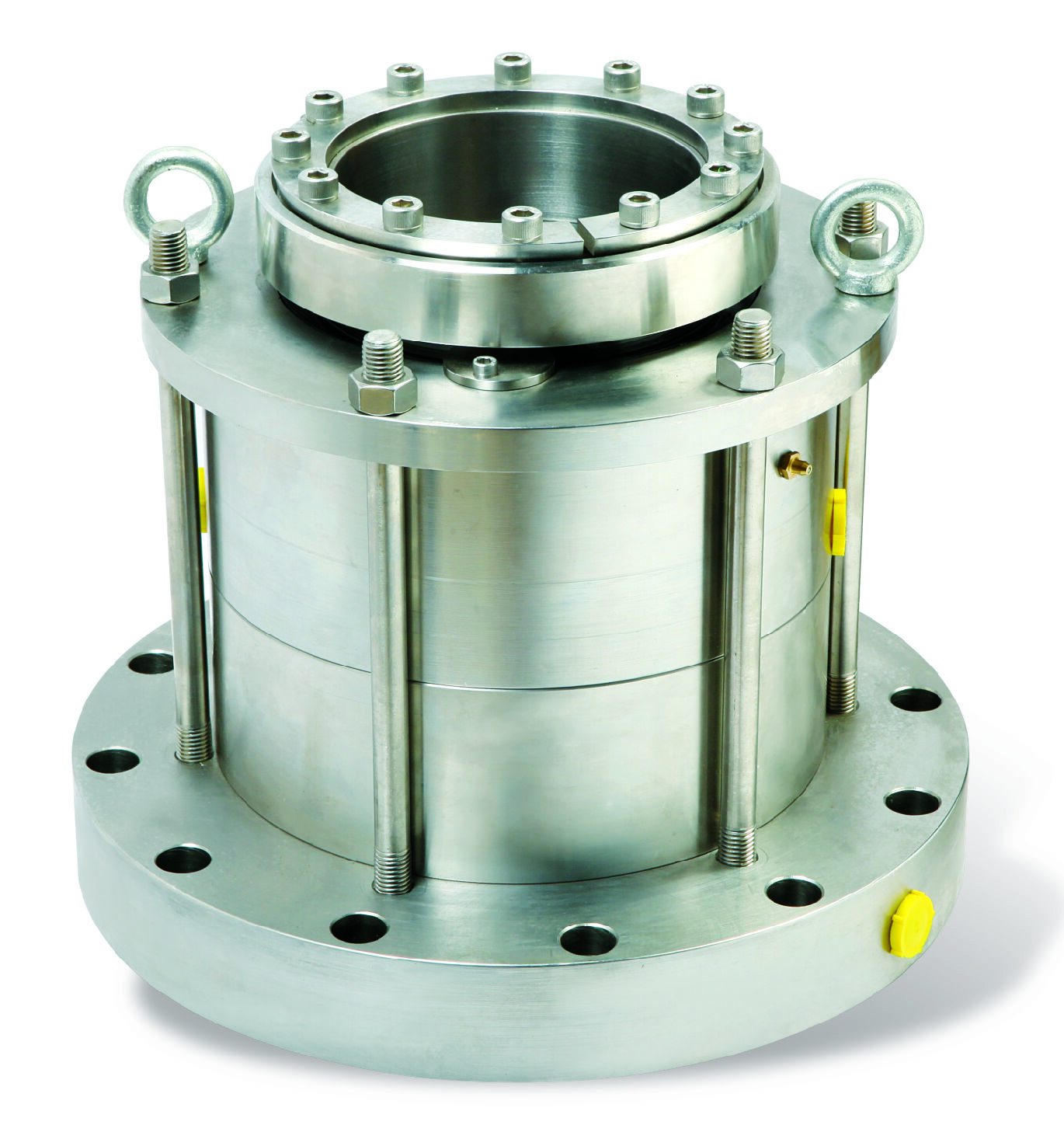
Key Performance Criteria for Welded Metal-Bellows Materials
Cyclic Fatigue Life vs. Corrosion Resistance: The Core Trade-Off in Welded Metal-Bellows Design
When engineers work on welded metal bellows, they run into a basic problem: materials that last through many cycles of stress, like those nickel based superalloys, tend to not stand up well against corrosion. On the flip side, stainless steels that resist corrosion pretty well often can't handle the repeated pressure changes without breaking down over time. This becomes a big issue in chemical processing pumps where the bellows have to deal with harsh chemicals and constant pressure shifts all day long. Take austenitic stainless steels such as 304L for instance. These work okay for applications that don't require too many cycles (say around 10,000 or so), but watch out when there's salt water or chlorides involved because these materials crack easily under stress in those conditions. Then there's Inconel 625 which lasts way longer than 100,000 cycles even when things get hot above 600 degrees Celsius. But let's be honest, nobody likes paying three times what they would for regular steel just to get that kind of durability. So what do we do? Well, it really comes down to looking at how long something needs to last versus what kind of environment it'll be in. If heat and stress are the main concerns, go with something tough on fatigue. But throw in acid or saltwater and suddenly corrosion resistance matters more than anything else, even if it means shorter service life.
Weld Integrity Requirements: How Heat-Affected Zone (HAZ) Stability Dictates Material Suitability
The Heat Affected Zone, or HAZ, refers to that transitional area around welds where metal properties change due to heat exposure. What happens in this zone really determines how reliable welded metal bellows will be over time. When the microstructure breaks down in the HAZ, problems start showing up like cracks forming, materials becoming brittle, or corrosion spots appearing especially when there's repeated stress on the component. Regular 304 stainless steel has higher carbon levels which makes it prone to issues during welding as chromium carbides tend to form, leaving behind areas vulnerable to corrosion. That's why many manufacturers turn to stabilized grades instead. Grades like 321 with titanium additions and 347 with niobium create more stable carbides that keep chromium distributed properly throughout the material, maintaining the integrity of the HAZ. Laser welding techniques offer another advantage here since they can cut down the size of the HAZ by about 60% compared to traditional methods, which helps control grain growth and reduces those pesky residual stresses. In critical applications such as aerospace fuel systems, nobody can afford compromised HAZ stability. Engineers run tests like microhardness mapping and dye penetrant inspections to make sure joints perform consistently even under all sorts of operational conditions.
Stainless Steels: The Workhorse Alloys for Standard-Grade Welded Metal-Bellows
304L and 316L: Balancing Cost, Formability, and Weldability in Low-to-Medium Pressure Applications
For welded metal bellows operating at low to medium pressures below 500 psi, austenitic stainless steels 304L and 316L strike a good balance between price, ease of shaping, and weldability. The very low carbon level in 304L steel, around 0.03% or less, stops those pesky carbides from forming along grain boundaries when welding. This means better corrosion protection and stronger welds whether using lasers or TIG methods. The material also works well for deep drawing operations and can handle complicated convoluted shapes needed in many designs. When manufacturers add 2 to 3 percent molybdenum to create 316L, they get much better defense against pitting and crevice corrosion problems. That's why this alloy tends to show up more often in harsh environments like marine installations, pharmaceutical equipment, and offshore measurement systems. For applications where the fluids aren't particularly aggressive, switching to 304L instead of 316L typically saves about 15 to 20 percent on costs while still maintaining excellent leak-proof performance across HVAC systems, process control valves, and various types of analytical instruments.
321 and 347: Stabilized Grades for High-Cycle, Elevated-Temperature Welded Metal-Bellows
Stainless steels like titanium-stabilized 321 and niobium-stabilized 347 solve many problems that standard austenitic grades face when used in applications involving repeated stress cycles at high temperatures, especially anything above around 400 degrees Celsius. What makes them special is how their stabilizing elements lock carbon into stable carbides during processes like welding or thermal cycling. This helps prevent those annoying issues where chromium gets depleted and causes sensitization problems at the grain boundaries. Both materials keep their corrosion resistance and maintain good ductility even after going through tens of thousands of compression cycles in parts such as exhaust manifolds, turbine expansion joints, and various thermal actuators. The 321 grade generally holds onto its ductility until temperatures reach about 800°C, while 347 goes further, resisting creep deformation and intergranular attacks all the way up to approximately 900°C. Tests conducted under accelerated aging conditions indicate that these stabilized grades cut down on fatigue crack initiation risks by roughly 40 percent compared to their non-stabilized counterparts. This means engineers can rely on them for dependable sealing performance in critical areas like power generation equipment and thermal management systems within the aerospace industry.
High-Performance Alloys for Demanding Environments: Inconel, Hastelloy, and Titanium in Welded Metal-Bellows
Inconel 625 and 718: Sustaining Fatigue Strength Above 600°C with Consistent Laser-Welded Joint Quality
The nickel chromium superalloys Inconel 625 and 718 offer remarkable performance when it comes to thermal stability and fatigue resistance, especially important for welded metal bellows that need to function reliably above 600 degrees Celsius. What makes these materials stand out is their gamma double prime phase hardening mechanism which gives them outstanding resistance against creep and thermal mechanical fatigue problems. These properties are particularly valuable in demanding environments like turbine exhaust housings where temperatures fluctuate constantly, nuclear reactor control rod drive systems, and various high temperature power generation equipment components. When fabricating these parts, laser welding techniques create joints with very little distortion while keeping the heat affected zone narrow. This means the core properties of the original alloy remain intact after welding, maintaining both strength and ductility characteristics. The result? Weld seams that don't become weak points over time, allowing these components to last significantly longer than standard alloys would manage under similar thermal cycling conditions experienced in real world applications.
Hastelloy C-276 and Titanium Grade 9: Corrosion-Resistant Welded Metal-Bellows for Semiconductor and Aerospace Systems
The unique combination of molybdenum, nickel, and chromium in Hastelloy C-276 makes it highly resistant to various forms of corrosion including pitting, crevice corrosion, and stress-corrosion cracking. This material holds up remarkably well even when exposed to harsh conditions like hot hydrochloric acid solutions and environments loaded with chlorine compounds. Because of these properties, engineers frequently specify this alloy for components in semiconductor manufacturing equipment where etching processes occur, as well as for bellows inside vacuum chambers that come into contact with aggressive halogen gases during operation. On the other hand, Titanium Grade 9 (Ti-3Al-2.5V) offers something different but equally valuable. It works exceptionally well in seawater applications and maintains structural integrity around strong oxidizers while providing approximately 40 percent weight reduction compared to traditional stainless steels. For this reason, aerospace manufacturers often choose Ti-3Al-2.5V for parts like aircraft hydraulic actuators and fuel system bellows that might encounter de-icing chemicals or get submerged in saltwater during emergencies. Both materials present certain challenges though. Specialized welding methods are necessary to preserve their microstructure and prevent issues related to galvanic coupling when combined with other metals in complex assemblies. These considerations become particularly important when designing systems requiring ultra high purity standards or operating under extreme safety requirements.
Material Selection Framework: Matching Welded Metal-Bellows Alloys to Application Parameters
Selecting the optimal alloy for welded metal-bellows requires evaluating four interdependent application parameters: operating temperature extremes, chemical exposure, cyclic stress demands, and pressure differentials.
Temperature: Austenitic stainless steels (e.g., 321, 347) are suitable below 400â500°C; nickel alloys like Inconel 718 maintain fatigue strength above 600°C. Thermal expansion coefficient (CTE) matching with adjacent components is critical to prevent stress fractures during thermal cycling.
Corrosion Environment: Hastelloy C-276 excels against reducing acids and halogens in semiconductor processing; titanium Grade 9 resists oxidizers and seawater in aerospace and marine systems.
Cyclic Life: High-purity 316L achieves 10âµ cycles at 15% deflection in low-pressure seals; Inconel 625 sustains 100,000 cycles at elevated temperatures and pressures. FEA modeling and physical fatigue testing should validate predicted life before qualification.
Pressure & Weld Integrity: Thin-gauge alloys require rigorous HAZ inspectionâincluding metallography and microhardness profilingâto detect sensitization or microcracking. Laser welding is strongly recommended for all high-performance alloys to minimize distortion and preserve mechanical continuity across the weld interface.
This parametric framework ensures welded metal-bellows deliver predictable, reliable performance by aligning intrinsic material properties with real-world service conditionsâwithout over-engineering or compromising on critical failure modes.
Frequently Asked Questions
What are welded metal bellows used for?
Welded metal bellows are used in a variety of applications that require flexibility and durability under conditions of pressure and temperature changes, such as chemical pumps, HVAC systems, process control valves, aerospace fuel systems, and automotive exhausts.
What is the Heat-Affected Zone (HAZ) in welding?
The Heat-Affected Zone (HAZ) is the area of metal surrounding the weld where the properties have changed due to the heat of welding. This zone can exhibit changes in grain structure, leading to potential weaknesses if not properly managed.
Why is corrosion resistance important in metal bellows?
Corrosion resistance is crucial in metal bellows because they often operate in environments with aggressive chemicals, salts, or oxidizers. Good corrosion resistance helps prolong the service life and maintain the integrity of the component.
Can stainless steel bellows be used at high temperatures?
Certain grades of stainless steel, like 321 and 347, are stabilized to withstand high temperatures and repeated stress cycles, making them suitable for applications like exhaust manifolds where temperatures can rise significantly.
Table of Contents
- Key Performance Criteria for Welded Metal-Bellows Materials
- Stainless Steels: The Workhorse Alloys for Standard-Grade Welded Metal-Bellows
- High-Performance Alloys for Demanding Environments: Inconel, Hastelloy, and Titanium in Welded Metal-Bellows
- Material Selection Framework: Matching Welded Metal-Bellows Alloys to Application Parameters