
 EN
EN
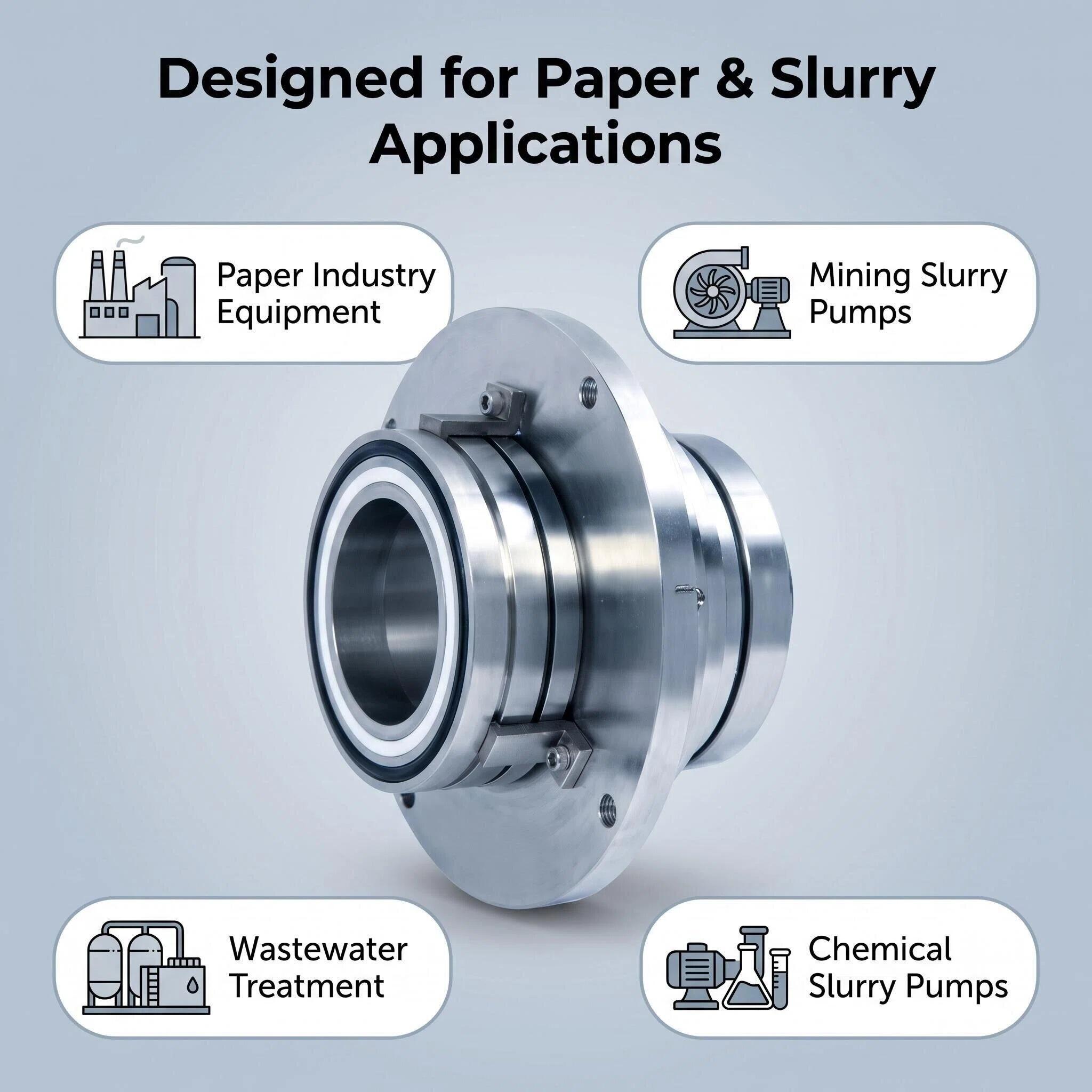
A water pump mechanical seal is one of the most critical components in any pumping system, yet it is also one of the most frequently overlooked until something goes wrong. When a mechanical seal begins to fail, the consequences can range from minor leaks to complete pump failure, costly downtime, and even safety hazards in industrial environments. Understanding the most common problems associated with a water pump mechanical seal — and knowing how to address them effectively — is essential knowledge for maintenance engineers, facility managers, and anyone responsible for keeping fluid systems running reliably.
The good news is that most water pump mechanical seal failures are preventable or correctable once you understand their root causes. Whether you are dealing with persistent leakage, premature wear, overheating, or seal face damage, each symptom points to a specific underlying issue that can be systematically diagnosed and fixed. This article walks through the most common failure modes of a water pump mechanical seal, explains why they occur, and provides practical guidance on how to resolve them and prevent recurrence.
Understanding How a Water Pump Mechanical Seal Works
The Basic Operating Principle
Before diagnosing problems, it helps to understand what a water pump mechanical seal is designed to do. In essence, it is a rotary device that prevents fluid from leaking along the shaft where it exits the pump casing. The seal consists of two flat, highly polished faces — one rotating with the shaft and one stationary — held in contact by a spring mechanism and fluid pressure. The extremely thin film of process fluid that forms between these faces provides both lubrication and the sealing action itself.
Because the water pump mechanical seal relies on precision engineering and controlled conditions to function, any deviation from its design parameters — whether in installation, operating environment, or maintenance practices — can trigger a failure. The seal faces must remain parallel, the spring must maintain consistent load, and the seal materials must be compatible with the fluid being pumped. When any of these conditions break down, problems follow quickly.
Key Components That Influence Seal Performance
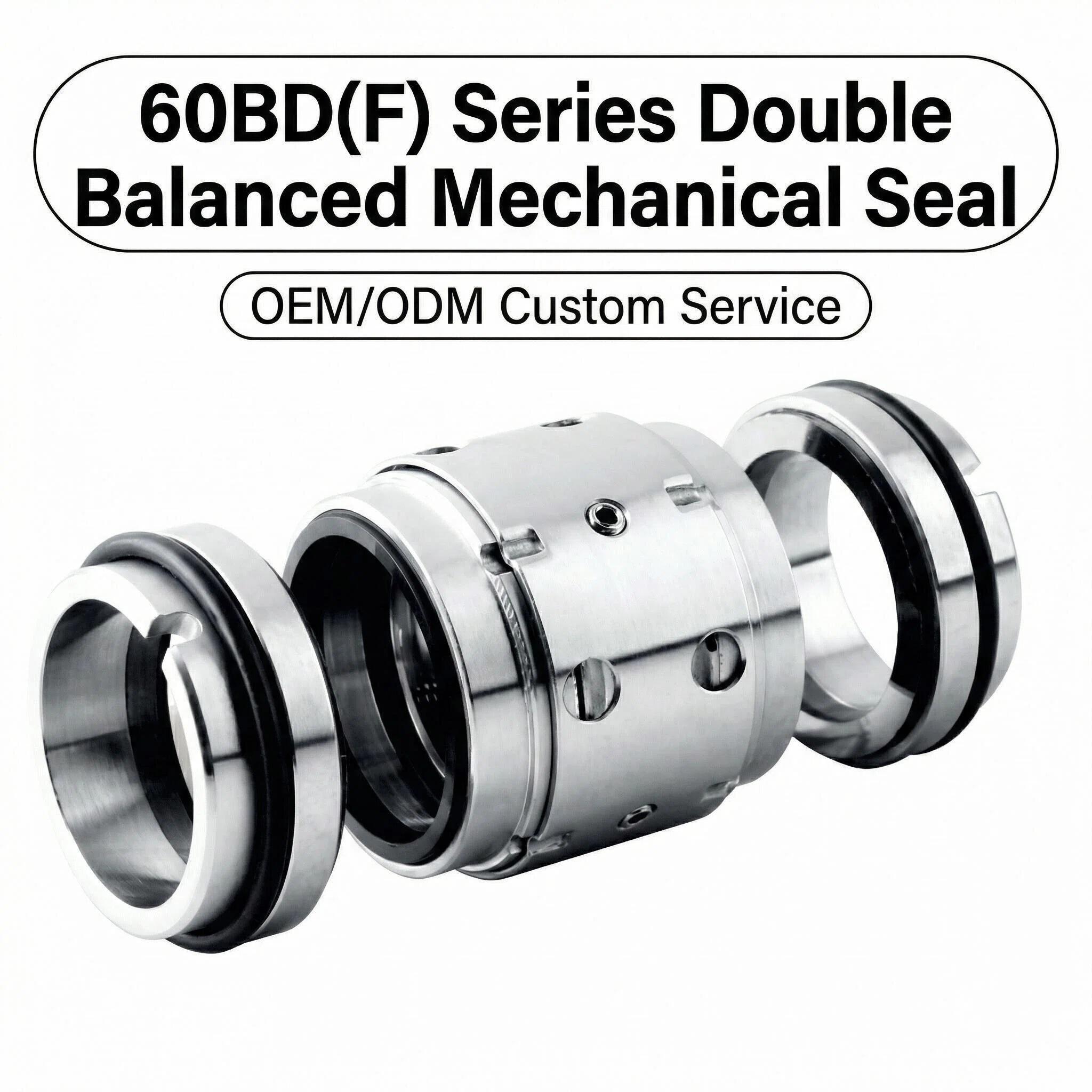
A standard water pump mechanical seal consists of several interdependent components: the rotating seal face, the stationary seat, secondary sealing elements such as O-rings or elastomeric bellows, a spring or wave spring to maintain face contact, and hardware to attach and retain the assembly. The material combination of the seal faces — commonly silicon carbide, tungsten carbide, or carbon graphite — is chosen based on the application's fluid chemistry, temperature, and pressure requirements.
Secondary seals, including O-rings and elastomers, are often the first components to degrade, particularly in high-temperature applications or when aggressive chemicals are present. A worn or hardened O-ring can destroy an otherwise functional water pump mechanical seal by allowing bypass leakage or permitting the seal face to lose its proper axial alignment. Keeping these secondary elements in good condition is just as important as protecting the primary seal faces themselves.
The Most Common Water Pump Mechanical Seal Problems
Seal Face Leakage and Its Causes
Leakage at the seal face is the most visible and most commonly reported problem with any water pump mechanical seal. It can manifest as a slow drip during operation, a spray when the pump is running at speed, or a sudden gush when pressure spikes occur. While some minimal weeping is technically normal — as the fluid film between faces is necessary for lubrication — visible dripping or pooling always indicates a problem that demands attention.
The most frequent causes of face leakage include worn or scored seal faces, loss of spring tension, improper face flatness due to thermal distortion, and particulate contamination becoming embedded in the seal face. When abrasive particles enter the seal chamber, they act like sandpaper between the precision-lapped faces, rapidly degrading their flatness and sealing capability. In slurry applications or dirty water pumping, this is an especially common scenario that requires appropriate seal design or additional protection measures.
Fixing face leakage depends heavily on the root cause. If the faces are worn beyond tolerance, they must be replaced. If contamination is the issue, the seal environment should be addressed — flushing plans, filtration, or a change to a seal design better suited to the fluid type are common solutions. If thermal distortion is involved, reviewing operating temperatures and selecting face materials with better thermal resistance may resolve the problem long-term.
Dry Running and Overheating Damage
Dry running occurs when a water pump mechanical seal operates without adequate fluid at the seal faces. This is one of the most destructive failure modes possible. The fluid film that normally lubricates and cools the faces disappears, causing rapid heat buildup from friction. Within seconds to minutes, this heat can crack seal faces, carbonize O-rings, and warp the entire seal assembly beyond repair.
Dry running can happen for several reasons: the pump runs with an empty or partially filled casing, the system loses prime, vapor pockets form around the seal (a condition called cavitation), or the pump operates at extremely low flow rates that fail to circulate fluid past the seal. In each case, the water pump mechanical seal is deprived of the conditions it needs to function correctly, and damage accumulates rapidly.
Prevention is the most effective fix. Installing pump protection devices such as low-flow switches, dry-run detection sensors, or automatic shut-off controls eliminates the conditions that lead to this type of damage. For applications where dry-running risk cannot be eliminated, selecting a double mechanical seal with an external barrier fluid — which provides independent lubrication regardless of the process fluid level — offers a much more robust solution for the water pump mechanical seal.
Incorrect Installation and Its Consequences
A significant proportion of early water pump mechanical seal failures can be traced back directly to installation errors. Because mechanical seals are precision components with tight tolerances, even small mistakes during fitting can compromise their performance from the very first start-up. Common installation errors include incorrect seal setting length, damaged O-rings caused by being dragged over sharp shaft edges, improper face contact due to misalignment, and the use of excessive lubricant that swells elastomers.
Shaft runout and misalignment between the pump shaft and the seal housing bore are particularly damaging. When the shaft does not run true, the water pump mechanical seal faces experience oscillating separation forces that cause the faces to open and close with each shaft revolution. This cyclical movement quickly destroys the hydrodynamic fluid film, leads to face wear, and promotes leakage. Checking shaft runout with a dial indicator before seal installation is a basic but often skipped step that prevents a large number of premature failures.
The fix for installation-related failures is straightforward in principle: follow the manufacturer's installation procedure rigorously, use the correct tools, inspect shaft and housing dimensions before fitting, and never reuse damaged secondary seals. Training maintenance staff on proper installation techniques for the water pump mechanical seal type in use pays consistent dividends in extended seal service life.
Addressing Vibration, Cavitation, and Pressure-Related Failures
How Vibration Damages Mechanical Seals
Excessive vibration is a silent enemy of any water pump mechanical seal. Vibration transmits dynamic forces into the seal assembly, causing the faces to separate momentarily, allowing fluid to escape, and accelerating wear on the contact surfaces. Over time, vibration also fatigues the spring elements, loosens hardware, and can cause fretting corrosion on the shaft under dynamic O-ring seals, leading to leakage paths that bypass the seal entirely.
Sources of pump vibration include unbalanced impellers, worn bearings, coupling misalignment, resonance in the pipe system, and operating the pump far from its best efficiency point. A pump running at reduced flow rates is particularly susceptible, as internal hydraulic forces become asymmetric and create radial shaft deflection. This deflection directly stresses the water pump mechanical seal and shortens its operational life.
Resolving vibration-induced seal failures requires identifying and eliminating the vibration source. Bearing replacement, impeller rebalancing, coupling realignment, and operating the pump closer to its design flow point are all standard corrective actions. In some cases, upgrading the water pump mechanical seal to a flexible-mount or cartridge design can provide better tolerance to residual vibration that cannot be completely eliminated.
Cavitation and Pressure Fluctuation Effects
Cavitation occurs when the local pressure in the pump drops below the vapor pressure of the fluid, causing vapor bubbles to form and then collapse violently as pressure recovers. The implosion of these bubbles generates intense localized pressure shocks that can pit metal surfaces, erode pump internals, and severely damage a water pump mechanical seal. The characteristic symptom of cavitation is a loud crackling or gravel-like noise from the pump, often accompanied by vibration and erratic performance.
Pressure fluctuations — whether from cavitation, water hammer, or system instability — subject the water pump mechanical seal to forces well beyond its design load. Seal faces can momentarily separate under pressure spikes, allowing fluid to bypass the sealing zone, or they can be slammed together under sudden pressure drops, causing face chipping and cracking. Over many cycles, these events accumulate as cumulative damage that eventually leads to seal failure.
Fixing cavitation issues typically involves addressing the suction conditions: ensuring adequate net positive suction head available (NPSHa), reducing suction pipe losses, checking for blocked strainers or partially closed suction valves, and verifying that the pump is properly sized for the application. When pressure fluctuations are a system-level problem, installing surge suppressors or adjusting control valve behavior can protect the water pump mechanical seal from transient overpressure events.
Material Compatibility and Environmental Degradation
Chemical Attack on Seal Components
Not every water pump mechanical seal is suitable for every fluid. Chemical incompatibility between the seal materials and the pumped fluid is a frequent cause of premature failure that is often misdiagnosed as mechanical damage. When O-rings or elastomeric bellows are exposed to fluids outside their chemical resistance range, they swell, shrink, harden, or dissolve — each of which destroys the seal's ability to function. Similarly, seal face materials can be attacked by aggressive acids, alkalis, or oxidizers, leading to pitting, corrosion, and loss of surface flatness.
Even in water pumping applications, chemical compatibility is not automatic. Treated water, seawater, hot water, and water mixed with cleaning agents or process additives each present different chemical environments. Selecting the wrong elastomer for the service temperature alone — for example, using a standard Buna-N O-ring in a high-temperature hot water pump — will cause accelerated degradation of the water pump mechanical seal even if all other conditions are perfect.
The solution is to consult the chemical compatibility data for each seal component material against the actual service fluid, including any temperature effects on chemical aggressiveness. When in doubt, opting for more chemically resistant materials — such as EPDM or Viton elastomers, or ceramic and silicon carbide faces — provides a wider safety margin. Reconfirming material selection whenever the process fluid changes is a basic but critically important practice.
Thermal and Age-Related Degradation
All water pump mechanical seal components have finite service lives, and thermal exposure accelerates the aging process for elastomeric components in particular. Repeated thermal cycling — heating and cooling as the pump starts and stops — causes O-rings and bellows to harden and lose their ability to conform to sealing surfaces. This leads to bypass leakage around the seal body even when the primary seal faces are still in acceptable condition.
High continuous operating temperatures also accelerate the carbonization of lubrication films between seal faces, creating abrasive deposits that grind away at the precision surfaces. In hot water pump applications, the water pump mechanical seal must be selected with temperature-rated materials and, in some cases, designed with provisions for external cooling flush to maintain seal face temperature within acceptable limits.
Managing thermal degradation means selecting appropriate temperature-rated seal materials, ensuring that cooling or flushing arrangements are properly maintained, and implementing a proactive replacement schedule based on operating hours rather than waiting for failure symptoms to appear. A planned replacement interval for the water pump mechanical seal, determined by the application's specific thermal load, is far more cost-effective than emergency replacement after an unplanned failure occurs.
Best Practices for Preventing Water Pump Mechanical Seal Failures
Proactive Maintenance Strategies
The most effective way to manage water pump mechanical seal problems is to prevent them from occurring in the first place. Implementing a condition-based or time-based maintenance program that includes regular inspection of seal chamber condition, monitoring of leakage rates, and periodic replacement of secondary seals before they reach the end of their service life is the foundation of reliable pump operation. Keeping records of seal installation dates, operating hours, and failure history helps identify recurring patterns that point to systemic issues requiring engineering solutions rather than simple part replacement.
Seal flush plans — standardized arrangements that introduce clean, cool, or pressurized fluid into the seal chamber — are an important tool for extending water pump mechanical seal life in demanding applications. A properly designed flush plan can remove heat, exclude contaminants, prevent dry running, and maintain appropriate pressure conditions at the seal faces. Reviewing flush plan adequacy whenever pump operating conditions change is an essential part of seal reliability management.
Selecting the Right Seal for the Application
Many seal problems can be traced back to an original equipment specification that did not fully account for the application's demands. A water pump mechanical seal that was adequate for clean, cool water at moderate pressure may fail rapidly when the application shifts to higher temperatures, dirty fluid, or frequent starts and stops. Regularly reviewing whether the installed seal type is still the best match for current operating conditions is a valuable engineering practice.
Cartridge seals, which arrive pre-assembled and pre-set from the manufacturer, eliminate many of the installation errors associated with component seals and are strongly preferred for critical applications where reliability is paramount. Double seals with barrier fluid arrangements provide maximum protection in applications involving hazardous, toxic, or high-temperature fluids. Matching the water pump mechanical seal design to the actual demands of the application — rather than defaulting to the cheapest available option — consistently delivers better long-term reliability and lower total lifecycle cost.
FAQ
How do I know if my water pump mechanical seal needs to be replaced?
The most obvious sign is visible leakage at the seal area, but other indicators include unusual noise or vibration during operation, overheating of the pump housing near the seal, and a gradual decline in pump performance. Regular inspection of the seal chamber and monitoring of any leakage drips during operation will help you catch deterioration before it progresses to catastrophic failure. If leakage exceeds the acceptable threshold for your system — typically more than a few drops per minute — the water pump mechanical seal should be inspected and likely replaced.
Can a water pump mechanical seal be repaired, or must it always be replaced?
In most cases, a failed water pump mechanical seal should be replaced rather than repaired. The seal faces require extreme precision lapping to function correctly, and field repair of these surfaces is not practical. However, if only secondary components such as O-rings or springs have failed and the seal faces remain undamaged and within flatness tolerances, replacing only the failed secondary components may restore functionality temporarily. Always assess the condition of the entire seal assembly, not just the failed part, before deciding on a repair versus replace strategy.
What is the typical service life of a water pump mechanical seal?
Service life varies widely depending on the application, operating conditions, fluid type, and seal quality. In clean water service under steady operating conditions, a well-selected and properly installed water pump mechanical seal can last anywhere from one to five years or longer. In harsh environments — involving abrasive particles, high temperatures, aggressive chemicals, or frequent start-stop cycles — service life may be significantly shorter. Tracking seal replacement intervals in your maintenance records allows you to establish realistic replacement schedules for your specific application.
Does pump speed affect water pump mechanical seal life?
Yes, shaft speed has a direct impact on seal face velocity, heat generation, and wear rate. Higher speeds increase the relative sliding velocity between the seal faces, generating more heat and potentially exceeding the limits of the face material or the lubricating film. Operating a pump above its design speed — for example, through improper variable frequency drive settings — can dramatically shorten water pump mechanical seal life. Conversely, very low speeds may reduce the hydrodynamic lift between seal faces, increasing contact wear. Maintaining the pump within its design speed range is important for consistent seal performance and longevity.