
 EN
EN
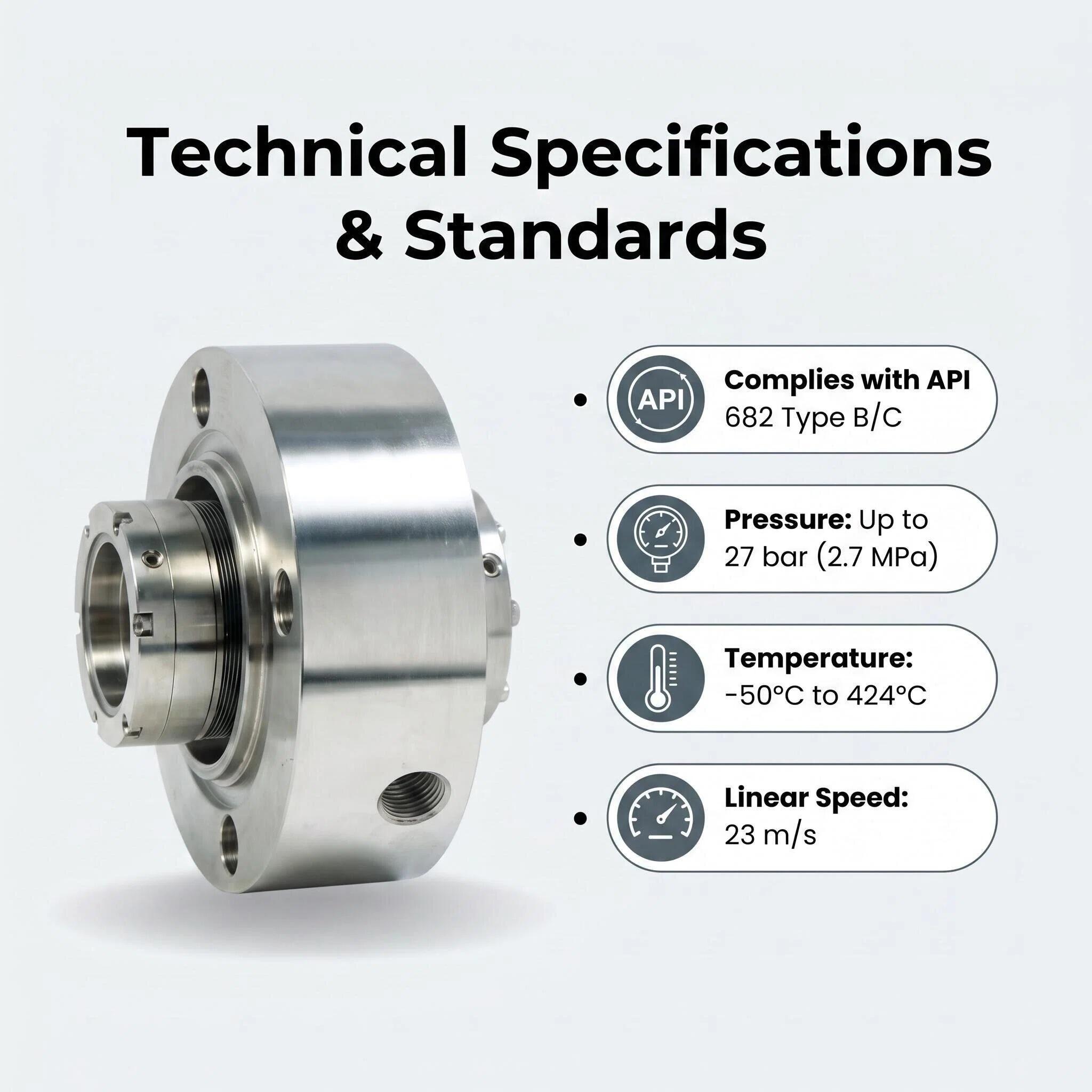
In industrial and commercial fluid-handling systems, one of the most persistent threats to operational continuity is uncontrolled leakage at the pump shaft. A water pump mechanical seal is the critical component engineered specifically to prevent this from happening. Unlike older packing-based solutions that relied on controlled dripping to function, a modern water pump mechanical seal creates a precise, dynamic barrier between rotating and stationary surfaces — stopping fluid from escaping the pump housing and protecting the entire assembly from the consequences of leakage.
Understanding how a water pump mechanical seal works — and why its design choices matter — helps engineers, maintenance professionals, and procurement teams make better decisions about pump system reliability. This article breaks down the functional mechanism of the water pump mechanical seal, explains the specific ways it prevents both leakage and downstream equipment damage, and outlines the key factors that determine its long-term performance in real operating environments.
The Core Mechanism of a Water Pump Mechanical Seal
How the Sealing Interface Works
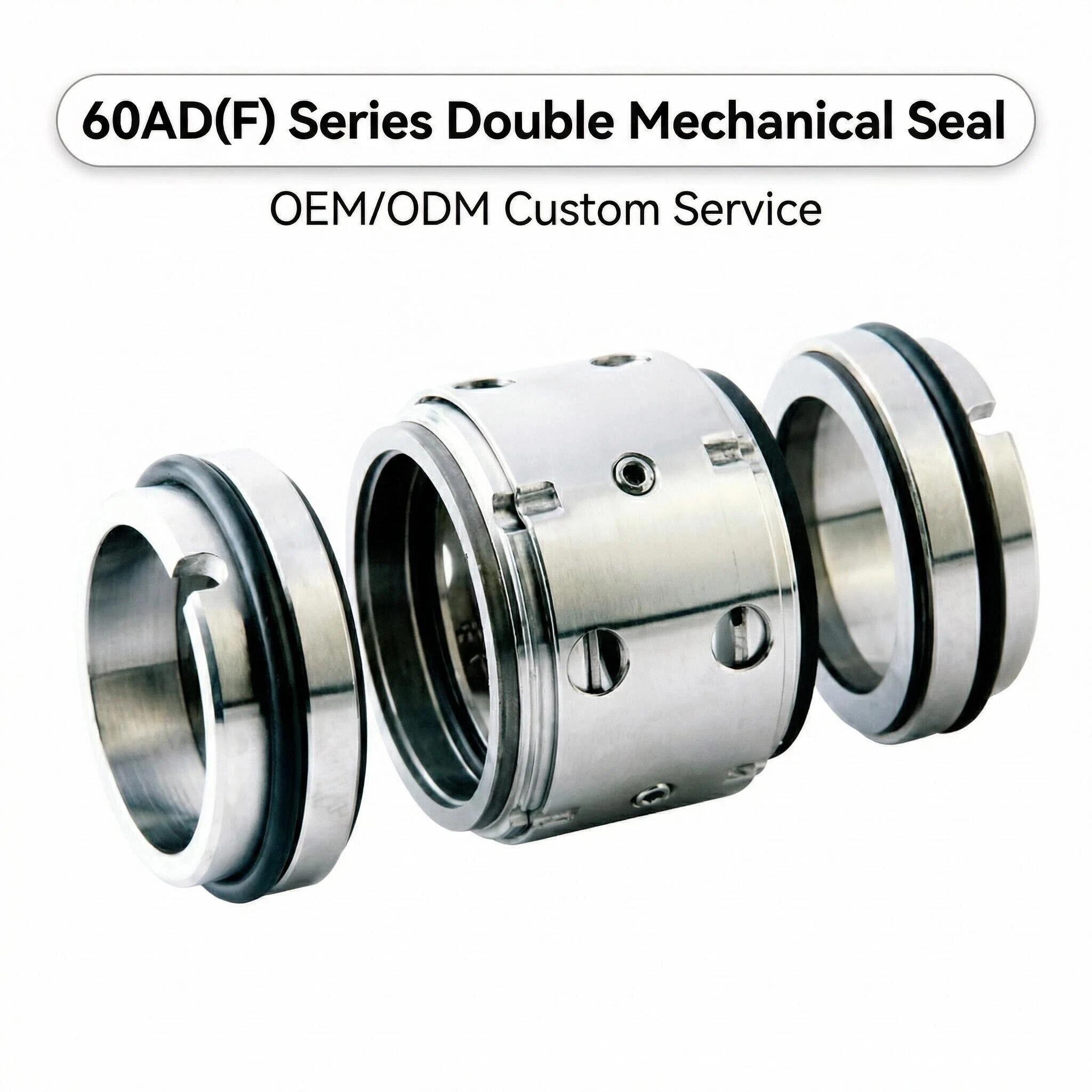
At the heart of every water pump mechanical seal is a precisely lapped interface between two flat faces — one rotating with the shaft and one stationary within the pump housing. These two faces are held in contact by a spring or bellows mechanism that continuously applies axial force. The contact between these faces is what creates the primary seal, blocking the pressurized fluid from passing along the shaft and escaping to atmosphere.
The sealing faces are typically manufactured from hard, wear-resistant materials such as silicon carbide, tungsten carbide, or carbon graphite. The choice of face material pairing is deliberate: one harder face and one softer face work together to maintain a microscopic fluid film between them, which actually lubricates the interface and prevents dry running. This is not a gap large enough for bulk leakage — it is a controlled, sub-micron film that sustains face life while maintaining the seal's integrity.
Secondary sealing elements, such as O-rings or elastomeric bellows, complement the primary face seal by preventing fluid from migrating between the seal components and the shaft or housing bore. Together, these elements form a complete, redundant sealing system that keeps the water pump mechanical seal effective across a wide range of pressures and shaft speeds.
Dynamic Compensation During Operation
One of the most important attributes of a well-designed water pump mechanical seal is its ability to compensate dynamically for shaft movement. Pumps rarely operate under perfectly static conditions. Shaft runout, axial displacement, vibration from cavitation, and thermal expansion all introduce movement that a rigid sealing system could not accommodate. The spring-loading mechanism within the water pump mechanical seal continuously adjusts face contact pressure to maintain the seal even as these dynamic forces act on the assembly.
Elastomeric components within the seal also play a role in dynamic compensation. They absorb minor misalignments and allow the rotating face to follow axial shaft movement without breaking contact with the stationary face. This adaptive response is what distinguishes a mechanical seal from simple gaskets or packing arrangements, making the water pump mechanical seal the preferred solution for demanding continuous-duty applications.
How Water Pump Mechanical Seals Prevent Leakage
Eliminating the Leak Path Along the Shaft
The shaft is inherently a challenging sealing location because it is simultaneously stationary relative to the pump housing and rotating relative to the fluid inside the pump. Traditional packing attempts to restrict flow along this path by compressing fibrous material around the shaft, but this always involves a compromise between leakage and friction. A water pump mechanical seal eliminates this compromise entirely by changing the geometry of the seal interface from a radial annular gap to a pair of flat axial faces.
Because the sealing faces run perpendicular to the shaft axis rather than parallel to it, there is no continuous annular gap through which pressurized fluid can migrate. The only potential leak path — between the faces themselves — is controlled by the precision of the face lapping and the spring load. In a properly specified and installed water pump mechanical seal, this path is effectively closed under all normal operating conditions, achieving near-zero leakage performance that packing systems simply cannot match.
Pressure Management Across the Seal Faces
Pump pressure acts on the back of the rotating face, attempting to force the faces apart and create a leak path. The design of a water pump mechanical seal directly accounts for this by balancing the hydraulic closing force against the spring load and the face contact pressure. The ratio of the hydraulic force area to the face contact area — known as the balance ratio — is carefully engineered to ensure that net closing force remains positive across the expected pressure range without generating excessive face wear from over-closing.
Unbalanced seals are typically used in lower-pressure applications, where the full hydraulic pressure acts to close the faces. Balanced seals are used in higher-pressure environments, where a stepped shaft or sleeve geometry reduces the hydraulic load on the face. This pressure management capability means that a correctly selected water pump mechanical seal maintains its leak-prevention function even when pump pressure fluctuates during startup, shutdown, or varying flow demand conditions.
Protecting Equipment from Damage Through Effective Sealing
Preventing Bearing and Shaft Contamination
When a pump seal fails and leakage occurs, the consequences extend well beyond the visible drip at the shaft exit. Water and process fluid that escapes along the shaft frequently migrates into the bearing housing, contaminating lubricant and causing accelerated bearing wear. A functional water pump mechanical seal prevents this contamination pathway from ever opening, protecting bearings from both direct water ingress and the corrosive effects of moisture-contaminated lubricant.
Bearing failure triggered by seal leakage is one of the most common root causes of unplanned pump outages in water treatment, HVAC, and process industry applications. The replacement cost of a bearing assembly far exceeds the cost of a quality water pump mechanical seal, making proper seal specification and maintenance a highly cost-effective reliability strategy. Furthermore, shaft corrosion caused by persistent leakage can lead to scoring and dimensional loss that ultimately requires full shaft replacement — a significantly more disruptive and expensive repair.
Avoiding Structural Damage and System Downtime
Leakage from a pump does not only damage internal components. Fluid escaping from a pressurized system can erode mounting surfaces, corrode base plates, create electrical hazards near motor windings, and contaminate insulation materials. In facilities where pumps operate in proximity to sensitive equipment or in hygiene-critical environments, even minor leakage can trigger regulatory or safety shutdowns. A reliable water pump mechanical seal prevents all of these secondary damage pathways by ensuring that fluid stays inside the system where it belongs.
Thermal damage is another risk that a functioning water pump mechanical seal helps prevent. In hot-water circulation systems or high-temperature process applications, leakage can cause localized flash vaporization, thermal shock to adjacent components, and dangerous surface temperatures at the point of escape. By maintaining an intact seal boundary, the water pump mechanical seal keeps thermal energy contained within the fluid circuit and protects surrounding structures from heat-related degradation.
Key Factors That Determine Seal Performance and Longevity
Material Selection for the Application Environment
The effectiveness of a water pump mechanical seal over its service life depends heavily on selecting the right materials for the specific fluid, temperature, and pressure conditions. Face material combinations must be chosen to resist chemical attack from the pumped medium while maintaining the surface hardness and flatness required for effective sealing. Elastomeric secondary seals must be compatible with both the pumped fluid and any cleaning agents or additives present in the system.
For standard clean water applications, a carbon-graphite versus silicon carbide face pairing with nitrile rubber secondary seals represents a well-proven combination. For higher-temperature systems, EPDM or PTFE elastomers offer better thermal stability. For aggressive chemical environments, fully ceramic or tungsten carbide face pairs and fluoroelastomer O-rings provide enhanced chemical resistance. Matching the water pump mechanical seal material specification to the actual operating environment is one of the most important steps in ensuring long-term leak prevention.
Installation Quality and Operating Condition Compliance
Even the best-designed water pump mechanical seal will underperform or fail prematurely if installed incorrectly. Common installation errors include shaft surface damage that compromises the secondary seal, incorrect spring compression that leads to insufficient or excessive face load, and contamination of the sealing faces during handling. Following the manufacturer's installation guidelines and maintaining clean, dimensionally correct shaft and housing surfaces is essential to achieving the seal's designed performance.
Operating conditions must also remain within the seal's design envelope. Running a water pump mechanical seal dry — even briefly — can cause rapid face damage due to the absence of the lubricating fluid film. Operating beyond the rated pressure or temperature range can cause elastomeric degradation or face deformation. Ensuring that operating parameters remain within specification, and that the system is properly primed before startup, are the operational foundations of reliable seal service life.
FAQ
What is the main purpose of a water pump mechanical seal?
The primary purpose of a water pump mechanical seal is to prevent leakage of the pumped fluid along the rotating shaft. It achieves this by creating a controlled, dynamic sealing interface between two precisely lapped faces — one rotating with the shaft and one stationary — that blocks fluid from escaping the pump housing under operating pressure and shaft movement conditions.
How does a water pump mechanical seal differ from traditional packing?
Traditional shaft packing works by compressing fibrous material around the shaft to restrict flow, but it requires a controlled drip to lubricate itself and always involves some degree of leakage. A water pump mechanical seal replaces this axial annular gap with a pair of flat radial faces that achieve near-zero leakage without requiring continuous fluid loss. Mechanical seals also generate significantly less shaft friction, reducing energy consumption and wear on the shaft surface.
What causes a water pump mechanical seal to fail prematurely?
The most common causes of premature water pump mechanical seal failure include dry running without adequate fluid lubrication, operating beyond rated pressure or temperature limits, installation errors such as incorrect spring compression or contaminated faces, and incompatibility between seal materials and the pumped fluid or its additives. Cavitation within the pump can also introduce shock loading that accelerates face wear and elastomeric degradation.
How often should a water pump mechanical seal be replaced?
Service life varies depending on operating conditions, fluid characteristics, and seal design, but a properly specified and installed water pump mechanical seal in clean water service typically lasts between one and five years under continuous operation. Higher temperatures, aggressive chemicals, abrasive particles in the fluid, or frequent start-stop cycling will reduce service life. Regular inspection during scheduled maintenance intervals — looking for signs of face wear, elastomeric hardening, or increased leakage — is the most reliable way to determine replacement timing.