
 EN
EN
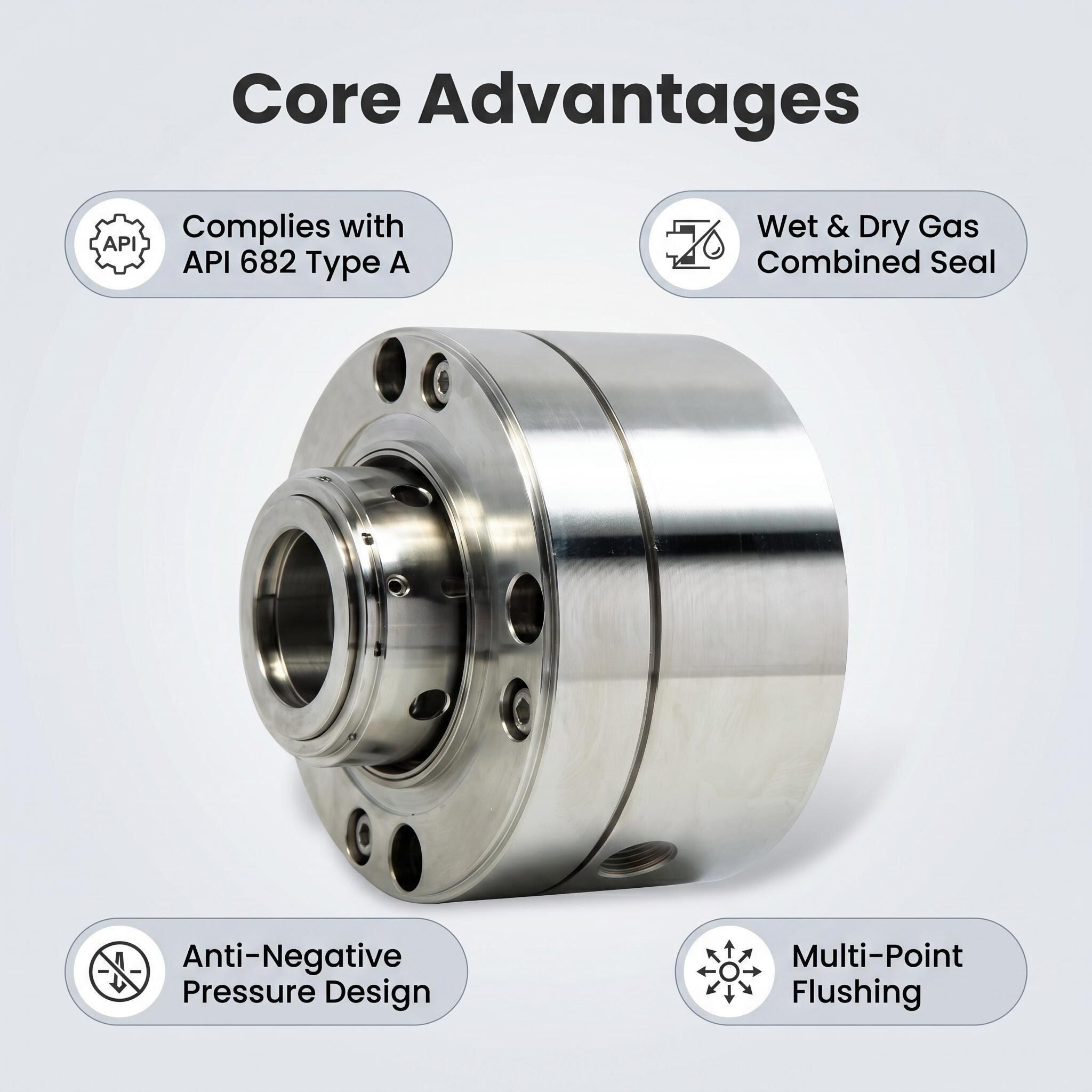
When it comes to sealing technology in water pump applications, the debate between traditional packing and modern mechanical seals has been settled in most industrial and commercial settings. Facilities managers, pump engineers, and maintenance professionals have increasingly moved away from rope-style packing in favor of precision-engineered sealing solutions that offer measurable performance advantages. Understanding why this shift has occurred requires a close look at how each technology works, what it demands from your maintenance team, and what the long-term operational costs really look like.
Mechanical seals represent a fundamentally different engineering philosophy compared to packing. Where packing relies on compressive friction and deliberate controlled leakage to keep a pump shaft from exposing the process fluid, mechanical seals use precision flat faces held together by spring force and hydraulic pressure to create a virtually leak-free barrier. In water pump applications specifically, this distinction carries serious implications for efficiency, safety, and total cost of ownership. This article explains, in practical terms, why mechanical seals outperform packing across the key criteria that matter most to pump operators.
The Fundamental Difference in Sealing Mechanism
How Packing Works and Its Inherent Limitations
Packing, sometimes called gland packing or compression packing, consists of braided or formed rings of fibrous material that are compressed around the pump shaft inside the stuffing box. The gland follower is tightened to squeeze the packing against the rotating shaft, creating friction that resists fluid escape. However, this friction generates heat, and to manage that heat, packing must be deliberately allowed to leak a small amount of water continuously. That intentional drip—often cited as 40 to 60 drops per minute—is not a defect; it is a design requirement.
The problem is that this design requirement becomes a liability in many water pump environments. Clean water applications may tolerate a slow drip, but wastewater, chemical-laden water, or pressurized systems make controlled leakage impractical and potentially hazardous. Furthermore, packing wears against the shaft over time, scoring the shaft surface and requiring periodic retightening or full replacement. Each adjustment temporarily disrupts operations and introduces variability into the sealing performance.
How Mechanical Seals Achieve Superior Sealing
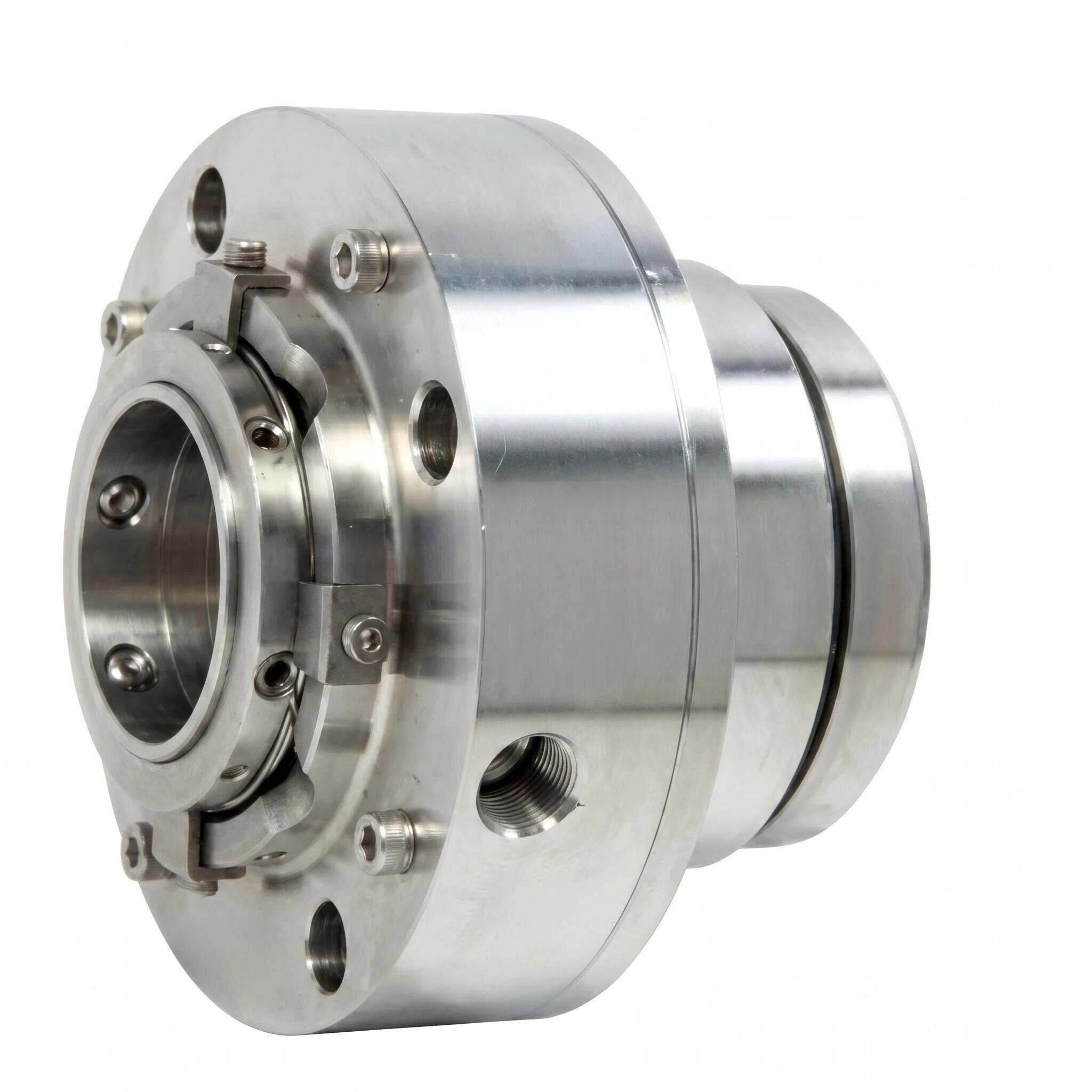
Mechanical seals operate on a completely different principle. A stationary seat is fixed within the pump housing while a rotating face is mounted on the shaft. The two precision-lapped faces are held in contact by spring loading, and the hydraulic pressure of the fluid itself contributes to the sealing force. The result is a dynamic sealing interface that rotates without the need for deliberate leakage and without progressively scoring the shaft.
The face materials used in mechanical seals—typically combinations of silicon carbide, tungsten carbide, or carbon graphite—are selected for low friction and high wear resistance. This means that in normal water pump operation, mechanical seals can run for years without adjustment. The absence of shaft wear and the elimination of continuous leakage are not minor improvements; they represent a fundamentally more reliable engineering solution for long-term pump operation.
Leakage Control and Environmental Compliance
Why Leakage Matters More Than Ever
Environmental regulations and workplace safety standards have become increasingly stringent in industrial, municipal, and commercial settings. Facilities operating pumps that handle process water, cooling water, or effluent are under pressure to demonstrate minimal environmental impact. Packing systems, with their inherent need for continuous drip leakage, create a direct conflict with these compliance requirements. The fluid that drips from a stuffed box must go somewhere—often into a drain, onto the floor, or into secondary containment systems that require monitoring and maintenance.
Mechanical seals dramatically reduce this compliance burden. A properly functioning mechanical seal in a water pump application produces leakage measured in drops per hour rather than drops per minute, and in many installations, leakage is effectively imperceptible during normal operation. This level of sealing integrity simplifies environmental reporting, reduces the risk of slip hazards from pooled water, and supports cleaner, safer operating environments without requiring complex drainage infrastructure.
Long-Term Leak Stability Under Varying Conditions
Water pumps rarely operate at perfectly steady conditions. Pressure fluctuations, temperature changes, and variations in flow rate are common in real-world applications. Packing performance degrades noticeably as these variables change, requiring more frequent gland adjustments to maintain acceptable leakage levels. Each adjustment is a manual intervention that introduces human error and operational downtime.
Mechanical seals are engineered to accommodate these variations with much greater stability. The spring mechanism compensates for shaft movement and minor misalignment, maintaining consistent face contact across a wide operating range. This self-adjusting capability is one of the key reasons why facilities that switch from packing to mechanical seals report significantly more predictable sealing behavior and longer intervals between maintenance events.
Maintenance Burden and Total Cost of Ownership
The Hidden Costs of Packing Maintenance
The upfront material cost of packing is lower than that of mechanical seals, and this often leads procurement teams to favor packing on initial capital expenditure reviews. However, this comparison is misleading when total cost of ownership is properly calculated. Packing requires regular retightening, periodic replacement of worn rings, ongoing monitoring of drip rate, and eventual shaft sleeve replacement due to wear-induced scoring. Each of these activities consumes labor time, spare parts inventory, and operational downtime.
In high-cycle or continuously operating water pump systems, the cumulative labor cost of packing maintenance far exceeds the initial price difference between the two sealing technologies. Maintenance technicians who perform frequent gland adjustments are also exposed to rotating equipment hazards, increasing workplace risk. The true cost of packing is not the material itself but the system of ongoing attention it demands from your maintenance organization.
How Mechanical Seals Reduce Maintenance Frequency
Mechanical seals, once correctly installed and operated within their design parameters, require no routine adjustment. They do not drip, they do not score the shaft, and they do not need periodic retightening. Maintenance activity is triggered by seal failure or scheduled replacement at end-of-life, not by continuous monitoring needs. This shift from reactive, frequent maintenance to planned, interval-based maintenance is a significant operational advantage in facilities with lean maintenance teams or high pump counts.
When mechanical seals are selected appropriately for the pump's operating conditions—fluid type, temperature, pressure, and shaft speed—their service life in water pump applications typically ranges from two to five years or more. This extended maintenance interval directly reduces the total labor, materials, and downtime cost compared to packing systems that may require attention every few weeks in demanding service conditions.
Performance Efficiency and Energy Consumption
Friction and Its Impact on Pump Efficiency
Packing creates significant friction against the rotating shaft. This friction consumes energy—energy that must be supplied by the pump motor but that contributes nothing to moving fluid. In large pump installations or multi-pump systems, this parasitic energy consumption adds up over time. The gland nut must be tight enough to control leakage but not so tight that excessive heat is generated, and finding this balance is an ongoing operational challenge that directly affects pump efficiency.
Mechanical seals, by contrast, are designed to generate minimal friction at the sealing faces. The lapped face surfaces and the thin lubricating film of fluid between them create a low-friction interface that consumes far less energy than packing. For water pump operators focused on energy efficiency and operating cost reduction, this difference in parasitic friction is a meaningful advantage, particularly in systems that run continuously or at high duty cycles.
Shaft and Equipment Protection
Beyond energy consumption, packing's abrasive contact with the shaft accelerates wear on expensive shaft sleeves and, in some designs, on the shaft itself. Replacing shaft sleeves requires disassembly of the pump and significant maintenance labor. Mechanical seals avoid this wear mechanism entirely because the sealing function is performed at the face interface, not against the shaft surface. The shaft itself remains protected, extending the useful life of the rotating assembly and reducing capital expenditure on replacement components.
This equipment protection benefit is particularly relevant in applications where water contains fine particulates or suspended solids. Abrasive particles that infiltrate a packing system accelerate shaft wear dramatically. Mechanical seals designed for dirty water or slurry applications use harder face materials and flushing arrangements that protect the sealing faces from abrasive contamination, maintaining sealing integrity under conditions that would rapidly destroy conventional packing.
Installation, Selection, and Application Suitability
Matching Mechanical Seals to Water Pump Requirements
The performance advantages of mechanical seals are fully realized only when the correct seal type, face material combination, and elastomer selection are matched to the pump's specific operating conditions. A seal designed for clean cold water service will not perform reliably in a high-temperature boiler feed application or in a pump handling mildly corrosive water treatment chemicals. Proper selection requires understanding the fluid chemistry, operating temperature range, shaft speed, suction and discharge pressure, and the pump's susceptibility to vibration or shaft runout.
Fortunately, the range of mechanical seals available for water pump applications is extensive, and most standard pump sizes are served by off-the-shelf seal designs that simplify selection and stocking. Single-spring seals, multi-spring seals, and cartridge-style mechanical seals each offer different installation and performance characteristics suited to different pump configurations. Working with an experienced seal supplier to confirm selection criteria before installation is a straightforward process that pays dividends in seal longevity.
Installation Quality as a Factor in Seal Performance
One argument sometimes raised in favor of packing is that it is more forgiving of installation errors and shaft condition than mechanical seals. This is partially true, but it does not constitute a genuine advantage. Packing's tolerance of poor shaft condition simply masks underlying mechanical problems that eventually cause more serious failures. Mechanical seals, when installed correctly on a properly maintained shaft, deliver consistent long-term performance that packing cannot match.
Modern cartridge-style mechanical seals have largely addressed the installation complexity concern. Factory-set spring compression and pre-aligned components reduce the chance of installation errors significantly, making the transition from packing to mechanical seals straightforward even for maintenance teams without extensive seal installation experience. The investment in proper training and the use of quality installation tools is small compared to the operational benefits that follow.
FAQ
Can mechanical seals be used as a direct replacement for packing in an existing water pump?
In most cases, yes, but the pump's stuffing box must be evaluated to confirm it can accommodate a mechanical seal. Many standard pump designs are already dual-configured to accept either packing or a mechanical seal with minor adaptation. The shaft condition must also be assessed, as mechanical seals require a smooth, undamaged shaft surface within specified tolerance ranges for reliable operation. A direct retrofit is often straightforward, particularly with cartridge-style mechanical seals that simplify installation.
How long do mechanical seals typically last in water pump applications?
Service life varies depending on operating conditions, fluid cleanliness, pump alignment quality, and seal selection accuracy. In clean water applications operating within design parameters, mechanical seals commonly achieve service lives of two to five years or longer. In more demanding conditions involving high temperatures, abrasive particles, or pressure cycling, life expectancy may be shorter, but it still typically exceeds what would be achieved with packing under the same conditions.
Are mechanical seals more difficult to maintain than packing?
Mechanical seals require less frequent maintenance than packing because they do not need routine adjustment or retightening. However, when a mechanical seal does reach end-of-life and requires replacement, the process involves pump disassembly to access the seal components. This repair event is more involved than tightening a gland nut, but it occurs far less frequently, and the total maintenance burden over the pump's operating life is substantially lower with mechanical seals than with packing.
What causes premature failure of mechanical seals in water pump service?
The most common causes of premature mechanical seal failure in water pump applications include incorrect seal selection, dry running during startup or low-flow conditions, excessive shaft runout or misalignment, abrasive contamination of the sealing faces, and thermal shock from rapid temperature changes. Most of these failure modes are preventable through proper seal selection, correct installation practice, and ensuring that the pump operates within the design envelope for which the seal was specified.