
 EN
EN
Selecting the right mechanical seal for your water pump system is one of the most consequential decisions in pump system design and maintenance. A poor choice leads to premature failure, costly downtime, water leakage, and contamination risks — all of which are entirely avoidable with a structured, informed selection process. Whether you are specifying a new installation or replacing a worn component, understanding the key criteria that govern mechanical seal selection will save both time and money in the long run.
A mechanical seal is a precision device used to prevent fluid from leaking along the rotating shaft of a pump. It achieves this by maintaining a controlled contact interface between a stationary ring and a rotating ring, supported by secondary seals, springs, and drive mechanisms. In water pump applications specifically, these components must perform reliably across varying pressures, temperatures, and operational cycles — making the selection process far more nuanced than simply matching a shaft diameter. This guide walks you through the critical factors and decision points to help you choose the most suitable mechanical seal for your water pump system.
Understanding the Operating Conditions of Your Water Pump
Pressure and Temperature Parameters
Every mechanical seal is rated for specific pressure and temperature ranges, and operating outside those limits is a primary cause of early seal failure. Before selecting a mechanical seal, you must accurately define the working pressure inside the pump housing, the ambient temperature, and the temperature of the pumped fluid. In water pump systems, these values can vary significantly — from low-pressure domestic supply pumps operating near ambient temperatures to industrial circulation systems running at elevated pressures and heat.
When pressure exceeds the design limit of a mechanical seal, the seal faces are forced apart, leading to leakage. Conversely, insufficient spring force in a low-pressure environment can cause inadequate face contact, resulting in dry running and accelerated wear. Documenting the full pressure range — including pressure spikes during startup and valve closure — ensures you select a mechanical seal built to handle the real operational envelope, not just the nominal design point.
Temperature affects the performance of secondary sealing elements such as O-rings and elastomers. A mechanical seal using NBR (nitrile butadiene rubber) secondary seals, commonly suitable for cold water, will degrade rapidly if used in a high-temperature hot water recirculation system. Matching the elastomer material to your actual operating temperature is just as important as matching the face materials.
Shaft Speed and Size
The shaft diameter and rotational speed are fundamental inputs in mechanical seal selection. Each mechanical seal model is dimensioned for a specific shaft size range, and the rotational speed directly determines the peripheral velocity at the seal faces — which in turn affects wear rates, lubrication film behavior, and heat generation. High-speed water pumps such as those used in booster or centrifugal pump applications place significantly more stress on the mechanical seal than low-speed positive displacement pumps.
When the peripheral velocity at the seal face is too high, the lubricating film between the faces can break down, causing dry contact and rapid material degradation. Selecting a mechanical seal with face materials and geometries optimized for the expected speed range is essential. For high-speed applications, harder face materials with better thermal conductivity — such as silicon carbide — are strongly preferred over softer alternatives like carbon-graphite alone.
Choosing the Right Face and Secondary Seal Materials
Primary Face Material Combinations
The face materials of a mechanical seal determine its wear resistance, chemical compatibility, and thermal handling capacity. In water pump systems, the most common combinations are carbon-graphite against ceramic, carbon-graphite against silicon carbide, and silicon carbide against silicon carbide. Each pairing offers a different balance of cost, durability, and suitability for specific water conditions.
Carbon-graphite against ceramic is widely used in light-duty domestic and commercial water pump applications where cost efficiency matters and the water is relatively clean. However, this combination is vulnerable to abrasion if the water contains suspended particles. For systems with lightly contaminated water or higher pressure, carbon-graphite running against silicon carbide provides improved hardness and abrasion resistance while still offering the self-lubricating properties of carbon.
Silicon carbide against silicon carbide is the premium choice for demanding industrial water pump applications, handling high pressures, high speeds, and fluid streams that may contain fine particulates. The inherent hardness and corrosion resistance of silicon carbide makes this face material combination the most durable option available in the mechanical seal market. While the upfront cost is higher, the service life improvement typically delivers a strong return on investment in continuous-duty pump systems.
Elastomer and Secondary Seal Selection
Secondary seals — typically O-rings, bellows, or wedge rings — prevent fluid from bypassing the primary seal faces. Selecting the appropriate elastomer material for secondary seals is critical in water pump applications, particularly where water temperature or treatment chemistry introduces variables. NBR (nitrile rubber) is the standard choice for cold and moderately warm fresh water. EPDM (ethylene propylene diene monomer) performs better in hot water and in systems where the water contains certain cleaning or treatment additives.
Fluoroelastomer (FKM/Viton) secondary seals offer superior chemical resistance and are suitable for applications where the water is treated with chlorine compounds or other disinfectants at concentrations that would degrade NBR or EPDM. Choosing the wrong elastomer in a mechanical seal leads to swelling, hardening, or cracking of the secondary seal, which allows leakage even when the primary faces are in good condition. Always verify elastomer compatibility against your specific water chemistry profile.
Seal Configuration and Design Type
Single vs. Double Mechanical Seals
Single mechanical seals are the most common configuration used in water pump systems. They consist of one pair of sealing faces and are suitable when the pumped fluid — clean water or lightly treated water — is acceptable as a face lubricant and poses no contamination or safety risk if a minor controlled leakage occurs. Single mechanical seals are straightforward to install, maintain, and replace, making them the default choice for the vast majority of water pump applications.
Double mechanical seals are specified when the pumped liquid must not contact the environment under any circumstances, or when the pumped fluid alone cannot provide adequate lubrication to the seal faces. In a double mechanical seal arrangement, a barrier or buffer fluid is introduced between two sets of seal faces. This configuration is more common in industrial process applications than in standard water pump systems, but it becomes relevant in water treatment plants handling disinfectants, concentrated chemicals, or other hazardous additives where strict containment is required.
Balanced vs. Unbalanced Designs
A balanced mechanical seal is designed so that the hydraulic closing force acting on the seal face is reduced relative to the total face area, which decreases heat generation and face wear at higher pressures. An unbalanced mechanical seal applies the full hydraulic pressure to the face closing force, making it simpler and less expensive to manufacture but limited to lower pressure applications. For standard water pump systems operating below approximately 10–15 bar, unbalanced mechanical seals are usually adequate and cost-effective.
When pump system pressures exceed this threshold — as in high-rise building pressurization systems, industrial cooling loops, or high-head water transfer pumps — a balanced mechanical seal becomes necessary to prevent excessive face loading, heat buildup, and premature failure. Specifying the balance ratio incorrectly is a common cause of seal failure in systems where the actual operating pressure was underestimated during the selection stage. Always verify the maximum system pressure, including transient peaks, before deciding between a balanced and unbalanced mechanical seal.
Installation Environment and Practical Compatibility
Pump Geometry and Space Constraints
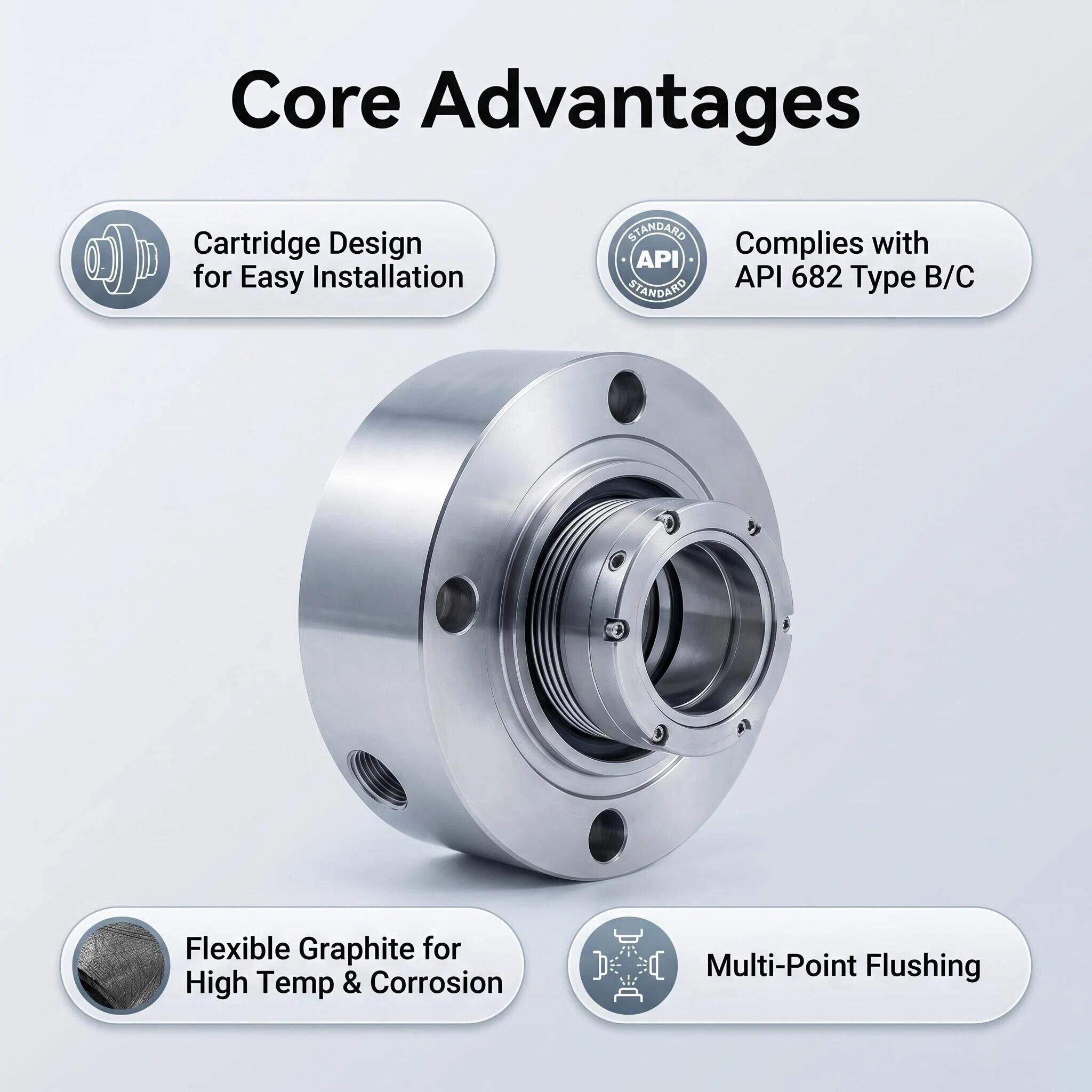
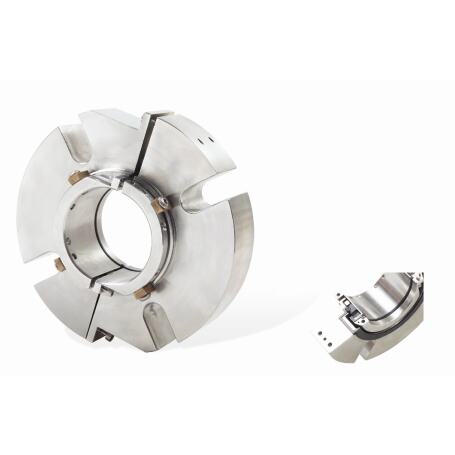
The physical installation environment within a pump directly influences which type of mechanical seal is feasible. Cartridge-style mechanical seals are pre-assembled units that simplify installation, reduce the risk of improper assembly, and are particularly valuable when maintenance is performed in the field without access to precision tools or clean conditions. Component-style mechanical seals require careful individual assembly but may be necessary in pumps with limited axial space or specific dimensional constraints.
Before finalizing your mechanical seal selection, measure the available space within the pump housing, confirm the shaft shoulder dimensions, and identify any impeller clearance constraints. A mechanical seal that is technically correct in material and pressure rating will still fail prematurely if it is installed under tension or compression outside the designed axial working range. Consulting the seal manufacturer's dimensional drawings against the actual pump assembly is a step that should never be skipped.
Flush Plans and Environmental Controls
In many water pump systems, especially those handling water at elevated temperatures or with minor suspended solids, implementing a flush plan — a controlled flow of fluid directed to the mechanical seal faces — significantly extends seal life. API flush plans, originally developed for the process industry, provide standardized frameworks that can be adapted for water pump applications. A Plan 11 flush, which recirculates pumped fluid from a high-pressure point to the seal chamber, is commonly used to keep the seal faces cool and clean in clean water applications.
When the pumped water contains particulates, a Plan 32 flush — injecting clean external water into the seal chamber — protects the mechanical seal faces from abrasive contact. Understanding and implementing the appropriate flush plan for your specific water pump environment is a practical measure that bridges the gap between good seal selection and long operational service life. Neglecting the flush plan in demanding applications is one of the most preventable causes of accelerated mechanical seal wear.
Common Selection Mistakes and How to Avoid Them
Overlooking System Dynamics
One of the most frequent mistakes in mechanical seal selection is designing for steady-state conditions while ignoring dynamic events such as pressure surges, cavitation, dry running during priming, and thermal cycling. These transient conditions often exceed the steady-state design parameters and are responsible for a disproportionate share of mechanical seal failures in water pump systems. A robust selection process accounts for these dynamics by applying appropriate safety margins and selecting seal designs that tolerate short-term excursions from nominal operating conditions.
Cavitation, for example, creates localized pressure collapses near the pump impeller that generate shock waves propagating through the fluid — directly impacting the mechanical seal. Water pump systems prone to cavitation require mechanical seals with greater face rigidity and support features that can absorb these impacts without losing face contact geometry. Consulting with a seal application specialist about your system's operational history is one of the most effective ways to identify hidden failure drivers before they cause repeat seal failures.
Using Generic or Non-Application-Specific Seals
In maintenance and repair scenarios, there is a temptation to install a generic or dimensionally compatible mechanical seal without verifying full application suitability. A seal that fits the shaft diameter and looks correct may have entirely inappropriate face materials, elastomers, or pressure ratings for the specific water pump system. This is especially problematic in industrial systems where water chemistry, temperature, and pressure differ significantly from standard domestic conditions.
The cost difference between a correctly specified mechanical seal and a generic alternative is typically modest — particularly when weighed against the cost of pump downtime, water damage, and repeat maintenance labor. Establishing a verified seal specification for each pump in your facility, cross-referenced to the pump model, operating conditions, and fluid characteristics, creates a reliable maintenance framework that eliminates guesswork and reduces failure rates over time.
FAQ
How do I know when my mechanical seal needs replacement?
The most obvious indicator is visible fluid leakage around the pump shaft. Other signs include unusual vibration, increased noise during operation, and a gradual reduction in pump efficiency. In preventive maintenance programs, mechanical seal replacement intervals are typically defined based on operating hours, temperature cycles, and fluid type rather than waiting for visible failure.
Can I use the same mechanical seal for hot and cold water pump applications?
Generally, no. Hot water applications require elastomer materials with higher temperature resistance such as EPDM or FKM, while cold water applications may use standard NBR. Face material compatibility and spring force calibration also differ between high-temperature and ambient-temperature water pump systems. Always verify that the mechanical seal is rated for the full temperature range your system operates within.
What causes a mechanical seal to fail prematurely in a water pump?
Premature mechanical seal failure in water pump systems is most commonly caused by dry running during pump priming or startup, incorrect installation resulting in misaligned or over-compressed faces, operation at pressures or temperatures beyond the seal's design rating, and the presence of abrasive particles in the pumped water. Selecting application-appropriate materials and maintaining a proper flush plan addresses the majority of these failure modes.
Is a cartridge mechanical seal better than a component seal for water pump maintenance?
Cartridge mechanical seals offer significant installation accuracy advantages because they are pre-set to the correct axial working length by the manufacturer, eliminating measurement and assembly errors in the field. For facilities where maintenance is performed by general mechanics rather than seal specialists, or where minimizing downtime is a priority, cartridge seals are strongly preferred. Component seals remain valid in applications where space constraints, pump geometry, or procurement logistics make cartridge formats impractical.