
 EN
EN
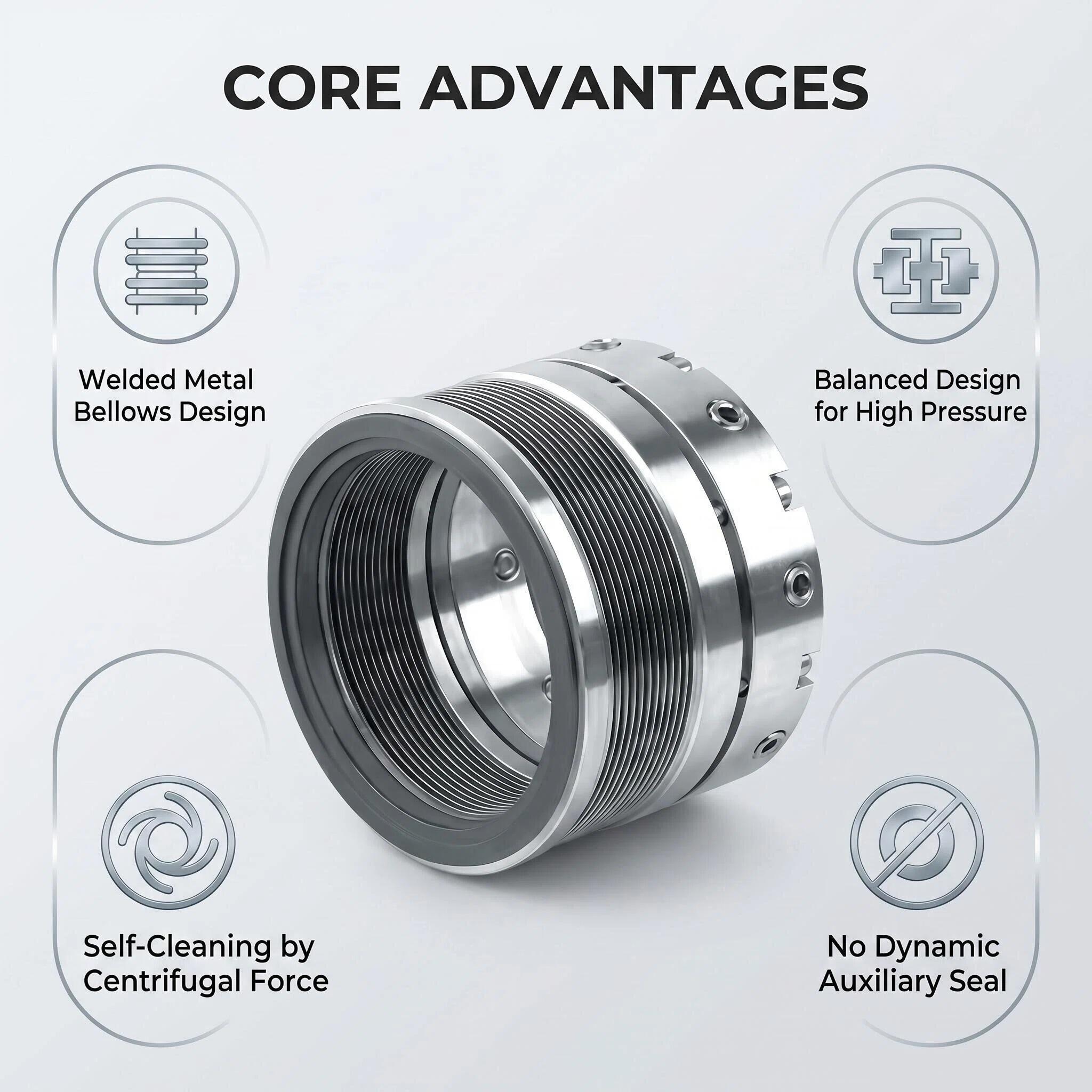
Engineering solutions for extreme environments demand components that go far beyond standard catalog offerings. When engineers and procurement specialists face challenges involving high pressure, elevated temperatures, chemical corrosion, or ultra-high vacuum conditions, custom welded metal bellows emerge as the preferred solution. Unlike their formed or hydroformed counterparts, welded bellows are precision-assembled from individual diaphragm plates, giving designers unprecedented control over geometry, material selection, and performance parameters. This fundamental difference in construction is precisely why they are so well-suited to highly specialized industrial and scientific applications.
The design process for custom welded metal bellows is a sophisticated engineering discipline that balances mechanical performance, material science, and manufacturing precision. Each application introduces a unique combination of operational demands — from the number of flex cycles required over a product's lifetime to the specific media that will contact the bellow's interior surfaces. Understanding how these design decisions are made, and why every parameter matters, is essential for engineers who rely on these components to maintain system integrity across demanding industrial, aerospace, semiconductor, and medical environments.
The Foundational Engineering Principles Behind Welded Bellow Design
Diaphragm Geometry and Its Role in Performance
The defining characteristic of custom welded metal bellows is their construction from individually formed diaphragm plates that are laser-welded or TIG-welded at their inner and outer diameters. Each diaphragm's thickness, convolution depth, and inner-to-outer diameter ratio directly governs the bellow's spring rate, axial travel, and fatigue life. Designers begin the process by modeling the expected displacement range and the forces the bellow must resist or transmit, then work backward to define the diaphragm geometry that satisfies all constraints simultaneously.
For applications requiring very low spring rates — such as pressure sensing instruments or vacuum feed-throughs — engineers specify shallower, thinner diaphragms with larger diameter ratios. Conversely, applications demanding high-pressure containment require thicker, more robust plate geometries that maintain seal integrity under axial or lateral loading. The ability to fine-tune every dimension is one reason custom welded metal bellows are specified where off-the-shelf components consistently fall short.
Finite element analysis (FEA) has become a standard tool in the design workflow, allowing engineers to simulate stress distributions across diaphragm convolutions before a single prototype is cut. This computational approach significantly reduces iteration time and allows confident specification of bellow geometry even for novel application environments where empirical data does not yet exist.
Material Selection for Application-Specific Environments
Material choice is among the most consequential decisions in designing custom welded metal bellows for specialized applications. Common material options include 316L stainless steel, Inconel alloys, Hastelloy, titanium, and AM350 precipitation-hardening stainless steel. Each material offers a distinct combination of corrosion resistance, yield strength, fatigue behavior, and weldability that makes it suitable for certain application profiles and unsuitable for others.
In chemical processing plants where bellows are exposed to aggressive acids or halogen compounds, Hastelloy C-276 is frequently selected because of its exceptional resistance to pitting and stress corrosion cracking. Aerospace and cryogenic applications often require titanium or Inconel 625, materials that maintain their mechanical properties across wide temperature ranges without becoming brittle at low temperatures or losing strength at elevated ones. Custom welded metal bellows manufacturers work closely with end users to analyze the service environment — including temperature cycling, media chemistry, and pressure profile — before finalizing the alloy specification.
The weldability of the chosen material is equally important since the quality of each weld joint between diaphragm plates directly determines the bellow's pressure rating and fatigue resistance. Premium alloys require specialized welding techniques, controlled atmospheres, and post-weld heat treatment protocols that add to both the technical complexity and the value of the finished component.
Key Design Parameters That Define Specialized Performance
Axial Travel, Spring Rate, and Cycle Life
Three interrelated parameters dominate the engineering specification of custom welded metal bellows: axial travel range, spring rate, and design cycle life. These three parameters are not independently adjustable — optimizing one typically imposes trade-offs on the others, and the design process involves carefully negotiating these trade-offs based on application priority. An engineer designing a bellow for a cryogenic valve actuator will prioritize low spring rate and reliable cycle life over maximum travel range, while one designing a flexible pipe connector may weight axial travel much more heavily.
Spring rate is governed primarily by material stiffness, diaphragm thickness, and the number of active convolutions in the stack. A longer bellow with more diaphragm pairs offers a softer spring constant for the same material and geometry — a lever that designers use when the application demands force-neutral displacement compensation. Cycle life, expressed in the number of full-range deflections before fatigue failure probability becomes significant, is engineered by keeping peak stress levels in the diaphragm material well below its fatigue endurance limit, a target typically achieved through careful FEA-guided geometry refinement.
For highly specialized applications in semiconductor fabrication or analytical instrumentation, custom welded metal bellows may be designed for millions of operating cycles over decades of service life without any maintenance access. In such cases, the fatigue safety margin is deliberately conservative, and every detail of the manufacturing process — from raw material certification to final helium leak testing — is documented to support long-term reliability assurance.
End Fitting Design and Integration Compatibility
A custom welded metal bellow does not operate in isolation; it must interface cleanly with the surrounding system. End fitting design is therefore a critical dimension of customization that goes hand-in-hand with bellow body specification. End fittings may be welded flanges, threaded nipples, tube stubs, or custom-machined weld preps tailored to match a specific mating component in the assembly. The choice of end fitting affects not only mechanical attachment but also leak-tightness, vibration transmission, and ease of installation or replacement.
In vacuum systems, end fittings must conform to industry-standard flange systems such as CF, ISO-KF, or ISO-LF to maintain compatibility with broader vacuum chamber architecture. In high-pressure hydraulic or pneumatic systems, custom end fittings may be designed with integrated pressure ports, sensor bosses, or dual-function features that reduce the total component count in the assembly. This level of integration is one of the core arguments for investing in purpose-designed custom welded metal bellows rather than adapting a generic product.
Surface finish requirements for end fittings are also application-driven. Ultra-high vacuum applications demand electropolished interior surfaces to minimize outgassing, while food and pharmaceutical applications require specific Ra values and material certifications to meet hygiene regulations. Every end fitting detail is evaluated against the application's regulatory and functional requirements as part of the comprehensive design process.
Manufacturing Processes That Enable True Customization
Precision Diaphragm Stamping and Forming
The manufacturing sequence for custom welded metal bellows begins with the precision stamping or hydroforming of individual diaphragm plates to exact dimensional tolerances. Thin-gauge sheet stock — often ranging from 0.05 mm to 0.5 mm depending on application — is formed into the convolution profile using hardened tooling. Dimensional consistency from plate to plate is critical because any variation in diaphragm geometry propagates directly into variation in spring rate and fatigue behavior across the assembled bellow stack.
For very thin diaphragms in high-cycle scientific instruments, clean-room handling protocols are followed during forming and inspection to prevent surface contamination that could nucleate fatigue cracks. Inspection of each diaphragm plate using optical profilometry or coordinate measuring machines (CMM) ensures that only plates within tight dimensional windows proceed to the welding stage. This rigorous intermediate inspection is one reason why leading manufacturers of custom welded metal bellows can offer performance guarantees that generic suppliers cannot.
Orbital Welding and Quality Assurance Protocols
The assembly of custom welded metal bellows through precision orbital or laser welding is what transforms a stack of individual diaphragm plates into a hermetically sealed, mechanically functional component. Orbital TIG welding provides highly consistent, repeatable weld penetration and bead profile — parameters that are essential when welding thin-gauge materials where even slight variations in heat input can produce undercut or incomplete fusion. Laser welding offers even finer control and lower heat input, making it the preferred method for the thinnest diaphragm materials used in medical and semiconductor applications.
Quality assurance for custom welded metal bellows encompasses multiple verification stages. Dimensional inspection confirms that the assembled bellow meets all drawing tolerances for free length, inside diameter, outside diameter, and end fitting geometry. Pressure testing at multiples of the rated working pressure verifies structural integrity of the weld joints, while helium mass spectrometer leak testing confirms hermetic performance at levels down to 1×10⁻¹⁰ mbar·L/s — a standard required for vacuum, aerospace, and many analytical instrument applications.
Documentation packages accompanying custom welded metal bellows for critical applications typically include material certificates with heat number traceability, weld procedure qualification records, dimensional inspection reports, pressure test certificates, and leak test data. This level of documentation supports end-user quality management systems and regulatory compliance obligations across industries from nuclear energy to medical device manufacturing.
Application-Driven Design Scenarios Across Industries
Semiconductor and Vacuum Technology Applications
The semiconductor manufacturing industry places some of the most demanding requirements on custom welded metal bellows encountered in any commercial application. Bellow-sealed valves used in process gas lines within chemical vapor deposition (CVD) or atomic layer deposition (ALD) equipment must combine ultra-high purity interior surfaces, minimal outgassing, and reliable cycle lives often exceeding one million actuations. The custom welded metal bellows in these valves serve as the primary dynamic seal between the actuator mechanism and the process gas environment, replacing elastomeric seals that would either contaminate the gas stream or degrade under the aggressive chemistry involved.
Vacuum chamber feed-through assemblies represent another high-volume application where custom welded metal bellows enable precise linear or angular motion transmission through a vacuum boundary without any sliding seal. Electron microscopes, particle accelerators, and satellite testing chambers all rely on this principle. The bellow must maintain its hermetic integrity through thousands of positioning cycles while contributing minimal hysteresis or nonlinearity to the motion system — demands that place rigorous constraints on both diaphragm geometry and weld quality.
Aerospace, Energy, and Medical Device Applications
In aerospace applications, custom welded metal bellows serve as flexible joints in fuel and oxidizer lines, pressure sensor elements in engine control systems, and compensators in thermal management tubing. The design challenges here involve wide temperature cycling ranges, vibration loading superimposed on normal operational deflection, and strict weight constraints. Materials such as Inconel 718 or titanium Grade 5 are specified to satisfy the combined mechanical and environmental demands, and every bellow is subject to proof testing procedures defined by aerospace quality standards.
Power generation and oil and gas applications rely on custom welded metal bellows for expansion joint functions in high-temperature piping systems, flexible connections in heat exchangers, and pressure-balanced assemblies in gas turbine hot sections. These bellows operate at temperatures that can exceed 600°C and must maintain their fatigue resistance throughout decades of thermal cycling. In medical device applications — particularly implantable pumps and surgical instruments — the design focus shifts to biocompatibility, miniaturization, and sterility, with titanium or high-purity 316L stainless steel preferred for direct patient contact components.
FAQ
What distinguishes custom welded metal bellows from standard formed bellows?
Custom welded metal bellows are assembled from individually formed diaphragm plates joined by precision welds, which allows independent control over geometry, material, and performance parameters. Standard formed or hydroformed bellows are produced from a single tube, which limits the range of achievable spring rates, pressure ratings, and material options. For specialized applications with tight performance requirements or unusual operating environments, the design flexibility of the welded construction is the decisive advantage.
How is the cycle life of custom welded metal bellows engineered and validated?
Cycle life is designed by keeping peak stress in the diaphragm material below its fatigue endurance limit through FEA-guided geometry optimization. Validation typically involves cyclic fatigue testing of prototype or production samples under defined deflection amplitudes and loading conditions, with test results documented against the design target. For critical applications, statistical sampling from each production batch may be destructively tested to a defined cycle count to confirm manufacturing consistency.
Which materials are most commonly specified for custom welded metal bellows in aggressive chemical environments?
Hastelloy C-276 is among the most widely used materials for chemically aggressive environments due to its broad resistance to oxidizing and reducing acids, chlorides, and other corrosive media. Inconel 625 is favored where both chemical resistance and elevated temperature strength are required simultaneously. For applications involving strong oxidizing acids, Titanium Grade 2 or Grade 5 may be selected. Material selection is always finalized after a detailed analysis of the specific media chemistry, concentration, temperature, and exposure duration involved in the application.
What quality certifications and documentation should buyers expect with custom welded metal bellows for critical applications?
Buyers specifying custom welded metal bellows for critical industrial, aerospace, or medical applications should expect a comprehensive documentation package that includes raw material certificates with full traceability to production heats, weld procedure and welder qualification records, dimensional inspection reports verified against engineering drawings, hydrostatic or pneumatic pressure test certificates, and helium mass spectrometer leak test data. Applications governed by specific regulatory frameworks — such as ASME pressure vessel codes, aerospace AS9100 requirements, or medical device ISO 13485 standards — will additionally require conformance documentation aligned to those frameworks.
Table of Contents
- The Foundational Engineering Principles Behind Welded Bellow Design
- Key Design Parameters That Define Specialized Performance
- Manufacturing Processes That Enable True Customization
- Application-Driven Design Scenarios Across Industries
-
FAQ
- What distinguishes custom welded metal bellows from standard formed bellows?
- How is the cycle life of custom welded metal bellows engineered and validated?
- Which materials are most commonly specified for custom welded metal bellows in aggressive chemical environments?
- What quality certifications and documentation should buyers expect with custom welded metal bellows for critical applications?