
 EN
EN
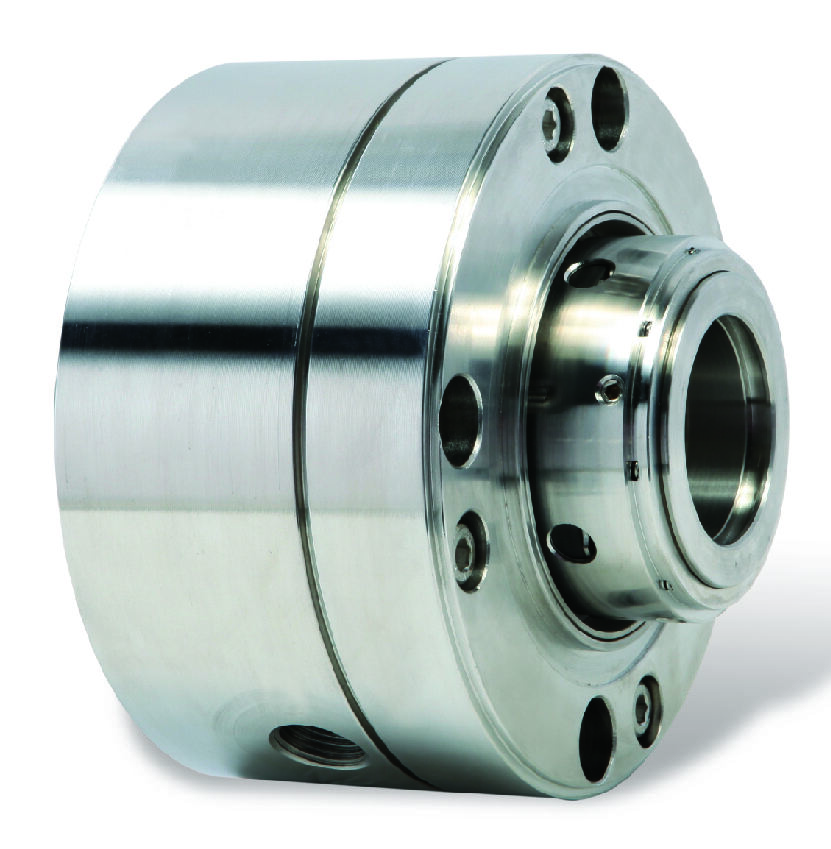
Fatigue Failure in Welded Metal-Bellows: Deflection, Vibration, and Hidden Resonance Risks
Axial, Lateral, and Angular Over-Deflection Mechanisms
When design deflection limits get exceeded, stress builds up at those critical weld joints which can lead to early fatigue failure problems. There are several ways this happens. First, when there's too much axial compression, the convolutions simply buckle under pressure. Then we have lateral misalignment issues that create all sorts of torsional stresses well beyond what standard joints can handle. And don't forget about angular deflections either. If these exceed around 5 degrees per convolution, the local strain at those outer weld seams jumps by as much as 300%. Industry numbers back this up pretty clearly too. According to field data from various sources, roughly two thirds of all fatigue failures in bellows seals occur within just five years of service life due to improper deflection management. To prevent these kinds of issues, installers need to carefully calculate movement vectors right from the start and follow those manufacturer specifications for deflection limits religiously. Good anchoring solutions combined with proper guide systems help spread out those pesky off-axis loads along their intended paths instead of letting them concentrate somewhere they shouldn't be.
High-Cycle Fatigue from System Vibration and Resonant Amplification
When resonant vibrations occur, they actually boost stress levels even under light operating conditions, which can lead to high cycle fatigue exceeding one million cycles in welded bellows assemblies. The pulsations running through pipelines typically fall within the 15 to 150 Hz range, matching up often with the natural frequencies found in bellows convolution systems. This match creates harmonic amplification effects that can reach as much as twenty times normal levels. These amplified vibrations focus cyclical stress right at those thin walled weld areas, causing tiny cracks to form and spread along the grain boundaries of the metal. Industry research indicates that facilities neglecting dynamic modeling when specifying bellows experience around a 40 percent increase in vibration related failures according to spectral analysis data. To combat these issues, engineers recommend incorporating finite element analysis for vibration simulations during the design phase. Additionally, installing tuned mass dampers becomes necessary whenever operational frequencies approach or surpass 80 percent of what the bellows' resonant threshold would normally be.
Corrosion and Erosion Damage in Welded Metal-Bellows
Stress-Corrosion Cracking (SCC) and the Critical Role of Environment-Material Matching
Stress corrosion cracking, or SCC for short, poses one of the worst dangers to welded metal bellows. This happens when tension in the material meets certain corrosive conditions, causing cracks to form beneath the surface that spread quickly. The problem gets really serious in chemical plants where things like chlorides, acids, and caustic substances are common. Choosing the right materials makes all the difference here. Austenitic stainless steel tends to develop SCC issues when exposed to chlorides at temperatures over 60 degrees Celsius. Nickel alloys stand up better against acidic environments though. Getting the right match between what's in the environment and the chosen material requires looking closely at temperature changes, pH levels, and how much contamination exists. Some options exist to reduce the risk. Duplex stainless steel works well, as does cathodic protection methods. But these solutions only work if the actual operating stresses stay within safe limits set for preventing SCC in the first place.
Erosion, Particulate Packing, and Accelerated Localized Degradation
When solid particles erode bellows in fast moving fluid systems, performance drops significantly. The rate at which materials wear away actually goes up exponentially once certain speed limits are crossed. When there's more than about 3% abrasive stuff in the mix like tiny bits of catalyst or sand, the damage isn't even across the bellows surface. It hits hardest on one particular side of those folded sections. What makes things worse is when particles get stuck between the folds. These trapped solids form little pockets that speed up corrosion processes by around 2 to 4 times compared to areas without such buildup. Bellows tend to break down most at their welded joints because these spots have different internal structures that make them weaker overall. To stop this kind of damage from happening, several approaches work well together. First, install multiple filters that catch anything bigger than 5 microns in size. For really tough environments, apply special coatings that resist erosion better. Designing the system so fluids move slower than 30 meters per second also helps a lot. And don't forget regular checks every three months using inspection tools to spot any particle buildup early before it becomes a major problem.
Weld Integrity Failures in Edge-Welded Metal-Bellows
Porosity, Lack of Fusion, and Microcracks: Root Causes and Detection Limits
Porosity happens when gases get trapped because metal is contaminated at the base level or there isn't enough shielding gas around. When welds don't fuse properly, it's usually because the heat wasn't right or parts were misaligned, which creates weak spots where materials meet. Microcracks tend to form either during cooling from thermal stress or because of hydrogen embrittlement issues in stronger alloys. These problems can't be seen with the naked eye. Regular ultrasonic testing (UT) equipment struggles to find flaws smaller than half a millimeter according to what industry tests have shown. X-ray methods aren't much better either; they miss tiny particles that make up less than 2% of material density. To actually detect these small issues reliably, manufacturers need advanced phased array UT systems that can pick up on discontinuities as small as one tenth of a millimeter. But getting access to such technology remains challenging for many shops still working with older equipment.
Prevention Through Controlled Welding Parameters and Targeted NDT Protocols
Precise heat control (150–250 A) and optimized travel speeds (5–15 cm/min) prevent thermal distortion while ensuring full penetration. Automated purge gas monitoring maintains oxygen levels below 50 ppm to eliminate porosity. For critical applications, a multi-stage non-destructive testing (NDT) protocol integrates:
- Laser profilometry for surface defect mapping
- High-frequency eddy current testing for subsurface flaws
- Digital radiography with contrast enhancement algorithms
Post-weld heat treatment at 600–700°C relieves residual stress and reduces microcrack formation potential. Equipment calibration against ASME Section V standards ensures detection capability aligns with the bellows’ required fatigue life.
Installation and Operational Errors That Compromise Welded Metal-Bellows Performance
When installed wrong or operated improperly, welded metal bellows tend to fail far more often than they should. If the alignment goes off track angularly, laterally, or even parallel, stress gets distributed unevenly across the bellows, which leads to those pesky fatigue cracks forming right at the weld seams. Compression settings matter too much for comfort. Over compressing these things basically stops them from flexing naturally, whereas under compression just opens up all sorts of leak paths through those convolutions. Around 40% of problems we see in the field actually come down to installation mistakes people could have avoided if only they checked their neutral positions properly or stayed within those axial deflection limits. Then there are operational blunders worth mentioning as well. Pressure spikes happening when nobody expects them, or letting bellows sit in chemicals they weren't designed for, both chip away at their structural integrity over time. What works best? Stick with strict protocols involving laser alignment checks, monitor torque digitally, and keep an eye on pressure levels in real time. These steps cut down early failures by more than half according to industry data. And don't forget proper training for operators about what those movement limits really mean and where those environmental boundaries lie. That kind of knowledge keeps systems running smoothly for years instead of months.
FAQ
What are common reasons for fatigue failures in welded metal bellows?
Fatigue failures often result from exceeding deflection limits, system vibration and resonace, improper installation or operational errors, as well as corrosion and erosion damage.
How can vibration-induced fatigue in metal bellows be prevented?
Incorporating finite element analysis during design, using tuned mass dampers, and ensuring operational frequencies stay below the bellows’ resonant threshold can reduce vibration-related fatigue.
What materials can help prevent stress-corrosion cracking (SCC) in metal bellows?
Choosing materials like nickel alloys and duplex stainless steel for corrosive environments helps in preventing SCC, coupled with controlling operating stresses.
What strategies can address erosion damage in metal bellows?
Employing multiple filters to catch abrasive particles, using erosion-resistant coatings, maintaining fluid velocity under 30 m/s, and conducting regular inspections are effective strategies to reduce erosion.