
 EN
EN

A water pump mechanical seal is one of the most critical yet often overlooked components in fluid handling systems. When it fails prematurely, the consequences range from costly downtime and fluid leakage to complete pump failure. What many maintenance engineers and facility managers fail to recognize is that the installation process itself plays a decisive role in how long a water pump mechanical seal will last. Even the highest-quality seal can fail within days if it is not installed correctly, while a standard seal, properly fitted, can deliver years of reliable service.
Understanding how proper installation directly extends the operational lifespan of a water pump mechanical seal is essential knowledge for anyone responsible for pump maintenance, system engineering, or procurement decisions. This article walks through the core installation principles, common mistakes to avoid, and the measurable impact that correct fitting practices have on seal longevity and overall system reliability. Whether you are working with centrifugal pumps, submersible systems, or inline configurations, the fundamentals of correct water pump mechanical seal installation apply universally.
The Mechanics Behind Seal Lifespan
How a Water Pump Mechanical Seal Functions Under Load
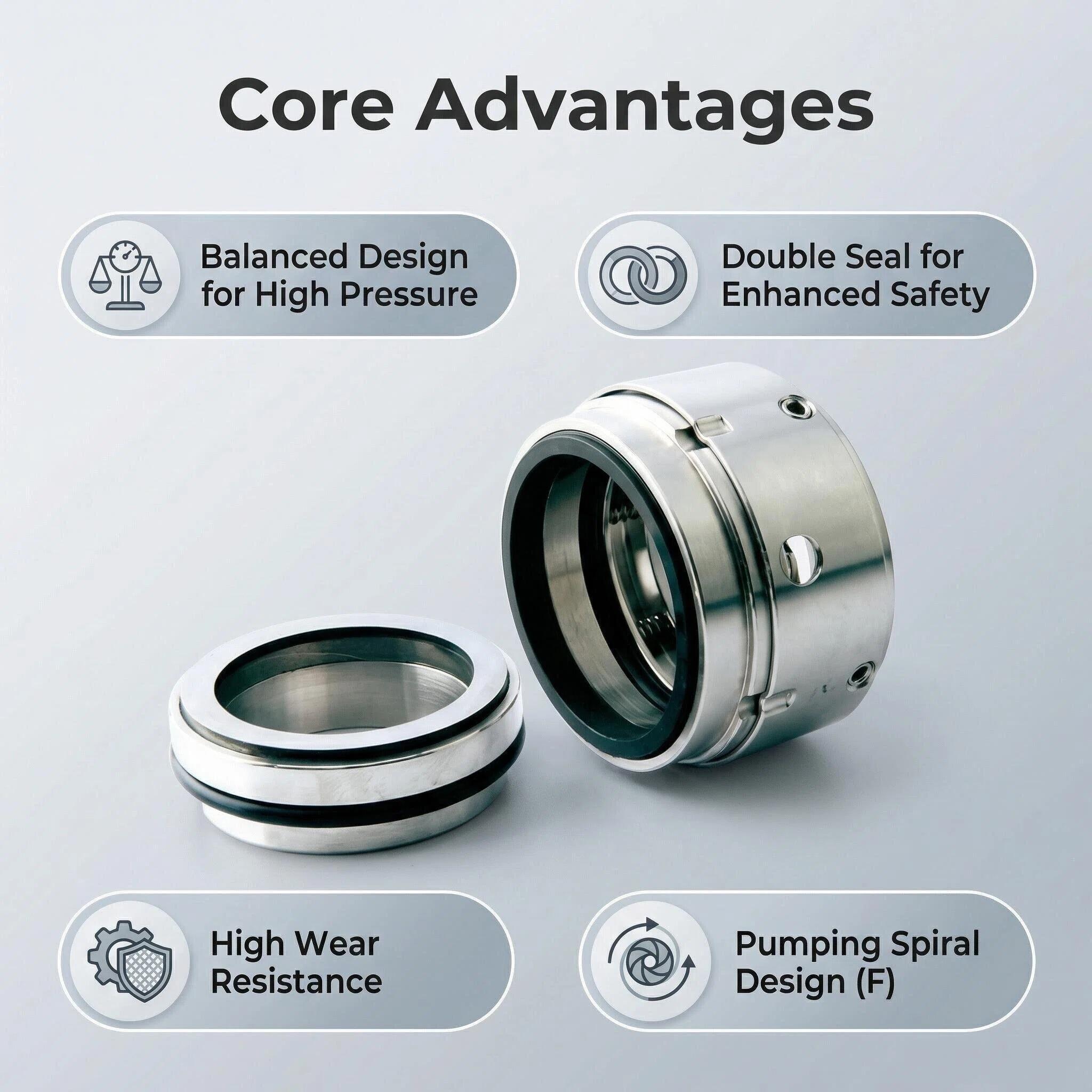
A water pump mechanical seal works by maintaining a precise, pressurized interface between two flat or precision-ground mating faces — one rotating with the shaft and one stationary within the pump housing. This interface creates a near-perfect barrier against fluid leakage while allowing rotational movement. The seal relies on extremely fine surface contact, controlled spring compression, and secondary sealing elements such as O-rings or bellows to function correctly under varying pressure and temperature conditions.
When operating as designed, the water pump mechanical seal generates a thin hydrodynamic film between its faces that lubricates and cools the contact zone. This film is essential. Without it, the faces generate excessive heat through dry contact, leading to rapid wear, thermal cracking, and eventual leakage. The longevity of the seal is therefore directly tied to how consistently this film can be maintained — and that consistency begins at the point of installation.
Any deviation from the designed operating geometry introduced during installation — such as angular misalignment, incorrect spring compression, or inadequate face contact — disrupts this critical film. The result is uneven wear, concentrated stress points, and dramatically shortened seal life. This is why installation quality is not merely a procedural concern but a fundamental engineering variable that determines the actual service life of a water pump mechanical seal.
The Role of Compression and Face Loading
Every water pump mechanical seal is engineered with a specific spring compression range that generates the correct closing force between the seal faces. Too little compression results in insufficient face contact, allowing fluid to bypass the seal interface. Too much compression causes excessive heat generation and accelerated face wear. Both conditions lead to early failure, and both are almost exclusively the result of installation errors rather than component defects.
During installation, the axial position of the seal on the shaft must be set precisely according to the manufacturer's specification. This is typically defined as a specific measurement from a reference point on the shaft to the gland face or pump housing. When this dimension is ignored or approximated, the spring operates outside its designed load range, and the water pump mechanical seal begins its service life already compromised. Precision during this step is not optional — it is the single most impactful installation variable affecting seal lifespan.
Pre-Installation Preparation and Its Impact on Longevity
Surface Inspection and Shaft Condition
Before a water pump mechanical seal is even touched, a thorough inspection of the shaft and seal housing must be completed. The shaft surface in the seal zone should be clean, free of burrs, corrosion, and scoring. Any surface irregularities in this area can damage the secondary sealing element — typically an O-ring or rubber bellows — as it is pressed into position, creating small but critical leak paths that defeat the purpose of the seal entirely.
Shaft runout is another pre-installation parameter that directly affects water pump mechanical seal performance. Excessive shaft runout causes the rotating seal face to wobble relative to the stationary face, generating cyclic mechanical stress on both faces and the secondary sealing elements. Even a modest runout beyond acceptable tolerance accelerates face wear exponentially. Checking runout with a dial indicator before installation takes only minutes but can prevent seal failure that would otherwise occur within a fraction of the expected service life.
The seal housing bore and gland plate faces must also be inspected for flatness and cleanliness. Any debris, old gasket material, or surface damage in these areas prevents proper seating of the stationary seat component, leading to misalignment of the entire water pump mechanical seal assembly from the first moment of operation.
Lubrication and Handling Protocols
Proper lubrication during installation is a frequently misunderstood aspect of water pump mechanical seal fitting. The goal is not to apply lubricant to the seal faces themselves — doing so can actually contaminate the face material and interfere with the hydrodynamic film that forms during operation. Instead, light lubrication with a compatible fluid or clean water should be applied only to the secondary sealing elements such as O-rings and rubber components to ease installation without tearing or distorting them.
Handling the seal faces with bare hands is a common but serious mistake. Skin oils and microscopic particles from fingerprints can embed in the lapped surface of a carbon or ceramic seal face, creating abrasive contamination that causes premature wear. Always handle water pump mechanical seal face components with clean gloves or lint-free cloths. Even a brief moment of improper contact can introduce damage that shortens the effective seal life by months or years.
Step-by-Step Installation Practices That Preserve Seal Life
Sequential Assembly and Alignment Verification
The sequence in which a water pump mechanical seal is assembled matters as much as each individual step. Beginning with the stationary seat, it should be pressed or fitted into the gland or housing bore squarely and evenly, without rocking or tilting. Uneven seating of the stationary face introduces a fixed misalignment angle that the rotating face must compensate for during every revolution, creating a cyclic stress pattern that degrades both faces over time.
Once the stationary component is seated, the rotating assembly — comprising the spring, collar, and rotating face — should be slid onto the shaft with care, maintaining axial alignment throughout. For pusher-type water pump mechanical seals, the drive collar must be secured at the correct axial position before the set screws are tightened. Tightening set screws unevenly or without verifying axial position is one of the most common causes of early seal failure in field installations.
After full assembly, rotating the shaft by hand before starting the pump allows the technician to feel for any binding, irregular resistance, or grinding — all of which indicate an installation problem that must be corrected before the system is energized. This simple check takes less than a minute and can prevent catastrophic seal failure on first startup.
Avoiding Common Installation Errors That Reduce Seal Life
One of the most damaging installation errors for a water pump mechanical seal is running the pump dry, even briefly, before the system is fully primed. Mechanical seal faces depend on the pumped fluid for lubrication and cooling from the very first rotation. Even a few seconds of dry running can generate enough heat to crack ceramic or carbon faces, warp elastomers, and permanently damage the mating surfaces. Always ensure the pump is fully primed and the seal cavity is filled with fluid before startup.
Overtightening the gland bolts is another widespread mistake. Many technicians assume that a tighter gland means a better seal, but this logic is flawed. Excessive gland load distorts the stationary face and can crack brittle seal face materials such as silicon carbide or ceramic. The water pump mechanical seal is designed to function within a specific load range — exceeding it during installation causes immediate structural damage that manifests as leakage early in service life.
Ignoring the manufacturer's installation instructions in favor of general practice or past experience is also a significant risk factor. Different water pump mechanical seal designs — including balanced versus unbalanced, single versus double, and cartridge versus component types — each have specific installation requirements that differ from one another. Using a one-size-fits-all approach leads to inappropriate compression, misaligned faces, and shortened service intervals.
Environmental and Operational Factors That Compound Installation Quality
Flush and Cooling Arrangements
Even a correctly installed water pump mechanical seal benefits from an appropriate flush or cooling arrangement, particularly in high-temperature, abrasive, or viscous fluid applications. Flush plans direct a controlled flow of clean fluid across the seal faces, removing heat, debris, and dissolved solids that would otherwise accumulate and damage the face interface. The effectiveness of any flush arrangement depends on the seal being installed in the correct orientation relative to flush ports — another installation variable that directly impacts longevity.
In applications where the pumped fluid contains solids or particles, a clean external flush from an independent source may be required to protect the water pump mechanical seal faces from abrasive wear. If the seal is installed without accounting for the flush connection or if flush flow rates are set incorrectly after installation, abrasive damage begins almost immediately, regardless of how carefully the seal itself was fitted. Installation and operational setup must be treated as a unified process.
Thermal and Pressure Cycling Considerations
Many water pump applications involve frequent starts and stops, pressure cycling, or temperature fluctuations. These dynamic conditions place cyclical stresses on all seal components, particularly the elastomeric secondary seals and the face contact zone. When a water pump mechanical seal is installed with correct compression and alignment, it is able to accommodate these cycles within its designed mechanical and thermal tolerances.
However, when installation errors are present — such as excessive face load or slightly cocked stationary seat — each thermal or pressure cycle amplifies the existing defect. What might be a minor misalignment under static conditions becomes a growing problem as the seal heats and cools repeatedly. This is why systems with demanding thermal or pressure profiles show the starkest contrast in seal life between correctly and incorrectly installed seals, often measured in months of additional service life per installation quality improvement.
FAQ
How does improper installation specifically shorten the life of a water pump mechanical seal?
Improper installation introduces misalignment, incorrect face loading, damaged secondary seals, or contaminated face surfaces — all of which disrupt the hydrodynamic film between the seal faces, generate excessive heat, cause uneven wear, and ultimately lead to leakage and failure far earlier than the designed service life. Even small installation errors compound over time, making each operating cycle more damaging than the last.
Can a cartridge-type water pump mechanical seal be installed more reliably than a component type?
Cartridge-type seals are pre-assembled to factory specifications and eliminate the need to set axial compression on-site, significantly reducing the risk of installation errors such as incorrect spring loading. They are generally more reliable in field installations because critical dimensions are already controlled. However, they still require correct shaft condition, proper housing preparation, and appropriate gland bolt torque to achieve their full service life potential.
What is the most common mistake made when installing a water pump mechanical seal?
The most common mistake is running the pump without ensuring it is fully primed, causing the seal faces to run dry even briefly. This can cause irreversible heat damage to face materials within seconds. The second most common error is setting the seal at the wrong axial position on the shaft, resulting in incorrect spring compression that either under-loads or over-loads the seal faces throughout its entire service life.
How often should a water pump mechanical seal be replaced regardless of visible leakage?
While replacement intervals vary by application, fluid type, and operating conditions, most industrial water pump mechanical seal installations benefit from scheduled inspection every 12 to 24 months. Even if no visible leakage is present, the seal faces, secondary sealing elements, and spring components experience gradual wear and fatigue. Proactive replacement on a planned schedule is far less costly than reactive replacement following an unplanned failure, and it ensures that each new seal begins its service life with a proper, careful installation.
Table of Contents
- The Mechanics Behind Seal Lifespan
- Pre-Installation Preparation and Its Impact on Longevity
- Step-by-Step Installation Practices That Preserve Seal Life
- Environmental and Operational Factors That Compound Installation Quality
-
FAQ
- How does improper installation specifically shorten the life of a water pump mechanical seal?
- Can a cartridge-type water pump mechanical seal be installed more reliably than a component type?
- What is the most common mistake made when installing a water pump mechanical seal?
- How often should a water pump mechanical seal be replaced regardless of visible leakage?