
 EN
EN
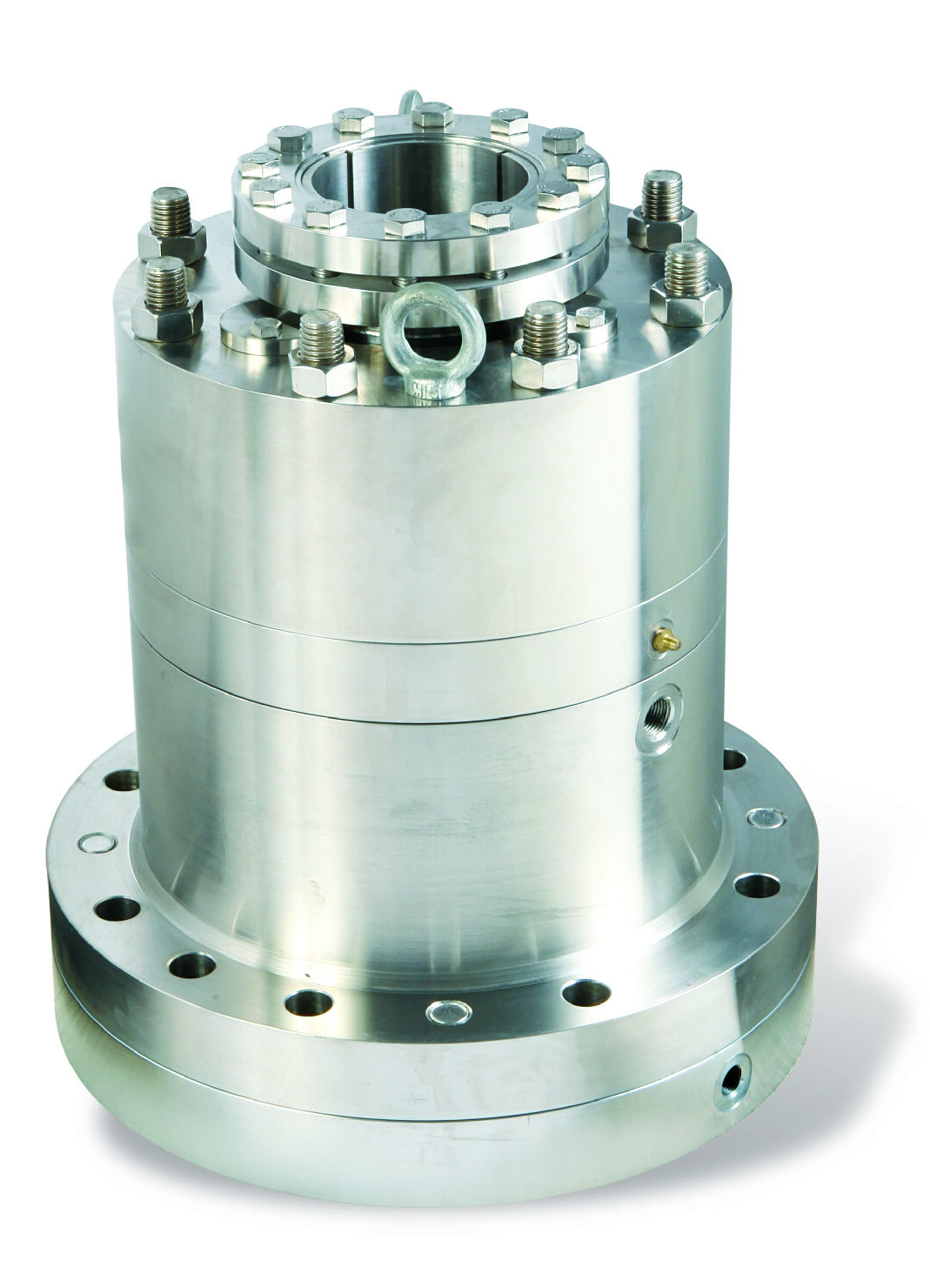
Zero-Leakage Sealing: Why Welded Metal-Bellows Eliminate Permeation and Static Leakage Paths
Hermetic Integrity: How Laser or TIG Welding Creates a True Dynamic Barrier
Laser and TIG welding techniques create seamless metal bellows that eliminate those tiny gaps found in rubber seals. These welding methods get rid of common weak spots such as O ring grooves and gasket connections where leaks tend to start. When welders carefully adjust their equipment settings, they can achieve consistent bonding throughout every fold of the bellows material, which stops gases from passing through at a molecular level. Tests show that these welded joints maintain the same strength as the original metal even after going through around 5,000 temperature changes according to standards set by ASME Section VIII. Using corrosion resistant materials also helps prevent chemical breakdown over time. What we end up with is a completely sealed system capable of handling sudden pressure increases up to 1000 pounds per square inch and still allowing for movement of plus or minus 3 millimeters in the shaft position without affecting the overall seal quality.
Real-World Validation: Aerospace and Cryogenic Applications Demanding
Welded metal bellows seals manage to keep helium leaks well below 1x10^-9 mbar L/s even when things get really tough. These seals work great in cryogenic applications down at around minus 253 degrees Celsius, stopping hydrogen from seeping through places where regular rubber or packed seals would just give up. The aerospace industry depends heavily on these seals for turbopumps that need to hold vacuum integrity while enduring intense vibrations of about 15 Gs, which meets all those strict requirements for orbital thrusters. Testing with helium mass spectrometers has shown that these metal bellows have leak rates about 100 times better than their rubber counterparts when subjected to temperature swings ranging from minus 200 to plus 500 degrees Celsius. What makes this possible is the elimination of those static gland plate connections that are notorious for creating hidden emission pathways. Real world tests on liquid oxygen transfer systems have recorded absolutely no detectable emissions after running continuously for 10 thousand hours, meeting all the requirements set out in the ISO 15848-1 Class AH standards for emissions.
Extended Fatigue Life: Engineering Welded Metal-Bellows for 10 Million+ Cycles
Achieving 10 million+ operational cycles hinges on geometric optimization validated by predictive modeling. A 2023 fatigue study demonstrated that bellows retained 87% pressure integrity after 12 million cycles under thermal gradients (–40°C to 280°C), confirming exceptional endurance in dynamic service.
Geometry-Driven Durability: Optimizing Convolution Pitch, Depth, and Wall Thickness per EJMA Guidelines
The Expansion Joint Manufacturers Association (EJMA) provides foundational design criteria for maximizing fatigue life:
- Convolution pitch/depth ratios below 1.8 reduce localized stress by 34%, per FEA simulations
- Wall thickness gradients must remain within ±0.05 mm to suppress crack nucleation
- Weld-joint positioning outside peak-stress zones extends mean-time-between-failure (MTBF) by 200%
Predictive Modeling: Leveraging ISO 15848-2 to Quantify Cycle Life Under Variable Pressure and Temperature
ISO 15848-2 enables precise lifecycle forecasting through multi-axis load mapping. Engineers correlate key variables to quantify degradation:
| Parameter | Impact on Cycle Life | Test Standard |
|---|---|---|
| Pressure (bar) | 10% increase = 30% life reduction | ASTM E606 |
| Thermal Cycling | 50°C swing = 2.1x acceleration | ISO 15848-2 Annex B |
| Spring Rate (N/mm) | Optimal 12–18 range prevents over-constraint | EJMA Section 4.7.3 |
These models are essential for applications with near-zero failure tolerance—including nuclear valve actuators and hydrogen compressor seals—where synergistic pressure, temperature, and mechanical loads drive performance limits.
Material Science for Harsh Environments: Matching Welded Metal-Bellows Alloys to Process Demands
Stainless Steel vs. Nickel Alloys vs. Titanium: Corrosion Resistance, Thermal Stability, and Weldability Trade-offs
When choosing materials, engineers need to consider several factors including how well they resist corrosion, maintain their properties at different temperatures, and can be welded together. Take standard 316L stainless steel for example. It's pretty affordable compared to other options, but watch out when dealing with chlorides because it starts developing those pesky pits once things get over 60 degrees Celsius. Then there are nickel alloys like Inconel 625 which hold up remarkably well even when temperatures climb toward 700 degrees, though working with them requires special TIG welding techniques that not every shop has mastered. Titanium stands out for its amazing ability to stand up against oxidizing acids, although nobody wants to deal with it turning brittle if exposed to too much hydrogen. Most often, material choices depend heavily on what the application demands. For basic chemical environments, stainless makes sense. High pressure and temperature situations typically call for nickel alloys. And anyone involved in marine operations knows titanium is practically indispensable for seawater cooling systems. One thing worth remembering though? When bellows expand differently from whatever they're connected to due to temperature changes, fatigue sets in faster than expected. This isn't just theory either; actual tests following ASTM G48 standards have shown exactly this kind of problem happening repeatedly.
Hastelloy C-276 in Chloride Service: When Welded Metal-Bellows Outperform Titanium in High-Pressure Seawater Systems
When dealing with offshore chloride environments, Hastelloy C-276 simply beats titanium hands down because it doesn't form hydrides when protected cathodically. This becomes especially critical below 500 meters depth where we start seeing serious degradation issues with titanium components. According to ISO 15156 standards for sour service applications, this alloy keeps its protective layer intact even when faced with chloride concentrations over 100,000 parts per million and temperatures pushing past 120 degrees Celsius. What makes Hastelloy C-276 so special? Its rich molybdenum content gives it remarkable resistance against pitting corrosion, which matters a lot when operating under pressures that can exceed 10,000 psi. For those working on subsea Christmas tree valves specifically, this material choice makes all the difference. Real world testing on hyper saline brine injection pumps tells the story clearly enough: equipment made with Hastelloy lasts about 42 percent longer compared to what we get with titanium alternatives in similar conditions.
| Property | Hastelloy C-276 | Grade 2 Titanium |
|---|---|---|
| Chloride Threshold | 100,000 ppm | <50,000 ppm |
| Max Operating Temp | 400°C | 300°C |
| SCC Resistance | Excellent | Moderate |
This robustness makes nickel-alloy bellows the preferred solution for seawater systems where galvanic corrosion and hydrogen embrittlement pose critical risks.
Critical Performance Parameters: Spring Rate, Pressure Response, and Face Loading Uniformity
Welded metal bellows significantly boost the reliability of mechanical seals by controlling three main factors together. The spring rate basically means how much force it takes to compress the bellows, which determines how well they respond when the shaft moves around. Designs that follow EJMA standards keep the seal faces touching properly even when there are sudden temperature changes. When it comes to pressure response, we're looking at how inside and outside pressures affect the shape of the bellows. Keeping those convolutions consistent stops the seal faces from getting out of alignment. Uniform face loading makes sure the pressure is spread evenly across where the seal meets the equipment. This matters a lot since uneven pressure causes faster wear and creates hot spots that can damage things. Laser welding removes the inconsistencies found in older multi-spring setups, so heat gets distributed pretty evenly across the surface with only about 5% variation. These three working together stop problems from snowballing: good spring rates reduce vibrations, stable geometry prevents catastrophic failures, and even pressure distribution keeps temps under 230 degrees Celsius. According to tests following ISO 21049 standards, these welded bellows stay aligned within just 0.0003 inches (or 7.6 micrometers) after going through 10,000 pressure cycles. That translates to maintenance intervals lasting up to 40% longer in refinery pumps. All told, this combination of factors delivers sealing performance that simply isn't possible with traditional spring-based systems.
FAQ Section
What are the advantages of using welded metal-bellows over rubber seals?
Welded metal-bellows provide a zero-leakage solution by eliminating the tiny gaps that cause leaks in rubber seals. They maintain integrity across a wide range of temperatures and pressures, making them ideal for demanding environments.
How do welded metal-bellows perform in cryogenic and aerospace applications?
They excel in these applications by achieving helium leak rates well below 1x10^-9 mbar L/s. This performance is critical for maintaining integrity in extreme conditions such as low temperatures and high vibrations.
What materials are preferable for welded metal-bellows and why?
The choice of materials depends on the application. Stainless steel is cost-effective for chemical environments, nickel alloys are suited for high pressure and temperature conditions, and titanium is used in marine applications for its resistance to seawater corrosion.
How is the fatigue life of welded metal-bellows maximized?
Fatigue life is maximized through geometric optimization and predictive modeling based on the guidelines of EJMA. Factors include controlling convolution pitch, depth, and wall thickness.
How do laser welding techniques enhance the performance of metal bellows?
Laser welding provides consistent bonding, eliminating the weak spots found in older multi-spring setups. This results in improved reliability, even pressure distribution, and longer maintenance intervals.
Table of Contents
- Zero-Leakage Sealing: Why Welded Metal-Bellows Eliminate Permeation and Static Leakage Paths
- Extended Fatigue Life: Engineering Welded Metal-Bellows for 10 Million+ Cycles
- Material Science for Harsh Environments: Matching Welded Metal-Bellows Alloys to Process Demands
- Critical Performance Parameters: Spring Rate, Pressure Response, and Face Loading Uniformity
-
FAQ Section
- What are the advantages of using welded metal-bellows over rubber seals?
- How do welded metal-bellows perform in cryogenic and aerospace applications?
- What materials are preferable for welded metal-bellows and why?
- How is the fatigue life of welded metal-bellows maximized?
- How do laser welding techniques enhance the performance of metal bellows?