
 EN
EN
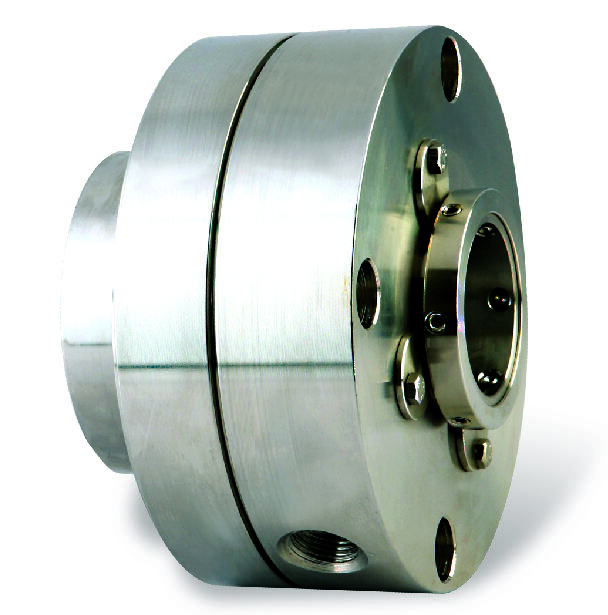
Hermetic Sealing: Zero-Leakage Performance Under Extreme Pressure
Physics of leak-free sealing in welded metal-bellows under differential pressure
Metal bellows created through welding offer hermetic sealing because they have continuous fusion joints that get rid of common failure spots like when rubber degrades, gaskets start to creep, or interfaces separate. These welded versions differ from those made by mechanical forming or hydroforming since their single piece construction stops micro cracks from forming under pressure changes while maintaining even wall thickness throughout each convolution. At pressures over 10,000 psi, materials such as 316L stainless steel or Hastelloy C-276 bend elastically but return to shape without lasting damage. No organic seals means no outgassing happens and there's no breakdown from heat above 400 degrees Celsius. That makes these components essential for things like moving parts in aircraft, cooling systems in nuclear plants, and chemical processes involving extreme heat where keeping seals intact literally keeps the whole system safe.
Comparative leakage rates: welded metal-bellows vs. hydroformed alternatives at 10,000 psi (ASTM E499-22)
Independent testing per ASTM E499-22 confirms welded metal-bellows maintain leak rates below 1 × 10⁻⁹ cc/sec at 10,000 psi—40–65% lower than hydroformed counterparts. This gap arises from three inherent limitations of hydroformed units:
- Seam vulnerability: Longitudinal seams introduce preferential leakage paths under extreme pressure
- Material thinning: Wall thickness at convolution crests is reduced by 15–30%, accelerating fatigue initiation
- Creep susceptibility: Non-welded designs exhibit 0.2–0.5% permanent deformation per 100 cycles
Welded variants further demonstrate stable performance across 500+ thermal cycles between –200°C and 650°C—validated in applications where failure consequences are catastrophic, including subsea hydrocarbon extraction and reactor primary-loop isolation.
Structural Integrity and Pressure-Rating Superiority
How double-ply welded construction extends burst pressure by 40–65% (Sandia NL data)
The double ply weld construction really boosts pressure containment because it joins two metal layers together into one strong structural unit. What this means is there are multiple stress paths built into the design, so when forces push against the material from different directions, they get spread out more evenly throughout the entire structure including those tricky end connections. According to tests done at Sandia National Labs, these dual layer designs can handle bursts at pressures 40 to even 65 percent higher than regular single ply versions. That makes all the difference for equipment dealing with sudden pressure surges over 15,000 psi like what happens in underwater oil rig safety systems or spacecraft fuel delivery pipes where failure isn't an option.
Welded end connections: Eliminating interface failure points in high-pressure service
When using bolted, flanged or threaded connections, we often see stress points develop at those joints. These spots are exactly where fatigue cracks tend to start when there's repeated loading over time. Welded end connections fix this problem by creating solid transitions between the bellows and the pipes next to them. No need for gaskets, O rings or any kind of mechanical fasteners anymore. Looking at data from ASME Boiler and Pressure Vessel Code studies, around 78 percent of all containment failures happen right at these connection points in systems that experience both high cycles and high pressures. What makes welded connections so good? They maintain structural integrity even when pressure spikes go beyond what they're rated for. This reliability matters a lot in safety critical systems where failure isn't an option.
Material and Thermal-Pressure Stability for Demanding Environments
Metal bellows made through welding maintain their shape and function even when exposed to wild temperature swings and pressure changes something absolutely critical for applications in aerospace tech, power plants, and offshore oil rigs. The fact that these components are constructed from solid metal without seams means they don't develop stress points that lead to early wear and tear when temperatures jump around rapidly from as low as minus 320 degrees Fahrenheit up to over 1200 degrees. Different materials can be used depending on what environment they'll face. Options include things like 316L stainless steel, Inconel 718, and Hastelloy C-276 which stand up well against harsh substances such as hydrogen sulfide rich gases, saltwater, and strong acids. Compared to rubber seals or glued alternatives, welded bellows simply don't release gases, won't change how they let stuff pass through under long term pressure, and won't fall apart when hit by sudden temperature shocks. This makes them reliable for maintaining complete seals in places like turbine bypass systems, nuclear reactor cooling circuits, and instruments requiring extremely high vacuum conditions.
Precision Spring Rate and Dynamic Seal Loading Control
Cyclic reliability: 500k-cycle repeatability under high-pressure modulation (NIST-validated)
Welded metal bellows show remarkable durability when it comes to repeated use, having passed NIST tests for over 500,000 pressure cycles without showing any signs of wear, even when subjected to varying loads as high as 10,000 psi. Their lasting performance comes down to carefully designed spring characteristics that keep the sealing surfaces properly loaded throughout all operating conditions. Maintaining steady contact pressure is what stops those tiny leak paths from forming during sudden pressure changes something absolutely essential for things like aircraft control systems, hydraulic valves used in machinery, and sensitive lab equipment. Getting that NIST certification means these components meet serious standards for repeatable performance over time, so engineers can focus on saving money in the long run rather than just looking at upfront costs when designing critical systems.
FAQ Section
What is hermetic sealing?
Hermetic sealing refers to making a system completely air and liquid-tight, preventing any leakage.
Why are welded metal bellows preferred over hydroformed ones?
Welded metal bellows maintain lower leakage rates and better structural integrity due to their construction without seams, making them superior in high-pressure conditions.
What materials are used in welded metal bellows?
Common materials include 316L stainless steel, Hastelloy C-276, and Inconel 718, chosen for their durability in extreme environments.
What are typical applications for welded metal bellows?
They are used in settings requiring zero leakage under extreme conditions, such as aerospace, nuclear plants, and subsea hydrocarbon extraction.
How do welded end connections enhance performance?
They eliminate stress point failures common in other types of connections, maintaining integrity even under intense pressure spikes.