
 EN
EN
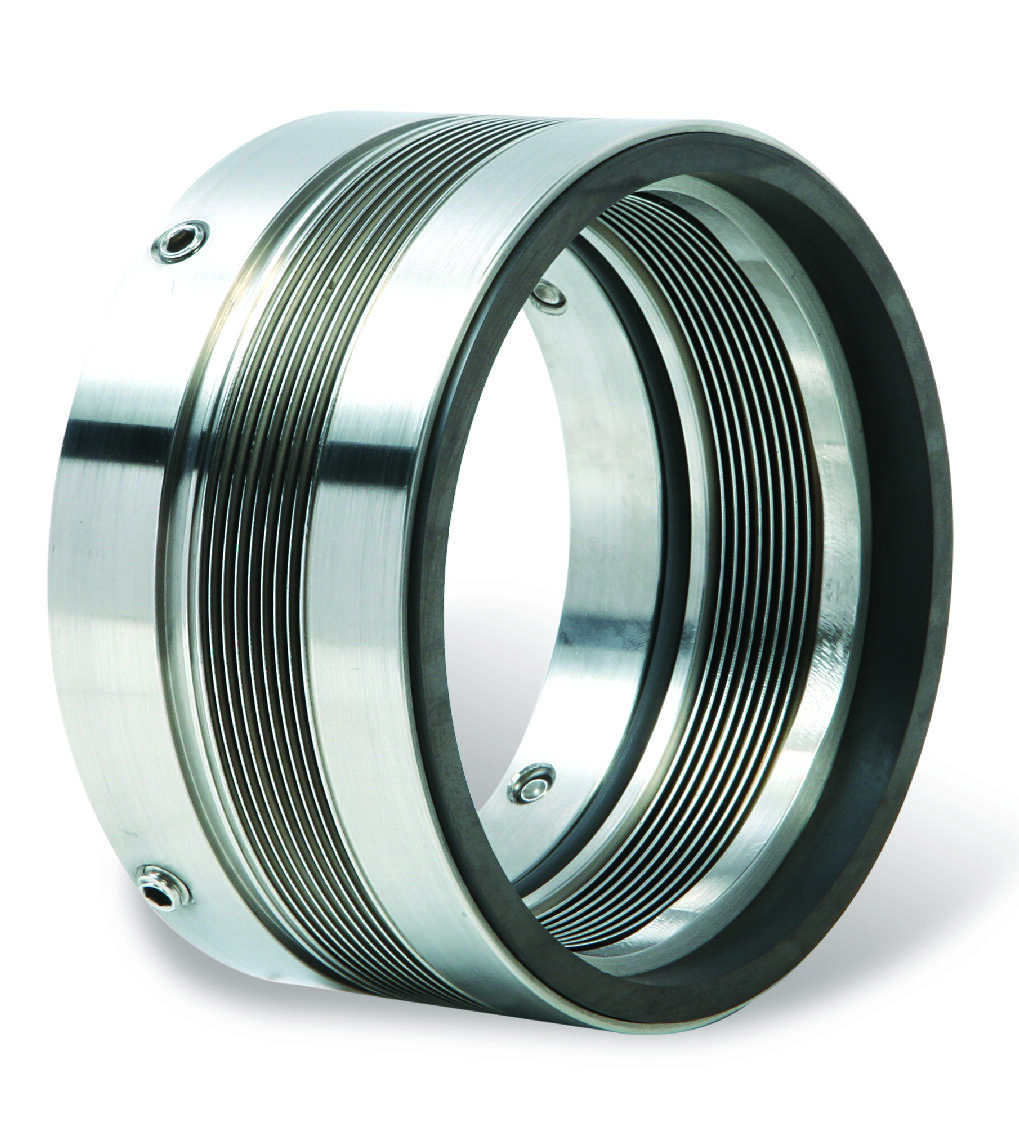
How Bellows Mechanical Seals Handle Extreme Heat and Thermal Expansion
Challenges of Sealing Under High-Temperature Conditions
High-temperature environments (>400°F/204°C) create unique challenges for mechanical seals. Traditional elastomeric seals degrade rapidly due to:
- Thermal degradation: Elastomers lose elasticity, becoming brittle and prone to cracking
- Differential expansion: Uneven thermal growth between rotating and stationary components misaligns sealing surfaces
- Chemical attack: Heat accelerates corrosion in aggressive media like refinery process fluids
A 2023 study by the Fluid Sealing Association found that 68% of seal failures in high-temperature pumps stem from these thermal stresses.
Thermal Expansion Compensation Through Bellows Design
Bellows mechanical seals address these issues through their flexible metal construction. The accordion-like bellows structure expands and contracts predictably under thermal cycling, compensating for radial shaft movement (up to 0.04 inches/1 mm), axial thermal growth, and pressure-induced distortions in pump housings.
Edge-welded bellows made from Inconel 625 or Hastelloy C-276 achieve spring rates of 60–120 lb/in, maintaining consistent face loading across temperature fluctuations from -320°F to 900°F (-196°C to 482°C).
Case Study: Reducing Seal Failures in Petrochemical Pumps with Metal Bellows
A Gulf Coast refinery reduced seal-related downtime by 42% after replacing elastomeric seals with LMB86 bellows seals in their crude oil charge pumps. Key improvements over 18 months:
| Metric | Before Bellows | After Bellows |
|---|---|---|
| MTBF (Mean Time Between Failures) | 6 months | 14 months |
| Annual Maintenance Costs | $184k | $92k |
| Unplanned Downtime Hours | 320 | 112 |
The welded metal bellows eliminated o-ring failures while handling thermal shocks from rapid process temperature changes (150°F to 650°F/66°C to 343°C).
Key Advantages of Bellows Mechanical Seals in High-Temperature Applications
Elimination of O-Rings Enhances Temperature Resistance
Switching out traditional elastomeric O rings which start breaking down at around 400 degrees Fahrenheit for advanced graphite or Grafoil wedge designs allows bellows mechanical seals to handle temperatures up to about 800 degrees in demanding environments like steam turbines and chemical reactors. The new approach cuts down on those annoying thermal fatigue issues by roughly three quarters when compared with older seal technology. A recent article from the ASME Pressure Vessel Journal backs this up, showing significant improvements in reliability for industrial applications where heat resistance matters most.
Superior Performance Under Thermal Stress vs Elastomeric Seals
While continuous thermal cycling causes elastomeric seals to harden and crack, welded metal bellows maintain flexibility across a -350°F to 800°F (-212°C to 425°C) range. Data from petrochemical pumps show bellows seals last 3.2x longer than rubber-based alternatives under 500+ thermal cycles (TAPPI Journal, 2022).
Zero-Leakage Design for High-Pressure and High-Temperature Environments
The monolithic welded construction eliminates potential leakage paths found in multi-component seals. In refining applications governed by API 682 standards requiring <50 ppm fugitive emissions, bellows seals achieve 98.5% lower hydrocarbon leakage versus packed glands.
Long-Term Durability Lowers Maintenance Costs in Critical Systems
A five-year field study of power plant boiler feed pumps revealed that bellows mechanical seals reduced unplanned downtime by 40% and cut annual maintenance costs by $18.7k per pump. With no elastomers to age, these seals deliver over 60,000 service hours in 93% of installations (Fluid Sealing Association Report, 2023).
Material and Construction Features of High-Temperature Bellows Seals
High-Performance Alloys: Inconel, Hastelloy, and SS316 in Bellows Mechanical Seals
Bellows seals can handle temps over 800 degrees Fahrenheit (about 425 Celsius) thanks to special alloys like Inconel 718 and Hastelloy C276. The nickel chromium mix in Inconel keeps around 90 percent of its strength even when things get hot, up to 1200 F (or 649 C). Stainless steel SS316 isn't quite as tough but still works well against oxidation issues, holding up until about 1500 F (816 C) in those steam environments where corrosion isn't a big problem. According to a recent report from Materials Performance in 2023, switching to Inconel based bellows cut down on thermal fatigue problems by nearly two thirds compared with regular carbon steel parts used in refinery pumps. That kind of improvement makes a real difference in maintenance costs and equipment longevity.
Chemical Compatibility and Corrosion Resistance in Aggressive Media
Material selection is critical for performance in harsh process fluids. Hastelloy C276 resists concentrated sulfuric acid (98% at 200°F/93°C), and nickel alloys prevent chloride stress corrosion cracking in marine settings. Proper alloy matching reduces seal degradation by 78% in chemical processing pumps exposed to pH extremes (-1 to 14).
Welded Construction Ensures Structural Integrity at Elevated Temperatures
Bellows made with laser welding technology get rid of those pesky gaskets that tend to lose their shape over time, which means they won't leak even after going through hundreds of temperature changes. When we talk about continuous welding, it creates a single solid piece that can handle pressures way beyond what mechanical assembly methods offer – around two to three times stronger actually, sometimes reaching as high as 15,000 pounds per square inch. Real world testing shows these welded versions hold up for approximately 18 to 24 months when exposed to extreme heat conditions like 900 degrees Fahrenheit in hydrocarbon environments. Traditional seal designs just don't cut it under similar circumstances, often breaking down completely within only six to nine months of service.
Design Variants and Industry-Specific Applications of Bellows Mechanical Seals
LMB84, LMB85, LMB86: Comparing Flexibility and Stroke for Dynamic Use
Mechanical seal bellows come in different models designed for particular operating conditions. Take the LMB84 model for instance it handles those high frequency vibrations really well. Then there's the LMB86 which works better when dealing with bigger axial movements typically found in reciprocating equipment. Recent testing back in 2023 showed something interesting edge welded bellows still keep about 95% of their flexibility even when temperatures hit around 800 degrees Fahrenheit or 427 Celsius. That kind of performance makes these seals great choices for things like agitators and various types of pumps where maintaining exact motion control is absolutely critical.
LMB86 with Grafoil Wedge: O-Ring-Free Sealing for Extreme Heat
The LMB86 model features a special Grafoil wedge that replaces traditional elastomeric O rings, making it work reliably even at temperatures above 500 degrees Fahrenheit or 260 Celsius. Made from graphite, this system handles thermal expansion really well without breaking down, which is something that regular seals often struggle with when they fail under heat stress. Testing done on ethylene cracker pumps showed absolutely no leaks after running for around 12,000 hours straight. That's actually three times better than what most standard seal designs can manage in similar conditions.
Applications in Refineries, Power Generation, and Steam Turbines
Industry-specific adaptations of bellows seals solve persistent reliability challenges:
- Refineries: Prevent fugitive emissions in alkylation unit pumps handling hydrofluoric acid
- Combined-cycle power plants: Operate reliably at steam turbine shaft speeds exceeding 5,000 RPM
- Geothermal systems: Resist scaling and chloride-induced corrosion in brine pumps
Field Data: 40% Longer Service Life in High-Temperature Turbine Systems
A three-year study across 12 natural gas compressor stations showed bellows seals reduced unplanned downtime by 72%. In turbine systems, nickel-alloy bellows extended service intervals by 40% compared to elastomeric seals, resulting in $2.8M annual savings per facility (Pump Systems International, 2023).
Selecting and Future-Proofing Bellows Mechanical Seals for Harsh Environments
Evaluating Temperature, Pressure, and Fluid Compatibility for Optimal Selection
Getting bellows mechanical seals to work properly really comes down to matching them with what the system is actually doing. When temperatures climb past 400 degrees Celsius, engineers typically turn to nickel chromium alloys such as Inconel 625 because they hold up better under heat stress. For systems running at pressures exceeding 3,000 pounds per square inch gauge, reinforced edge welded designs become necessary to prevent those telltale deformations that lead to leaks. The latest data from Fluid Sealing Industry Report shows something pretty alarming too – around two thirds of early seal failures happen because the materials just don't play nice with whatever chemicals are flowing through. That's why specs sheets for chlorine containing applications almost always call out special alloys like Hastelloy C-276, which stands up much better against aggressive chemical environments than standard options.
Total Cost of Ownership: Balancing Initial Investment and Long-Term Reliability
Although bellows mechanical seals carry an initial cost premium of 25–40% over elastomeric alternatives, they deliver 70% lower lifetime costs in chemical processing due to reduced maintenance and downtime (2023 Pump Systems Report). The elimination of routine o-ring replacements contributes to an average return on investment within 18 months in refinery pump applications.
Innovations: Smart Monitoring and Advanced Coatings for Next-Gen Seals
Next-generation bellows seals now incorporate embedded IoT sensors that monitor real-time wear via temperature and vibration patterns, with pilot programs showing a 60% reduction in unplanned outages (2023 Tribology Review). Additionally, plasma-sprayed tungsten carbide coatings have extended service life by 30,000+ hours in coal-fired power plant feedwater pumps compared to standard materials.
Sustainability and Energy Efficiency Trends in Leak-Free Seal Technology
Zero-leakage bellows designs have prevented an estimated 9.5 million liters of hydrocarbon emissions annually across U.S. petrochemical facilities, according to an EPA 2023 study. Improved hydraulic geometries also boost efficiency by 12–18% in pipeline booster pumps, supporting DOE energy reduction goals for industrial operations.
FAQ Section
What are bellows mechanical seals used for?
Bellows mechanical seals are designed to handle extreme temperatures and thermal expansion in high-pressure and aggressive chemical environments, significantly reducing leakage and extending service life. They are commonly used in refineries, power plants, steam turbines, and geothermal systems.
How do bellows mechanical seals handle extreme temperatures?
The bellows structure is made from metal alloys, such as Inconel and Hastelloy, that can withstand temperatures above 800°F. Their accordion-like design allows for predictable expansion and contraction, compensating for radial shaft movement and thermal growth.
What are the main benefits of using bellows mechanical seals?
They offer superior performance under thermal stress, eliminate o-rings for better temperature resistance, maintain zero-leakage in high-pressure settings, and provide long-term durability which lowers maintenance costs.
Are bellows mechanical seals cost-effective?
Although they may have higher initial costs, bellows mechanical seals offer lower lifetime expenses due to reduced maintenance and downtime, providing an average return on investment within 18 months in refinery applications.
Table of Contents
- How Bellows Mechanical Seals Handle Extreme Heat and Thermal Expansion
- Key Advantages of Bellows Mechanical Seals in High-Temperature Applications
- Material and Construction Features of High-Temperature Bellows Seals
- Design Variants and Industry-Specific Applications of Bellows Mechanical Seals
-
Selecting and Future-Proofing Bellows Mechanical Seals for Harsh Environments
- Evaluating Temperature, Pressure, and Fluid Compatibility for Optimal Selection
- Total Cost of Ownership: Balancing Initial Investment and Long-Term Reliability
- Innovations: Smart Monitoring and Advanced Coatings for Next-Gen Seals
- Sustainability and Energy Efficiency Trends in Leak-Free Seal Technology
- FAQ Section