
 EN
EN
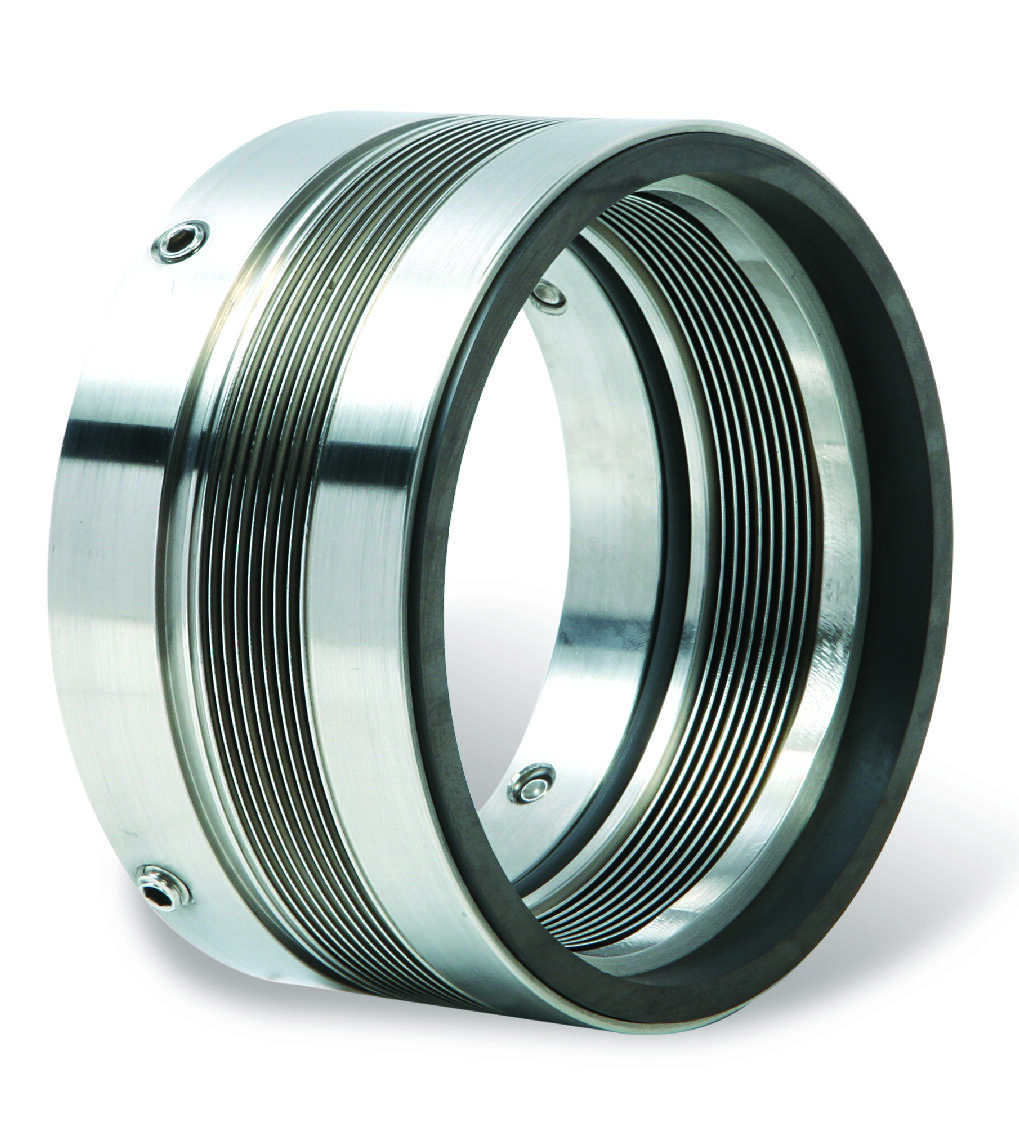
Core Structure and Function of a Bellows Mechanical Seal
Overview of bellows mechanical seal components and their integration
Bellows mechanical seals combine three main parts that stop leaks from happening in pumps and other rotating machinery. At their heart are those primary sealing surfaces usually crafted from tough stuff like silicon carbide or tungsten carbide which create the actual barrier stopping fluids from escaping. Instead of relying on old fashioned springs and moving O rings, modern designs use corrugated metal bellows assemblies. These bellows give needed flexibility along the axis direction but still keep good contact between the seal faces. Then there are secondary static seals, often PTFE wedges, that hold everything together without needing any sliding motion along the shaft itself. Top manufacturers make sure all these pieces fit together properly so the bellows can handle problems like temperature changes causing expansion, when shafts aren't perfectly aligned, or damage from constant vibrations over time.
Primary sealing faces: Materials and role in pressure containment
Sealing faces can handle pressures over 1,450 psi (about 100 bar) thanks to some serious material science work. When we pair carbon graphite with tungsten carbide, we get this sweet spot between lubrication properties and durability against wear. The surface finish matters too - anything below 1 micrometer Ra really cuts down on leaks, sometimes getting them under 0.1 ml per hour when everything's running just right. What makes these seals work so well is maintaining that thin layer of fluid between surfaces, around 0.25 micrometers thick. This keeps things moving smoothly without letting metals grind against each other directly, which would wreck the whole system pretty quickly.
Static vs. dynamic sealing principles in non-pusher designs
Non pusher type bellows seals work differently from standard designs because they fix everything but the actual bellows component. Traditional pusher seals depend on those sliding O rings for operation, while these newer versions use welded metal bellows that move back and forth along the axis when the shaft shifts position. This design removes those pesky friction points which cause about three quarters of early failures in moving parts applications according to industry data. The static nature of this setup means no more fretting corrosion problems either. Plus there's less buildup of particles over time. These benefits matter a lot in chemical processing environments where certain substances tend to crystallize and speed up equipment wear significantly compared to other industries.
Bellows Assembly: Enabling Flexibility and Reliability
At the heart of today's bellows mechanical seals lies the bellows assembly itself, which brings together specially engineered metals and meticulous design work to tackle problems that plagued older systems. When it comes to choosing materials, there's no room for error. For environments loaded with chlorides, 316L stainless steel stands out as a reliable choice, handling concentrations below 5,000 ppm Cl- even at temperatures around 200°F. Meanwhile, Inconel 718 proves its worth in extreme conditions where hydrocarbons reign supreme, maintaining structural integrity all the way up to 800°F according to recent findings from the NACE corrosion study published last year. What really sets these metal options apart is their impressive resistance to corrosion - typically above 90% effectiveness across a wide pH range from acidic to alkaline solutions thanks to those carefully controlled annealing procedures during manufacturing.
Axial movement and thermal compensation capabilities
The multi-ply design of these bellows can handle significant movement requirements - around 12mm axially and temperature changes within a range of plus or minus 400 degrees Fahrenheit. This is really important for reactor systems where different materials expand at different rates when heated. The housing expands at about 6.5 micro inches per inch per degree Fahrenheit while the bellows material expands faster at approximately 8.2 micro inches per inch per degree. When pressure surges occur in the system, typically reaching around 300 psi, these bellows keep the seal faces properly aligned. Industry data from pump reliability studies conducted throughout 2024 shows that this alignment maintenance works well in most cases, with success reported in roughly 87% of installations across various facilities.
Eliminating dynamic O-rings: How the bellows enhances longevity
Replacing traditional O-ring pusher mechanisms with welded bellows doubles maintenance intervals—from 8,000 to 16,000 hours in centrifugal pumps. The static secondary seal design reduces friction-induced wear by 63% compared to elastomer-based dynamic systems (Pump & Systems, 2023). Its monolithic construction also survives 15,000 vibration cycles without fatigue in API 682 Group 2 service conditions.
Sealing Faces and Surface Engineering for Durability
The sealing faces on bellows mechanical seals are basically where all the important stuff happens when it comes to keeping things leak free and making sure these components last longer. When designing these systems, engineers really focus on how well materials work together under friction and whether they can handle whatever chemicals might be present. Most often, they choose between carbon, silicon carbide or tungsten carbide for this purpose. Industry reports show that around three quarters of all industrial applications still rely on these same materials despite newer alternatives becoming available in recent years.
Common Face Materials: Carbon, Silicon Carbide, and Tungsten Carbide
Carbon graphite composites are pretty good when it comes to resisting wear without breaking the bank, especially where there's no abrasion or corrosion going on. For those high speed pump applications, reaction bonded silicon carbide stands out because it conducts heat so well, which means less heat builds up right at the contact points. When dealing with really tough chemical environments, tungsten carbide mixed with either cobalt or nickel binders tends to be the material of choice. These materials can handle incredible hardness levels around 2500 HV and stand up against pitting damage too. Surface treatments matter a lot as well. Things like antimony impregnation work wonders for improving how smoothly components move against each other. Diamond like carbon coatings applied at about 3 to 5 microns thick also help reduce friction while making parts more resistant to sudden temperature changes that could otherwise cause failure.
Precision Finishing Standards (e.g., <1 µin Ra) and Flatness Requirements
Lapping achieves surface roughness below 0.025 µm Ra, minimizing asperity contact that accelerates degradation. Top-tier manufacturers use helium leak testing to verify flatness within 1 light band (0.3 µm), a standard shown to reduce leakage rates by 89% versus commercial-grade seals. Such tight tolerances require climate-controlled finishing environments to prevent thermal distortion.
Hydrodynamic and Hydrostatic Lift Technologies in Modern Face Design
Micro-scale laser etching (20–50 µm groove depth) enables controlled fluid film formation, cutting friction coefficients by 40–60% during startup. Hybrid designs combine hydrostatic balancing with spiral groove patterns to sustain a lubricating gap of 0.5–2 µm, even under ±15° misalignment. This engineered texturing prevents solid-phase contact during dry-running events, significantly extending maintenance intervals.
Secondary Seals and Drive Mechanisms for Stable Operation
Static elastomers, PTFE wedge rings, and backup ring configurations
Secondary sealing systems in bellows mechanical seals use fluorocarbon elastomers (FKM/FFKM) combined with PTFE wedge rings to maintain integrity under pressure cycling. Backup rings prevent extrusion in systems exceeding 1,500 PSI. This layered configuration supports temperatures from -40°C to 230°C and resists chemical attack in hydrocarbon environments.
Pin-driven vs. tab-driven systems for torque transmission
Two primary methods transmit torque in modern bellows seals:
- Pin-driven systems use hardened steel pins engaged with shaft sleeves, capable of handling torque loads above 12 Nm in centrifugal pumps
- Tab-driven designs feature integrally formed metal tabs, reducing part count by 40% while ensuring alignment in compressors
Tab-driven configurations are preferred in food-grade and sanitary applications where crevice elimination is critical.
Anti-rotation features ensuring alignment without restricting movement
Advanced anti-rotation mechanisms employ splined collars or laser-etched grooves that allow ±0.5mm axial travel while maintaining face alignment within 0.0002" TIR. These features suppress seal face chatter in high-speed turbines (up to 14,000 RPM), extending service life by 300% compared to conventional set-screw assemblies.
Real-World Applications and Advancements in Bellows Seal Technology
Case Study: Performance in Chemical Pumps with Aggressive Media
Bellows mechanical seals really stand out in chemical processing environments. According to the Fluid Sealing Association from 2023, about two thirds of all pump failures actually come down to seal problems. Take a look at sulfuric acid transfer systems over seven years now. The stainless steel bellows seals paired with tungsten carbide faces kept those pesky fugitive emissions well under 500 ppm even when working with solutions that had pH levels below 1.5. That's pretty impressive considering how aggressive those conditions are. Regular pusher seals just can't keep up though. They tend to fail around four times more often in exactly the same situations. Makes sense why so many plants are switching to bellows technology these days.
Industry Trends: Shift Toward Non-Pusher Seals in High-Vibration Environments
The latest Global Industrial Seals Report from 2023 shows that around 42 percent of refineries are going with welded metal bellows seals when it comes to centrifugal pumps used in catalytic cracking units. What makes this design so attractive is that it gets rid of those pesky dynamic O-rings that tend to get stuck or slip under stress, which matters a lot in environments where vibrations hit over 25g. Most operators have switched to PTFE wedge secondary seals paired with elastomer backups for these tough installations. These components just seem to hold up better under extreme conditions than older alternatives, which explains why they're becoming the norm across the industry.
Future Outlook: Integration with Smart Monitoring and Predictive Maintenance
New hybrid designs now feature built-in sensors capable of tracking face temperatures within about 2 degrees Celsius and measuring axial deflection as it happens. Real world testing indicates that when factories implement these internet connected systems, they see roughly an 87% drop in unexpected equipment shutdowns. The reason? These smart systems can predict problems before they happen and constantly check for leaks. Things get even better when paired with recent improvements in those special carbon coatings that are typically between 3 to 5 microns thick. Together, all these tech upgrades mean maintenance doesn't need to happen nearly as often anymore - sometimes stretching out past 26,000 operating hours even under extreme conditions where super cold hydrocarbons are involved.
FAQ Section
What are the primary components of bellows mechanical seals?
Bellows mechanical seals consist of primary sealing surfaces, corrugated metal bellows assemblies, and secondary static seals often made of PTFE wedges.
Why are non-pusher designs preferred in bellows seals?
Non-pusher designs eliminate friction points and fretting corrosion, making them more reliable in high-vibration environments.
What materials are commonly used for sealing faces?
Common materials for sealing faces include carbon graphite, silicon carbide, and tungsten carbide.
How do bellows seals perform in aggressive media?
Bellows seals excel in aggressive media environments by significantly reducing fugitive emissions and outperforming regular pusher seals.
Table of Contents
- Core Structure and Function of a Bellows Mechanical Seal
- Bellows Assembly: Enabling Flexibility and Reliability
- Sealing Faces and Surface Engineering for Durability
- Secondary Seals and Drive Mechanisms for Stable Operation
- Real-World Applications and Advancements in Bellows Seal Technology
- FAQ Section