
 EN
EN
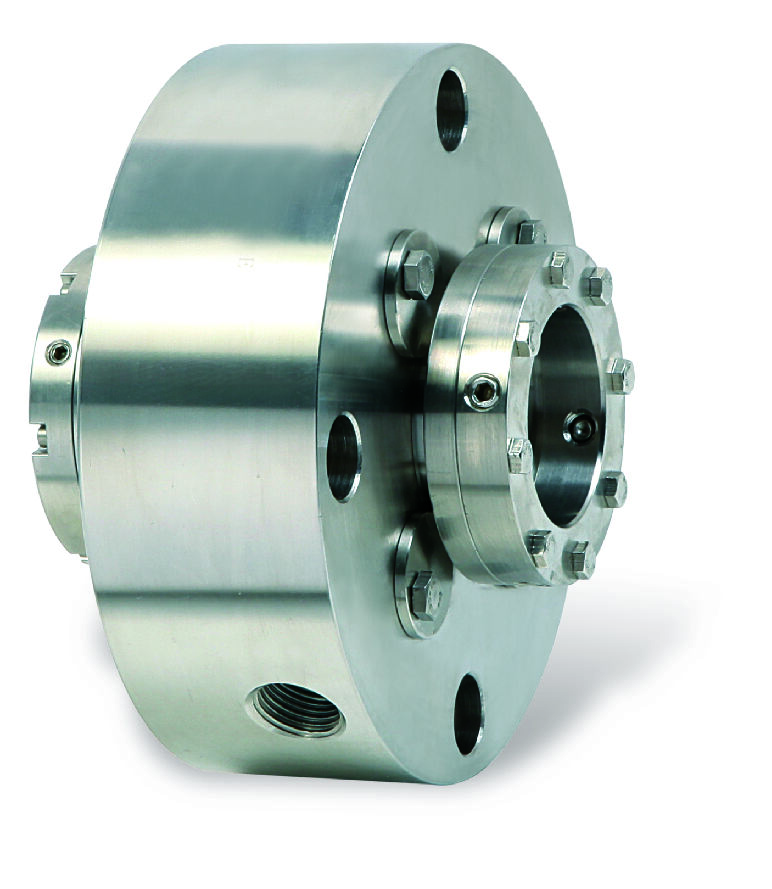
Working Principle of a Bellows Mechanical Seal
The Role of Sealing in Dynamic Rotating Equipment
Bellows mechanical seals prevent hazardous fluid leaks in pumps, mixers, and compressors operating at speeds up to 3,600 RPM. Unlike static gaskets, these seals dynamically adapt to shaft movements while withstanding pressures exceeding 500 PSIG in industries like petrochemical processing and power generation.
How the Bellows Mechanical Seal Working Principle Ensures Leak-Free Operation
Bellows assemblies have taken over from traditional spring systems these days, relying instead on those welded metal diaphragms that keep the rotating primary ring properly aligned with its stationary counterpart. What makes this setup so effective is that it does away with those pesky dynamic O-rings which tend to get clogged up over time. Plus, there's still that super thin layer of lubricating fluid maintained between parts - we're talking about something measuring just 0.6 microns thick here, which happens to be around ten times thinner than an actual strand of human hair! According to industry reports coming out of the Fluid Sealing Association in their latest 2023 findings, these bellows seals actually cut down on those unwanted fugitive emissions by nearly all of them (like 99.7%) when put against older packed gland seal designs in centrifugal pumps.
Axial Flexibility and Seal Face Optimization for Stable Performance
The edge welded bellows design allows for around 3 to 5 mm of axial movement compensation thanks to those accordion like folds we see in them. This is actually about 62 percent better than what pusher seals can offer. When it comes to those silicon carbide faces, laser texturing gets them down below 0.4 microns Ra roughness which makes a big difference. Tribology research shows this cuts down on friction heat by roughly 28 degrees Celsius. Putting these two features together means no more face separation issues when dealing with thermal expansion in steam turbines running hot at around 260 degrees Celsius. Something engineers really care about since equipment failure at these temperatures can be catastrophic.
Case Study: Implementation in Centrifugal Pumps at a Petrochemical Plant
A refinery replaced 134 spring-based seals with metal bellows units in API 610 process pumps handling 180°C crude oil. Results after 18 months:
- Leak incidents: Reduced from 37 to 2
- MTBR: Increased from 11 to 27 months
- Energy savings: 9.4% from reduced friction losses
The installation paid back in 8 months through reduced spill containment costs and downtime avoidance.
Compensation for Axial Movement and Misalignment
Bellows mechanical seals excel in industrial systems requiring compensation for axial displacement and angular misalignment. Their unique architecture addresses critical challenges posed by shaft deflection and vibration—factors responsible for 23% of premature seal failures in rotating equipment (Rotating Machinery Journal 2023).
How Bellows Design Enables Reliable Performance Under Shaft Deflection and Vibration
The welded metal bellows structure provides inherent flexibility, dynamically adjusting up to 5mm of axial movement without compromising seal face contact. Unlike spring-loaded alternatives, this unitary design:
| Feature | Bellows Seal | Spring Seal |
|---|---|---|
| Axial compensation | 0.5–5 mm | 0.2–1.5 mm |
| Vibration damping | 85% energy absorption | 60% absorption |
| Fatigue resistance | 100,000+ cycles | 30,000 cycles |
This engineered flexibility reduces wear at critical interfaces by 70% during shaft misalignment events (Reliability Engineering Report 2023). The bellows’ symmetrical configuration maintains balanced face loading even under 0.5° angular deflection—common in large-scale compressors and turbines.
Real-World Example: Marine Applications with High Vibration and Dynamic Loads
Offshore supply vessels put bellows seals to the test in 2022, and they held up remarkably well. These seals survived 12 months of operation despite some pretty tough conditions including shaft vibrations reaching 12.7 mm/s RMS, temperature swings between -20°C and 180°C, and constant alignment changes as ships adjusted their position dynamically. What really stands out is how much better they performed compared to old school pusher seals. Maintenance crews saw around 80% fewer leaks, which means less downtime and repair work. The seals ran for over 28,000 hours before needing any major touch-ups according to Marine Engineering's case study from last year. For anyone working in marine environments where equipment faces extreme mechanical stress beyond what standard seals can handle, these results point clearly toward bellows technology being the superior choice.
Material Innovation for Harsh Industrial Environments
Bellows mechanical seals rely on advanced material engineering to withstand aggressive operating conditions. Corrosive chemicals, extreme temperatures, and abrasive particulate matter demand components engineered for longevity.
Use of Corrosion-Resistant Alloys, Grafoil, and Advanced O-Rings
Stainless steel (316L/904L) and nickel-based alloys (Hastelloy C-276) form the core of metal bellows in acidic or saline environments. Grafoil® flexible graphite seals compensate for thermal expansion while resisting oxidation up to 450°C (842°F). High-consistency fluoroelastomer (FKM) O-rings maintain compression set resilience even when exposed to aromatic hydrocarbons.
High-Temperature Performance in Power Generation and Chemical Processing
Nickel-chromium superalloys retain yield strength above 800°C (1,472°F), enabling reliable sealing in gas turbine lubrication systems. In ethylene cracker applications, silicon carbide (SiC) face materials prevent galling during thermal cycling, reducing fugitive emissions by 97% compared to carbon-graphite pairs (ASTM F3040-23 benchmark).
Advantages of Metal Bellows Mechanical Seals in Corrosive Applications
A 2023 study of offshore oil platforms found metal bellows seals lasted 18% longer than spring-based designs in hydrogen sulfide (H₂S) environments. Their welded construction eliminates secondary sealing surfaces vulnerable to chloride stress corrosion cracking (CSCC), a common failure mode in seawater-cooled systems.
Durability and Maintenance Benefits in Continuous Operations
Extended Service Life Due to Fatigue and Vibration Resistance
Mechanical seals with bellows actually perform better than those with springs because they incorporate metal bellows that soak up axial stress caused by temperature changes and machine vibrations. Made of welded stainless steel or Hastelloy material, these components get rid of spring fatigue problems that often plague traditional mechanical seals while keeping pressure evenly distributed across sealing surfaces. Real world testing at refineries shows centrifugal pumps equipped with bellows seals last over 35 thousand hours between maintenance stops, whereas spring based seals typically need service after around twelve to eighteen thousand hours under comparable operating conditions. According to research published by ASM International last year, this design approach cuts down on microscopic crack development by about eighty two percent. That makes them particularly suitable for demanding environments like compressor systems driven by turbines where reliability matters most when running at high RPMs.
Reduced Downtime in Oil and Gas Processing: A Performance Benchmark
Offshore platforms face massive maintenance costs when things go wrong, sometimes exceeding $1.2 million per day according to Oil & Gas Journal data from 2022. Bellows seals address this problem by reducing seal-related downtime by about 60%. Why? Two main reasons stand out. First, they don't have sliding parts that get clogged with asphaltene or paraffin deposits. Second, these seals handle pressure changes in wellbore fluids up to 1,500 PSI without issue. Looking at real world results, a three year study on fourteen LNG processing trains showed something remarkable. Pumps with bellows seals needed only 27% as many replacements compared to traditional spring seal setups. That translates to roughly nine extra production days each year for every facility involved. For operators dealing with sour gas injection pumps exposed to hydrogen sulfide levels over 25,000 ppm, this kind of reliability isn't just nice to have it's practically essential for keeping operations running smoothly.
Comparison with Conventional Spring-Based Mechanical Seals
Design Superiority: Bellows vs. Pusher Seals in Modern Industrial Systems
Bellows mechanical seals get rid of those troublesome springs we find in traditional pusher type designs. Instead they use metal welded bellows that offer good axial flexibility while keeping sealing pressure steady throughout operation. Pusher seals work differently since they need those sliding secondary seals to handle face wear issues. Bellows seals stay in contact naturally because of their built in flexibility, something really important when dealing with temperature changes or when shafts aren't perfectly aligned. Take a look at what ASME reported back in 2023 about refinery pumps. Their findings indicated that bellows designs lasted around 30 percent longer compared to regular spring based ones in situations where there was lots of vibration going on. Another benefit comes from this special flexibility design. It cuts down on the risk of particles getting trapped inside, which happens quite often with pusher seals when working with gritty substances such as slurries or materials that tend to crystallize over time.
Are Pusher Seals Still Relevant in High-Performance Applications?
Pusher seals still find some use in older systems running at slow speeds and lower temperatures, like simple water pumps. But these seals tend to get stuck when there are sudden pressure shifts, which makes them less reliable for today's industrial needs. According to a report from Frost & Sullivan back in 2022, around two thirds of chemical plants swapped out pusher seals for bellows type ones when they upgraded their equipment. The main reasons? Lower maintenance expenses and getting rid of those pesky spring corrosion problems. That said, some budget conscious operations where conditions stay pretty steady, like farm irrigation systems, continue to use pusher seals because they don't need the fancy dynamic performance features that more advanced systems require.
Frequently Asked Questions (FAQ)
What are bellows mechanical seals used for?
Bellows mechanical seals are used in pumps, mixers, and compressors to prevent hazardous fluid leaks while adapting dynamically to shaft movements.
How do bellows mechanical seals differ from spring-based seals?
Bellows seals use welded metal diaphragms instead of springs, eliminating dynamic O-rings and offering greater axial flexibility and vibration damping.
What industries benefit from using bellows mechanical seals?
Industries like petrochemical processing, power generation, and marine applications benefit from bellows seals due to their durability in harsh environments.
Are bellows seals better for high-temperature applications?
Yes, bellows seals perform well in high-temperature applications, maintaining seal integrity in temperatures as high as 260°C, making them suitable for steam turbines and gas turbines.
How do bellows seals contribute to energy savings?
Bellows seals reduce friction losses, resulting in energy savings. For example, a refinery saw a 9.4% energy savings after switching to bellows seals.
Table of Contents
- Working Principle of a Bellows Mechanical Seal
- Compensation for Axial Movement and Misalignment
- Material Innovation for Harsh Industrial Environments
- Durability and Maintenance Benefits in Continuous Operations
- Comparison with Conventional Spring-Based Mechanical Seals
- Frequently Asked Questions (FAQ)