
 EN
EN
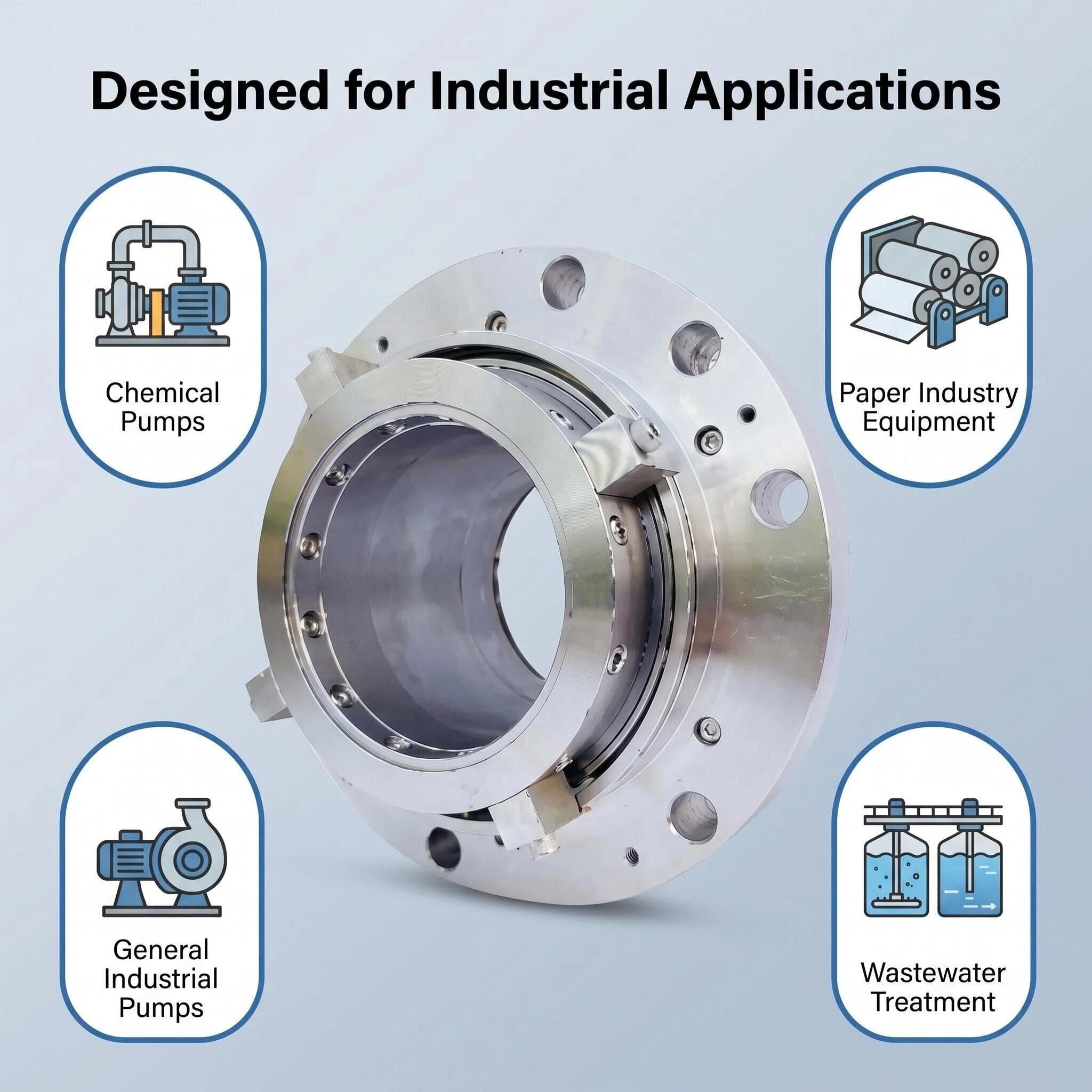
In industries where slurry pumps operate under extreme conditions — handling abrasive particles, corrosive chemicals, and high-pressure flows — the mechanical seal is one of the most critical components determining whether operations run smoothly or grind to a costly halt. A mechanical seal that is poorly matched to the application will fail prematurely, causing unplanned downtime, environmental hazards, and significant maintenance expenses. Understanding why the right mechanical seal selection matters is not just a technical exercise; it is a core business decision that directly impacts operational reliability and profitability.
Slurry pump environments are uniquely demanding. Unlike clean-water pumps, slurry pumps move mixtures laden with solid particles that can erode sealing faces, clog flush lines, and accelerate wear in ways that conventional sealing solutions were never designed to handle. The mechanical seal chosen for such applications must be engineered to endure these realities, not simply meet a generic specification. In this article, we explore the reasons why the right mechanical seal choice is so consequential for slurry pump reliability, and what factors should guide that decision.
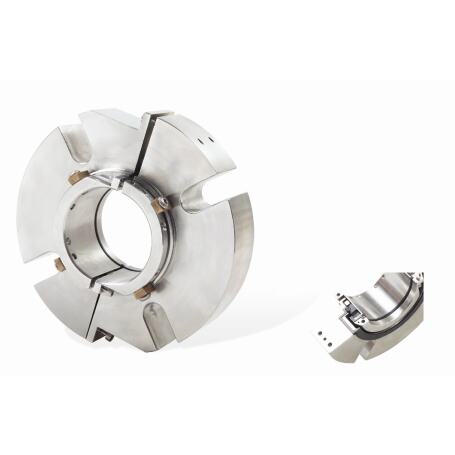
The Role of a Mechanical Seal in Slurry Pump Operation
How a Mechanical Seal Functions Under Slurry Conditions
A mechanical seal creates a dynamic barrier between the rotating pump shaft and the stationary housing, preventing process fluid from leaking into the environment or the bearing assembly. In a slurry pump, this task is vastly more complicated than in standard pump applications. The sealed fluid contains solid particles that continuously attack the sealing faces, wearing them down at an accelerated rate compared to clean-service seals.
The face materials of a mechanical seal must maintain precise contact under these conditions. When abrasive slurry infiltrates the sealing gap, it acts as a lapping compound, rapidly degrading the faces and leading to leakage. A well-selected mechanical seal uses face materials and geometries specifically designed to resist this kind of abrasion, maintaining an effective seal life that justifies its installation cost.
Beyond face wear, the mechanical seal must also accommodate shaft runout, vibration, and thermal expansion that are common in high-load slurry pump operation. These dynamic stresses can break the sealing film if the component is not engineered with adequate flexibility and dimensional tolerance. Choosing a mechanical seal with the right spring configuration and gland design is therefore essential to long-term function.
Why Generic Seals Fail in Slurry Environments
Many operators make the mistake of installing a standard mechanical seal — designed for clean or mildly contaminated fluids — into a slurry pump. The consequences are predictable and costly. Generic seals lack the hardened face materials, flush system compatibility, and robust secondary sealing elements needed to survive in particle-laden, high-wear environments.
In practice, a mismatched mechanical seal in a slurry pump may last only a fraction of its rated service life. Premature failure leads to process fluid leakage, bearing contamination, and shaft sleeve damage — all of which multiply the total cost of the original sealing error. The repair and replacement costs far exceed the modest savings made by choosing a lower-specification seal at the outset.
Furthermore, in applications involving toxic, hazardous, or environmentally regulated slurries, a failing mechanical seal creates compliance risks in addition to operational ones. Regulatory penalties, environmental cleanup obligations, and reputational damage can all trace back to a single poor sealing decision made at the specification stage.
Key Factors That Determine Mechanical Seal Suitability for Slurry Pumps
Face Material Selection and Hardness
The single most important design factor for a mechanical seal in slurry service is the hardness and wear resistance of the sealing faces. Silicon carbide is widely regarded as the preferred face material for slurry applications because of its exceptional hardness, which allows it to resist the abrasive action of solid particles in the process stream. Tungsten carbide is another common choice, offering high toughness alongside hardness.
The pairing of face materials also matters significantly. A hard-on-hard face combination — such as silicon carbide against silicon carbide — is often preferred in heavy slurry service because both faces wear at a similar, controlled rate rather than allowing rapid degradation of one softer component. The right mechanical seal will specify face material pairings based on the specific abrasivity, particle size, and chemistry of the slurry being handled.
Material selection for the secondary sealing elements — O-rings, bellows, and gaskets — must also account for chemical compatibility with the slurry chemistry. Elastomers that swell, harden, or degrade in contact with the process fluid will compromise the mechanical seal's integrity regardless of how well-chosen the primary faces are.
Seal Configuration and Flush Arrangements
Beyond materials, the configuration of the mechanical seal must be matched to the slurry pump's operating environment. Single mechanical seals are suitable for less aggressive slurry applications where particle size is small and concentration is moderate. Double or tandem mechanical seal configurations are typically required for highly abrasive, high-concentration slurries or where environmental containment is mandated.
Flush arrangements play a critical supporting role. A Plan 32 flush — injecting clean fluid from an external source into the seal chamber — is commonly used to keep abrasive particles away from the sealing faces. Without proper flushing, even a well-specified mechanical seal will suffer accelerated wear as particles accumulate around the sealing interface. The flush design must be integrated into the overall mechanical seal selection process, not treated as an afterthought.
Gland design also contributes to reliability. A mechanical seal gland that allows easy inspection, adjustment, and replacement reduces the labor burden associated with maintenance activities, minimizing the downtime impact of routine or corrective service intervals.
The Reliability Impact of Mechanical Seal Selection
Downtime Costs Driven by Seal Failures
The connection between mechanical seal reliability and overall plant uptime is direct and significant. In continuous-process industries such as mining, mineral processing, and chemical manufacturing, slurry pumps often run around the clock. When a mechanical seal fails, the pump must be taken offline for inspection and repair — a process that can consume many hours and disrupt production schedules.
In high-value production environments, the cost of unplanned downtime caused by a mechanical seal failure can be orders of magnitude greater than the cost of the seal itself. A single failure event may involve lost production, emergency labor costs, expedited parts procurement, and potential damage to adjacent components like bearings and shafts that were exposed to leaked slurry.
Plants that invest in correctly specified mechanical seals — matched to the actual operating conditions of their slurry pumps — consistently report longer mean time between failures and lower total maintenance expenditure. The reliability gains from proper mechanical seal selection compound over time, delivering measurable reductions in lifecycle operating costs.
Predictive Maintenance and Seal Performance Monitoring
Choosing the right mechanical seal also enables more effective predictive maintenance strategies. When a seal is properly matched to its application, its wear behavior becomes predictable, allowing maintenance teams to schedule replacements based on service hours or condition monitoring data rather than reacting to unexpected failures.
Modern slurry pump installations increasingly incorporate seal flush flow monitoring, temperature sensors, and leakage detection systems that work in conjunction with the mechanical seal to provide early warning of developing problems. These condition monitoring approaches are most effective when the underlying mechanical seal design is stable and well-matched to the pump's duty, because anomalies in sensor readings are then clearly attributable to actual seal degradation rather than noise from an inherently mismatched component.
The ability to plan maintenance proactively, rather than reactively, represents a substantial operational advantage in asset-intensive industries. The right mechanical seal is therefore not only a reliability component — it is an enabler of smarter, data-driven maintenance practices that reduce total cost of ownership across the pump's service life.
Evaluating Mechanical Seal Suppliers and Specifications
What to Look for in a Mechanical Seal Designed for Slurry Service
When evaluating a mechanical seal for slurry pump applications, procurement and engineering teams should focus on several specific technical criteria. Face material hardness ratings, secondary seal material compatibility data sheets, and documented service experience in comparable slurry duties are the most important starting points for any evaluation.
The dimensional envelope of the mechanical seal must match the pump's seal chamber geometry, including bore diameter, gland dimensions, and shaft size. A mechanically sound seal that does not fit the installation envelope is no more useful than an undersized one. Seal suppliers should be able to provide detailed dimensional documentation and, where necessary, custom-engineered solutions for non-standard pump geometries.
Application support is another critical differentiator. Suppliers who offer technical consultation based on actual slurry properties — including particle size distribution, pH, temperature, and solids concentration — are far better positioned to recommend the right mechanical seal than those who rely solely on catalog-based selection. The complexity of slurry environments demands this higher level of application engineering.
Total Cost of Ownership Versus Initial Purchase Price
A common procurement error in industrial environments is evaluating mechanical seal options solely on initial purchase price. In slurry pump applications, a lower-cost seal that fails in three months will cost far more in total than a higher-specification seal that delivers twelve or eighteen months of reliable service. Total cost of ownership calculations must account for seal replacement frequency, associated labor costs, downtime exposure, and the risk of secondary damage to the pump.
Engineering teams and procurement managers who adopt a lifecycle cost perspective when specifying a mechanical seal will consistently make better decisions than those focused on unit price alone. This perspective is increasingly recognized in maintenance best practices frameworks and is central to asset integrity management programs in industries where slurry pump reliability is operationally critical.
Documenting the performance of mechanical seals in service — tracking failure dates, failure modes, and associated costs — creates the evidence base needed to justify investment in higher-performance sealing solutions. Organizations that build this data foundation are able to make increasingly confident mechanical seal selections over time, continuously improving their slurry pump reliability outcomes.
FAQ
What makes a mechanical seal suitable for slurry pump applications?
A mechanical seal designed for slurry pump service must use hard, abrasion-resistant face materials such as silicon carbide or tungsten carbide, along with secondary sealing elements that are chemically compatible with the process fluid. The configuration — single, double, or tandem — must be matched to the severity of the slurry, and the flush arrangement must be designed to keep abrasive particles away from the sealing faces. All of these factors together determine whether the mechanical seal will deliver reliable service life in slurry conditions.
How does a failed mechanical seal affect slurry pump reliability?
When a mechanical seal fails in a slurry pump, it typically causes process fluid to leak past the sealing faces, contaminating the bearing housing and potentially damaging the shaft sleeve. This forces an unplanned pump shutdown for inspection and repair. In continuous-process environments, even a short unplanned stoppage can result in significant lost production value. Repeated seal failures compound these costs and indicate a fundamental mismatch between the seal specification and the operating conditions.
Can a standard mechanical seal be used in a slurry pump if the slurry is dilute?
In very low-concentration, fine-particle slurry applications, a standard mechanical seal with appropriate face materials may perform adequately if supported by a proper flush arrangement. However, the threshold for 'dilute enough to use standard seals' is lower than many operators assume, and the consequences of getting it wrong are costly. It is generally advisable to consult with a mechanical seal application engineer before defaulting to a standard seal in any slurry service, even apparently mild ones.
How often should a mechanical seal in a slurry pump be replaced?
Replacement intervals for a mechanical seal in slurry service depend heavily on the abrasivity of the slurry, operating speed, seal face materials, and the effectiveness of the flush arrangement. Well-specified seals in moderate slurry service may achieve twelve to eighteen months of reliable operation, while severe-duty applications may require more frequent replacement. Establishing a condition monitoring program — using flush flow, temperature, or leakage indicators — allows maintenance teams to schedule replacements predictively rather than waiting for failure to occur.