
 EN
EN
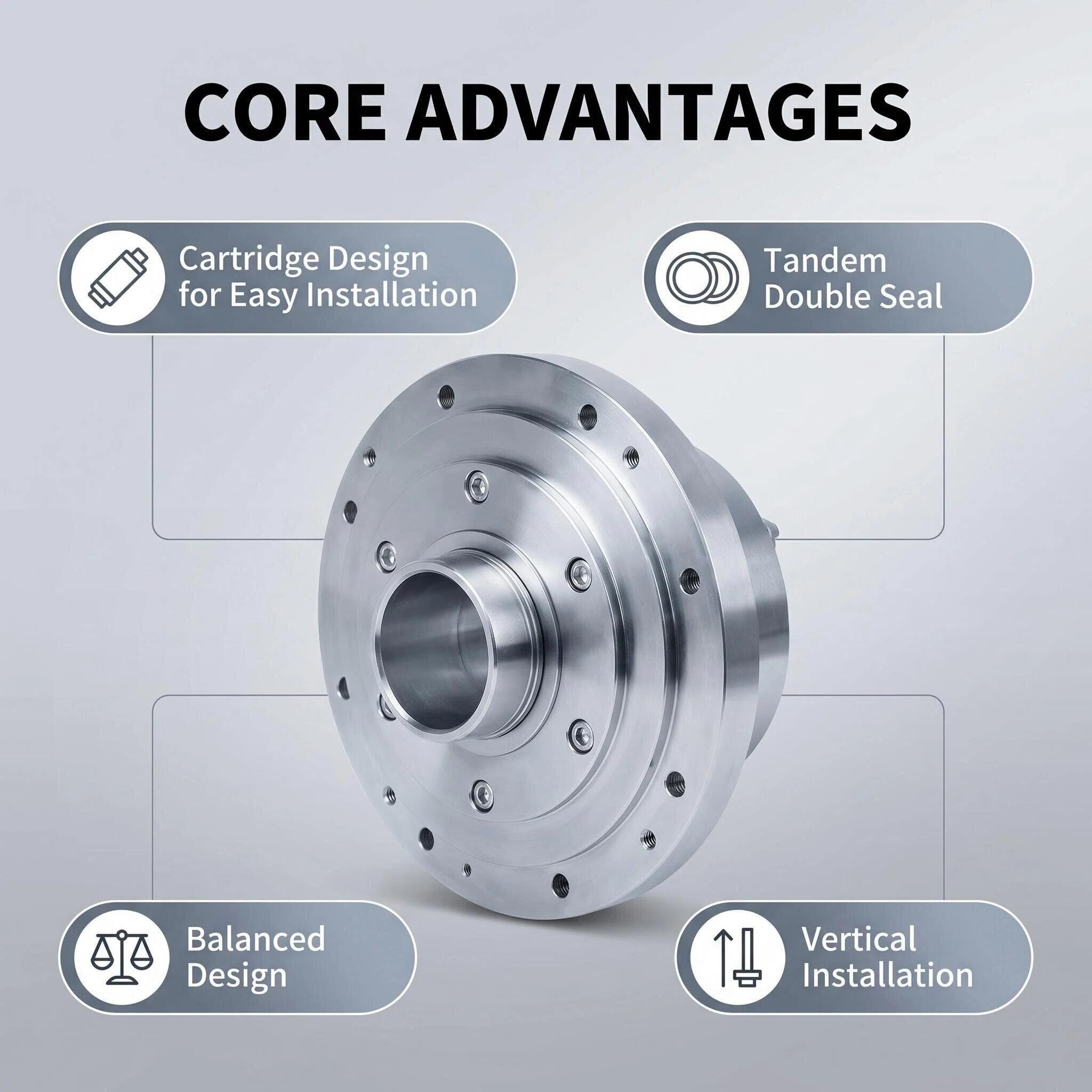
In the most demanding industrial environments — mining operations, mineral processing plants, wastewater treatment facilities, and chemical manufacturing sites — equipment reliability is everything. Among the most critical yet frequently overlooked components in these systems are slurry pump mechanical seals. These precision-engineered components prevent leakage, protect bearings, and keep the entire pump assembly running efficiently. Yet they are also the components most likely to fail prematurely when the wrong design or material is used in harsh service conditions.
Understanding what makes slurry pump mechanical seals last longer is not just a technical curiosity — it is a business-critical priority. Frequent seal failures mean unplanned downtime, costly replacements, and significant risks to process continuity. This article examines the key design and material features that separate long-lasting seals from short-lived ones, and explains why each feature matters specifically in tough slurry-handling conditions.
The Harsh Reality of Slurry Pump Operating Conditions
Why Slurry Environments Are So Destructive to Seals
Slurry is not simply dirty water. It is a mixture of liquids and abrasive solid particles — often including sand, gravel, ore fines, coal dust, ash, or chemical precipitates — that creates an extremely aggressive operating environment for any mechanical component. Slurry pump mechanical seals are directly exposed to this mixture, and without the right design features, wear and failure can occur within weeks or even days.
The primary threats to slurry pump mechanical seals include abrasive particle ingress into the sealing faces, chemical attack from acidic or alkaline slurries, thermal degradation from heat generated at the seal interface, and vibration-induced misalignment. Each of these mechanisms works individually and in combination to accelerate wear, increase leakage rates, and ultimately cause catastrophic seal failure.
Operators who understand these threats are better positioned to evaluate which seal features genuinely extend service life and which are simply marketing language. The right seal choice begins with a clear-eyed assessment of the specific slurry characteristics — particle size distribution, pH level, solid concentration, and temperature range — before any seal selection is made.
The Real Cost of Premature Seal Failure
When slurry pump mechanical seals fail ahead of schedule, the consequences extend well beyond the cost of a replacement seal. Unplanned pump shutdowns can halt entire processing lines, causing production losses that are often many times more expensive than the seal itself. Environmental spills from failed seals can trigger regulatory penalties and cleanup obligations. Bearing damage from leaking slurry can escalate a simple seal replacement into a full pump rebuild.
In high-throughput operations such as gold processing plants or phosphate mining facilities, even a few hours of downtime per month adds up to significant revenue loss over a calendar year. This is precisely why investing in slurry pump mechanical seals with verified longevity features is a financially sound decision, not just an engineering preference.
Material Selection as the Foundation of Seal Longevity
Hard Face Materials That Resist Abrasion
The single most impactful design decision affecting the longevity of slurry pump mechanical seals is the choice of sealing face materials. In clean water applications, softer face combinations such as carbon against ceramic perform adequately. But in slurry service, abrasive particles become embedded in or trapped between the sealing faces, causing rapid wear if the face material is not sufficiently hard.
Silicon carbide (SiC) is widely regarded as the benchmark material for slurry applications. With a hardness rating that far exceeds traditional ceramic materials, silicon carbide faces can withstand the grinding action of abrasive particles without significant material loss. Both sintered silicon carbide and reaction-bonded silicon carbide variants are used in slurry pump mechanical seals, each offering different balances of hardness, fracture toughness, and chemical resistance.
Tungsten carbide is another option for extremely aggressive slurries, particularly those with coarse particle sizes or high solid concentrations. Its exceptional hardness and toughness make it well-suited for conditions where silicon carbide's relative brittleness could be a concern. Matching the correct hard face material combination to the specific slurry type is a critical engineering step that directly determines seal service life.
Elastomer and Secondary Seal Material Compatibility
Hard face materials get most of the attention, but the secondary sealing elements — O-rings, bellows, and drive components — are equally important in determining how long slurry pump mechanical seals last. These elastomeric components must resist chemical attack, thermal cycling, and dynamic movement without cracking, swelling, or losing their sealing properties.
Viton (FKM) is the default choice for acidic or hydrocarbon-bearing slurries, offering excellent resistance to a broad spectrum of chemicals and temperatures up to approximately 200°C. EPDM is preferred for alkaline slurries and applications involving water-based processing. In highly aggressive chemical environments, PTFE-encapsulated secondary seals or FFKM materials may be specified to ensure that slurry pump mechanical seals maintain their integrity across the entire service interval.
Material compatibility charts should always be consulted and cross-referenced against the actual slurry chemistry. A mismatch between the elastomer material and the process fluid is one of the most common causes of premature seal failure, and it is entirely preventable with proper specification.
Design Features That Protect Sealing Faces in Slurry Service
Cartridge Seal Design for Simplified Installation and Alignment
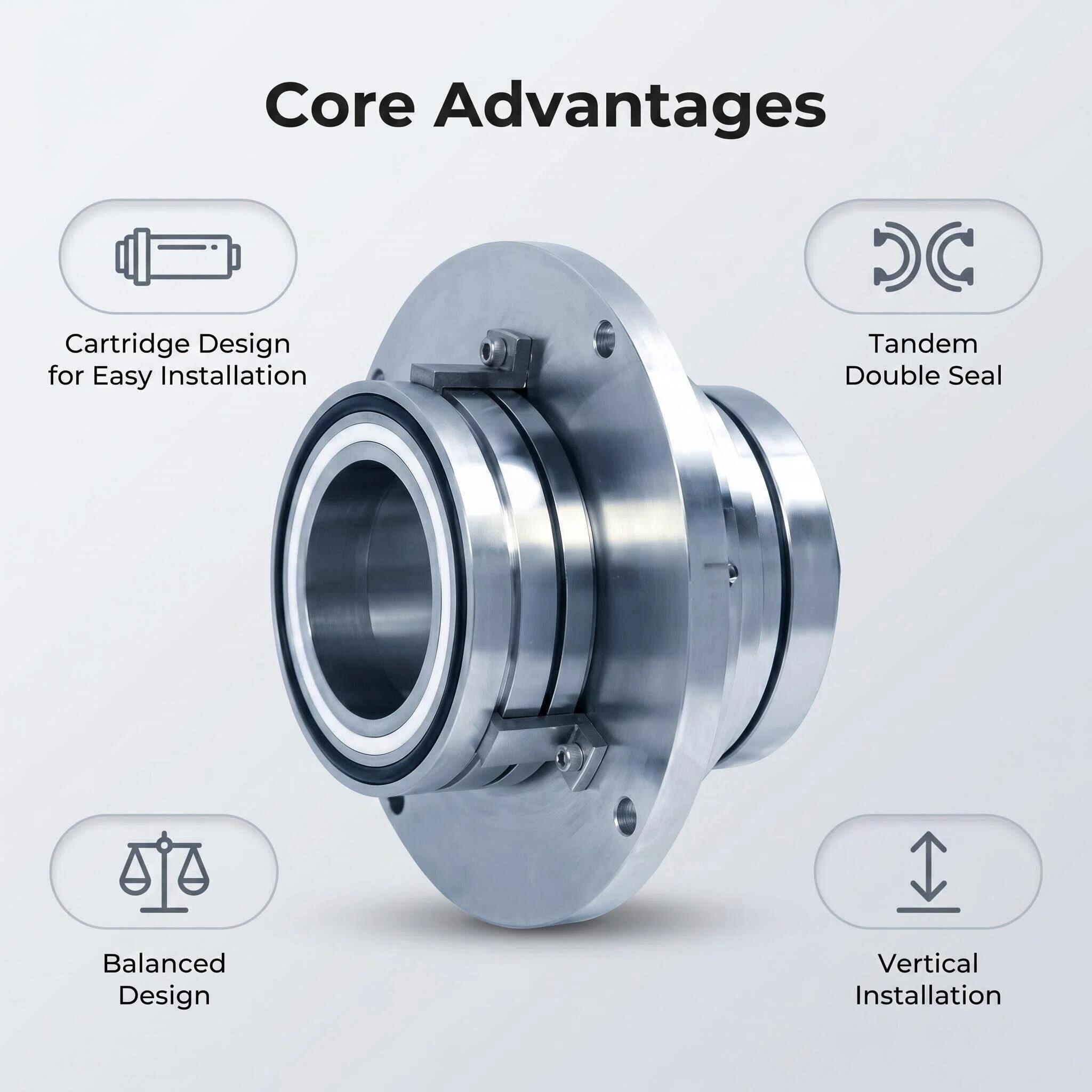
One of the most valuable design features in modern slurry pump mechanical seals is the cartridge configuration. Unlike component seals that require careful measurement and adjustment during installation, cartridge seals arrive as a pre-assembled, pre-set unit. The critical spring compression and face alignment are already established at the factory, eliminating installation errors that can lead to premature face wear or inadequate sealing force.
In busy industrial maintenance environments where speed and consistency matter, the cartridge design ensures that every seal replacement delivers the same baseline performance regardless of the individual technician's experience level. For slurry pump mechanical seals specifically, precise face alignment is non-negotiable — even minor misalignment creates uneven contact patterns that accelerate wear and cause early failure.
The slurry pump mechanical seals available in cartridge format typically include integrated throat bushings, gland plates, and flush ports, making them suitable for direct installation without additional machining or custom fitting work. This integration reduces total installation time and lowers the risk of human error during pump maintenance turnarounds.
Flush Plan Compatibility and Internal Pumping Features
In many slurry applications, the standard approach of running the process fluid across the seal face is not viable because the abrasive particles in the slurry accelerate face wear exponentially. Instead, a seal flush plan introduces a clean barrier or flush fluid into the seal chamber to create a zone of cleaner lubrication at the sealing interface. This dramatically extends the life of slurry pump mechanical seals by keeping abrasive particles away from the critical contact zone.
Some advanced seal designs incorporate an integral pumping ring or spiral groove pattern into the rotating face. This feature generates a centrifugal pumping action that draws clean flush fluid toward the sealing faces while simultaneously expelling any abrasive particles that attempt to enter the seal chamber. For high-solid-content slurries, this self-cleaning action is one of the most effective engineering solutions for extending seal life without requiring complex external flushing systems.
Understanding and specifying the correct API flush plan — whether Plan 32 for external flush, Plan 13 for recirculation, or Plan 53 for pressurized barrier fluid — is an essential step in ensuring that slurry pump mechanical seals operate under the conditions they were designed for. Incorrect flush plan selection, or failure to maintain flush fluid quality and flow rate, will undermine even the most robust seal design.
Mechanical Robustness Features for Demanding Service Cycles
Spring Design and Corrosion Resistance
The drive and closing mechanism of slurry pump mechanical seals must maintain consistent face contact pressure across the entire operating range, including during startup, shutdown, and load fluctuations. In slurry service, this is complicated by the fact that springs and drive components are exposed to aggressive fluids that can cause corrosion, scaling, or particle build-up that interferes with spring movement.
Single coil springs are often preferred over multiple small springs in slurry applications precisely because they are less susceptible to clogging with solid particles. However, their correct specification — in terms of spring force, diameter, and material — is critical. Hastelloy C and 316 stainless steel are common spring materials for slurry pump mechanical seals, offering good corrosion resistance in most mineral processing and chemical environments.
Some designs relocate the spring outside the process fluid zone entirely, protecting it from both chemical attack and particle accumulation. This 'outside-mounted spring' configuration is particularly effective in highly corrosive or extremely high-solid-content slurries where internal spring integrity cannot be reliably maintained over long service intervals.
Vibration Tolerance and Shaft Deflection Compensation
Slurry pumps are among the most vibration-prone rotating equipment in any processing plant. Unbalanced impeller loading, recirculation effects, and mechanical imbalance from worn wear rings all generate vibration that transmits directly to the seal assembly. Slurry pump mechanical seals that are not designed to accommodate this dynamic environment will experience fretting, face separation, and spring fatigue that dramatically shorten their operational life.
Flexible drive mechanisms, bellows designs, and self-aligning gland configurations are engineering solutions that allow slurry pump mechanical seals to absorb vibration and compensate for dynamic shaft movement without compromising face contact. These features are particularly important in large centrifugal slurry pumps where shaft deflection under load can be several tenths of a millimeter — well within the range that can cause conventional rigid seal designs to fail prematurely.
Selecting seals with adequate axial movement compensation also protects against the consequences of thermal expansion and impeller adjustment, both of which alter the effective shaft position during operation. A seal with insufficient axial travel will either open the faces — causing leakage — or over-compress them, causing accelerated wear. For slurry pump mechanical seals, designing in sufficient axial float is a basic but frequently underappreciated longevity feature.
Seal Configuration Choices for Extended Service Life
Double Mechanical Seals for Maximum Protection
In the most challenging slurry applications — high-temperature mineral processing, concentrated acid slurries, or pumps handling toxic or radioactive materials — a single mechanical seal may not provide adequate protection regardless of its material quality. In these cases, double slurry pump mechanical seals with a pressurized barrier fluid represent the most reliable engineering solution for achieving long-term leakage-free performance.
A double seal configuration places two seal faces in series, with a clean barrier fluid circulating between them at a pressure slightly higher than the process pressure. This arrangement ensures that even if the inboard seal face experiences some wear or momentary face separation, the outboard seal prevents any process fluid or slurry from escaping to atmosphere. For slurry pump mechanical seals, this redundancy translates directly into longer maintenance intervals and higher confidence in environmental compliance.
The barrier fluid system requires a reliable supply at the correct pressure differential, which adds complexity to the installation. However, in high-value or high-risk applications, this complexity is a worthwhile trade-off for the dramatically improved seal reliability and service life that double seal configurations provide. Many facilities operating in regulated environments mandate double seal configurations as a standard engineering requirement.
Throttle Bushings and Seal Chamber Design Optimization
The geometry of the seal chamber itself has a significant impact on how long slurry pump mechanical seals last in service. A well-designed seal chamber provides adequate space for flush fluid circulation, prevents dead zones where solids can accumulate, and minimizes the ingress of high-velocity slurry from the pump casing into the sealing area.
Throttle bushings — hardened, close-clearance components installed at the pump-side end of the seal chamber — play a critical role in this optimization. By restricting the flow of abrasive slurry from the pump casing into the seal zone, a properly sized throttle bushing reduces the solid particle load that reaches the sealing faces. For slurry pump mechanical seals, the throttle bushing is a simple but highly effective first line of defense against abrasive wear.
Seal chamber modifications such as enlarged bore designs, tangential flush entry ports, and tapered bore geometries all contribute to improved solid particle management within the sealing environment. These design details may seem minor, but their cumulative effect on the longevity of slurry pump mechanical seals in high-solid applications is well-documented in maintenance records across multiple industries.
FAQ
How often should slurry pump mechanical seals be replaced in heavy-duty applications?
Replacement intervals vary widely based on slurry characteristics, operating pressures, and seal design quality. In moderate slurry service with properly designed slurry pump mechanical seals and an effective flush plan, intervals of 12 to 24 months are achievable. In highly abrasive or chemically aggressive conditions, intervals may be shorter unless upgraded seal materials and configurations are specified. Monitoring seal flush flow rates, leakage rates, and vibration levels provides early warning of impending seal failure and helps optimize replacement scheduling.
What is the most common cause of early failure in slurry pump mechanical seals?
Abrasive particle ingress into the sealing face zone is the single most common cause of premature failure in slurry pump mechanical seals. This is typically a result of inadequate or failed flush systems, incorrect seal chamber geometry, or the selection of face materials that are too soft for the abrasive particle hardness in the slurry. Secondary causes include chemical incompatibility between the elastomers and the process fluid, installation-induced misalignment, and operating the pump outside its design envelope, which generates excessive vibration and shaft deflection.
Can slurry pump mechanical seals be used as a direct replacement for packing glands?
Yes, slurry pump mechanical seals can be retrofitted onto many pumps that were originally designed for packing glands, though the conversion requires attention to seal chamber dimensions, shaft diameter, and the availability of a suitable flush plan connection. The benefits of conversion are significant — mechanical seals eliminate the continuous water flush loss and the regular packing adjustment required with gland packing, and they provide a far more reliable leakage-free barrier in most operating conditions. A dimensional and hydraulic assessment of the pump is recommended before any packing-to-seal conversion project.
Does flush water quality affect the lifespan of slurry pump mechanical seals?
Flush water quality has a direct and measurable impact on the longevity of slurry pump mechanical seals. Flush water containing abrasive particles, high dissolved solids, or aggressive chemicals can cause wear or corrosion at the sealing faces even when the primary function of the flush is to protect against process slurry ingress. Clean, particle-free water at an appropriate pressure — typically 0.1 to 0.2 MPa above the seal chamber pressure — is the recommended standard for most slurry applications. Using recycled process water as flush fluid without adequate filtration is a common but avoidable cause of accelerated seal wear.
Table of Contents
- The Harsh Reality of Slurry Pump Operating Conditions
- Material Selection as the Foundation of Seal Longevity
- Design Features That Protect Sealing Faces in Slurry Service
- Mechanical Robustness Features for Demanding Service Cycles
- Seal Configuration Choices for Extended Service Life
-
FAQ
- How often should slurry pump mechanical seals be replaced in heavy-duty applications?
- What is the most common cause of early failure in slurry pump mechanical seals?
- Can slurry pump mechanical seals be used as a direct replacement for packing glands?
- Does flush water quality affect the lifespan of slurry pump mechanical seals?