
 EN
EN
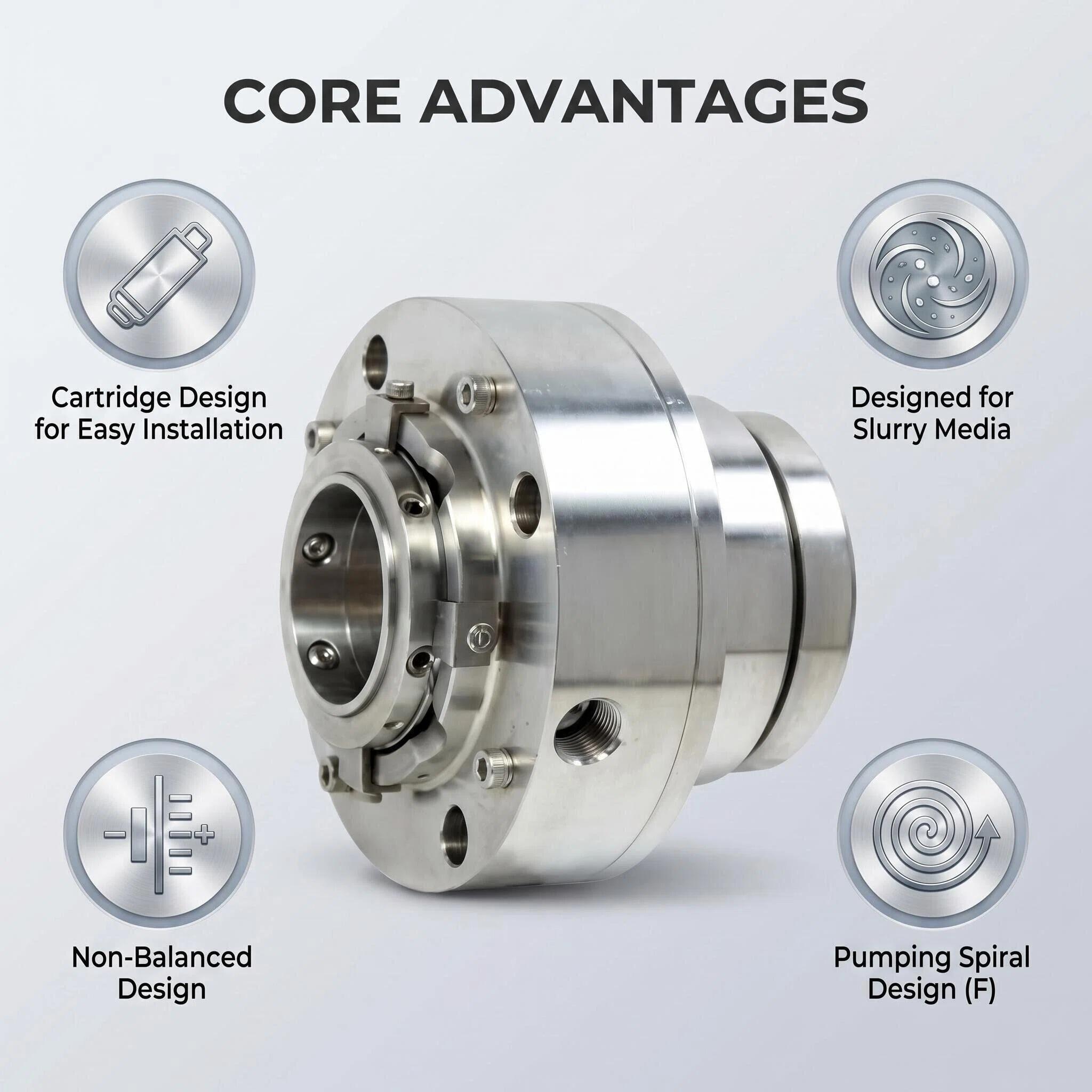
In mining and industrial processing environments, equipment reliability is not a convenience — it is a production necessity. Among the many components that keep heavy-duty fluid handling systems operational, slurry pump mechanical seals occupy a uniquely critical position. These seals are responsible for containing abrasive, corrosive, and high-density slurries that would otherwise escape the pump housing, causing equipment failure, environmental contamination, and costly downtime. Understanding what makes them essential begins with recognizing the extreme conditions they are designed to endure.
The mining and mineral processing sectors deal with fluid streams that are far more aggressive than what standard pump seals are designed to handle. Slurry mixtures containing ore particles, tailings, chemical reagents, and water at varying temperatures place immense stress on every rotating component. slurry pump mechanical seals are engineered specifically to withstand these punishing conditions, serving as the first and most important line of defense between the pump's internal wetted components and the external environment. Their role extends beyond simple leakage prevention — they protect shaft integrity, reduce maintenance frequency, and preserve overall system efficiency.
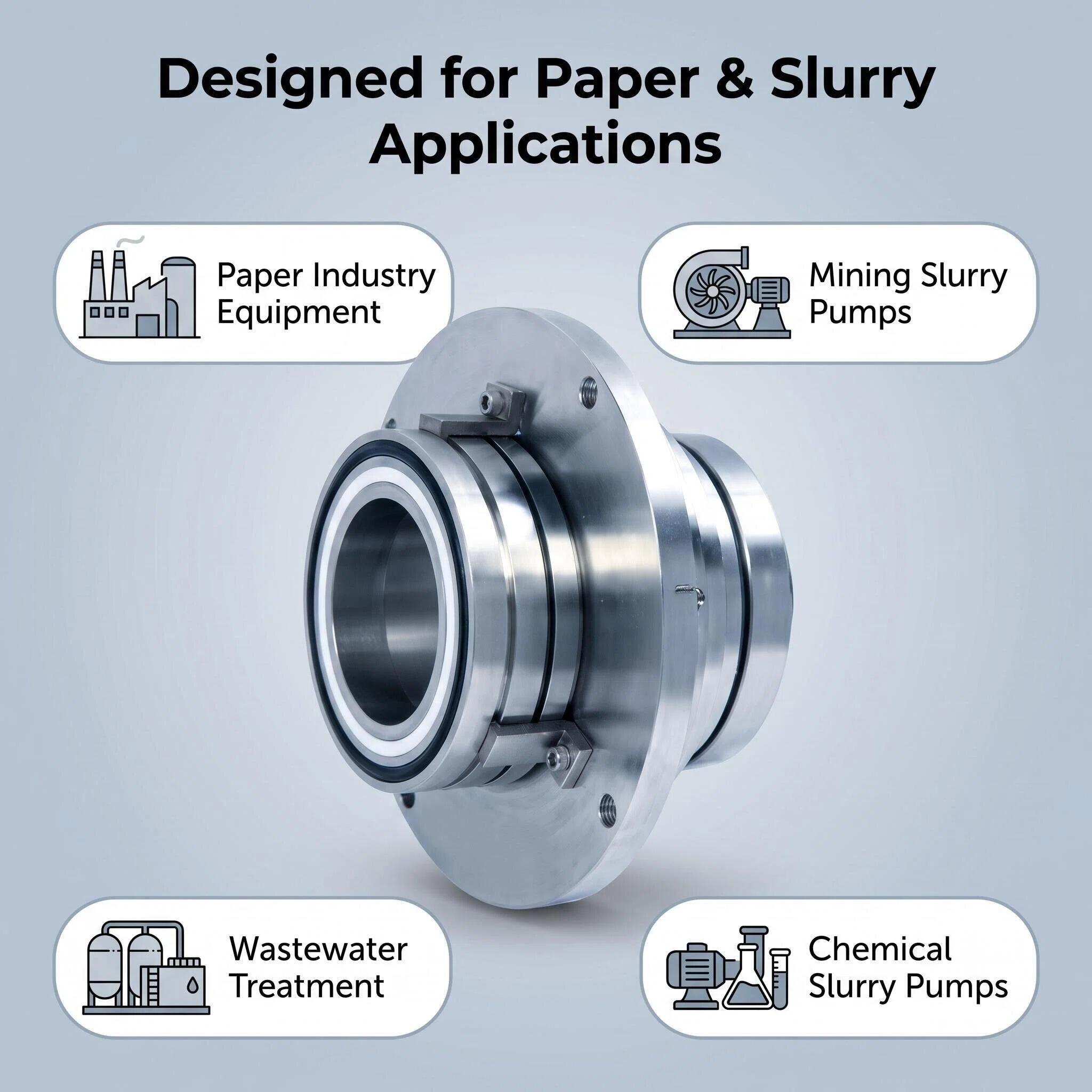
The Unique Operating Demands of Mining and Processing Environments
Abrasive Particle Exposure and Wear Resistance
Mining slurries are inherently laden with solid particles ranging from fine mineral dust to coarse aggregate fragments. These particles are constantly circulating through the pump at high velocities, and they inevitably interact with every internal surface, including the sealing faces. Standard mechanical seals used in clean-fluid applications would degrade rapidly under this kind of abrasive attack. Slurry pump mechanical seals are designed with hard-face materials such as silicon carbide, tungsten carbide, and specialized ceramic composites that maintain dimensional stability even when exposed to continuous particle impingement.
The hardness and surface finish of the seal faces are critical parameters. When abrasive particles infiltrate the seal interface, they can act as a grinding medium, accelerating wear and generating heat. High-quality slurry pump mechanical seals use precision-lapped faces with extremely tight flatness tolerances to minimize the gap through which particles can enter. This engineering approach directly reduces the rate of face wear and extends seal service life in abrasive slurry duty.
Beyond face materials, the seal design itself must account for particle intrusion from the process side. Flush arrangements, throat bushings, and expeller mechanisms are frequently integrated into the seal assembly to manage the flow of particles near the sealing interface. These features work in combination to ensure that slurry pump mechanical seals continue performing reliably even in the most particle-dense processing streams encountered in mineral beneficiation plants and mine dewatering operations.
Corrosive Chemical Compatibility
Beyond abrasion, mining and processing slurries frequently contain aggressive chemical compounds. Leach solutions in hydrometallurgical processes, flotation reagents, acidic mine water, and alkaline thickener underflows all present significant chemical compatibility challenges. The elastomers, metals, and face materials used in slurry pump mechanical seals must be selected to resist chemical degradation across this wide range of pH values and fluid compositions.
Secondary sealing elements such as O-rings and bellows are particularly vulnerable to chemical attack. Materials like Viton, EPDM, Kalrez, and PTFE are chosen based on their compatibility with the specific chemical environment. A mismatch between elastomer chemistry and the process fluid can lead to swelling, cracking, or extrusion of the secondary seal, resulting in rapid seal failure. Proper material selection for slurry pump mechanical seals is therefore not a minor engineering detail but a fundamental determinant of operational reliability.
How Slurry Pump Mechanical Seals Protect Mining Equipment and Operations
Preventing Catastrophic Shaft Damage
The shaft is one of the most expensive and structurally critical components of any slurry pump. When sealing integrity is compromised, abrasive slurry migrates along the shaft, causing erosion, fretting corrosion, and premature bearing failure. Slurry pump mechanical seals create a robust barrier that prevents this migration, protecting the shaft sleeve, bearings, and coupling from premature wear. In high-value mining pumps handling dense tailings or mill discharge slurries, the cost of a damaged shaft assembly can far exceed the cost of a complete set of seal replacements.
Properly functioning slurry pump mechanical seals also reduce the risk of catastrophic shaft seizure events. When abrasive ingress progresses unchecked, the resulting wear debris can accumulate in bearing housings and accelerate failure in a cascade sequence. Reliable sealing prevents this failure chain from initiating, giving maintenance teams time to plan predictive interventions rather than responding to emergency breakdowns. This protective function has direct implications for mine production continuity and overall equipment effectiveness.
Controlling Environmental and Workplace Safety Hazards
Slurry leakage is not only a mechanical problem — it is a safety and environmental compliance issue. Process slurries in mining operations may contain heavy metals, toxic reagents, and fine particulate matter that pose risks to workers and the surrounding environment. Slurry pump mechanical seals that maintain reliable containment prevent these materials from escaping to sumps, pump pads, and drainage channels where they could contaminate groundwater or create hazardous working conditions.
Regulatory frameworks governing mining site operations increasingly mandate zero or near-zero leakage from fluid handling equipment. Facilities that fail to meet these standards face operational penalties, regulatory scrutiny, and reputational risks. Investing in high-performance slurry pump mechanical seals is therefore aligned with both operational and compliance objectives. The seal is not merely a mechanical component — it is an instrument of responsible and sustainable operations management in a heavily regulated industry.
Workplace hygiene and housekeeping are also directly influenced by seal performance. Plants with frequent seal failures tend to operate in conditions of chronic leakage, creating slippery floors, corrosion of structural steelwork, and accelerated degradation of adjacent equipment. By maintaining effective containment, slurry pump mechanical seals contribute to a cleaner, safer, and more productive working environment at mineral processing facilities.
Design Features That Define High-Performance Slurry Pump Mechanical Seals
Robust Face Loading and Spring Mechanisms
The contact force between seal faces must be carefully controlled to achieve the right balance between leakage prevention and face wear. Too little contact force allows fluid film breakdown and leakage; too much force generates excessive heat and accelerates face wear in abrasive service. Slurry pump mechanical seals designed for mining duty typically incorporate multiple springs or single coil springs in configurations that maintain consistent face loading across the full range of shaft deflection and axial movement encountered during operation.
In heavy-duty slurry applications, spring-loaded designs must also resist clogging from solid particles. Multiple small springs are sometimes replaced by single large-pitch coil springs or wave springs that provide better particle clearance. Some advanced slurry pump mechanical seals use elastomeric bellows in place of springs, eliminating the clogging risk entirely while maintaining axial compliance. The choice of spring mechanism reflects a careful engineering trade-off based on the specific slurry characteristics and operating conditions at each installation site.
Seal Arrangement and Flush Plan Selection
The arrangement in which slurry pump mechanical seals are configured has a substantial impact on their suitability for different slurry types and severity levels. Single seals with a throat bushing and API Plan 1 or Plan 3 flush arrangements are commonly used for moderate-duty slurry service where particle size and concentration are manageable. In more aggressive duties, double mechanical seals with a barrier fluid system provide an additional layer of protection by keeping clean, pressurized fluid between the two seal faces, completely isolating them from the process slurry.
Expeller or centrifugal seal arrangements offer a dynamic alternative that uses a rotating impeller to generate a pressure zone that prevents slurry from reaching the seal faces. This approach is well-suited to high-solids, coarse-particle slurries where conventional flush plans struggle to maintain clean conditions at the seal interface. The selection of the appropriate seal arrangement for a specific mining application requires a detailed analysis of slurry properties, pump operating conditions, and available utilities. Correctly specifying slurry pump mechanical seals at the design stage is always preferable to adapting an inappropriate seal after installation problems emerge.
The Commercial and Operational Value of Investing in Quality Slurry Pump Mechanical Seals
Reducing Total Cost of Ownership
When procurement decisions for slurry pump mechanical seals are made purely on the basis of initial purchase price, the result is often false economy. Lower-quality seals may carry a smaller unit cost, but their shorter service life, higher replacement frequency, and contribution to collateral equipment damage result in significantly higher total expenditure over the lifecycle of the pump. In high-throughput mining circuits where pumps run continuously for months between planned shutdowns, seal reliability has a direct and measurable impact on cost per tonne of material processed.
Maintenance labor is a significant but often underestimated cost component. Each seal replacement event requires pump isolation, draining, disassembly, and recommissioning. In remote mine site operations where skilled maintenance personnel are costly and limited in availability, reducing the frequency of seal-related interventions has a compounding positive effect on maintenance budget utilization. High-performance slurry pump mechanical seals that deliver longer service intervals between replacements directly reduce this burden.
Supporting Continuous Process Throughput
Mining and mineral processing operations are designed around continuous production flows. Unplanned pump stoppages disrupt these flows, creating production bottlenecks that ripple through crushing, grinding, flotation, and tailings handling circuits. Slurry pump mechanical seals that perform reliably under process conditions are a critical enabler of consistent throughput, allowing operations to meet their production schedules and recovery targets without the disruption of unplanned maintenance.
Planned maintenance windows at mining sites are carefully optimized to minimize lost production. When seal failures occur between planned shutdowns, the remedial work must either be completed during emergency downtime or deferred with the risk of further deterioration. Either outcome is commercially undesirable. Specifying slurry pump mechanical seals with service lives aligned to planned maintenance intervals transforms seal management from a reactive firefighting task into a predictable, budget-controlled maintenance activity that supports production planning and capital expenditure forecasting.
FAQ
What materials are typically used in slurry pump mechanical seals for mining applications?
The seal faces in mining-grade slurry pump mechanical seals are most commonly manufactured from silicon carbide, tungsten carbide, or alumina ceramic, chosen for their hardness and resistance to abrasive wear. Secondary sealing elements such as O-rings are typically made from Viton, EPDM, or PTFE depending on chemical compatibility requirements. Metal components including springs, gland plates, and sleeve hardware are usually fabricated from 316 stainless steel or higher-alloy grades to resist corrosion in acidic or saline slurry environments.
How often should slurry pump mechanical seals be replaced in a mining operation?
Replacement intervals for slurry pump mechanical seals vary considerably based on slurry characteristics, pump operating conditions, and seal design quality. In moderate-duty applications, well-specified seals may achieve service lives of six months to over a year. In very aggressive duties involving coarse, high-density, or chemically active slurries, replacement cycles may be shorter. The best practice is to align seal replacement with planned maintenance shutdowns and to monitor seal condition through regular leakage checks and bearing temperature trending to identify deterioration before catastrophic failure occurs.
What is the difference between a single and double arrangement for slurry pump mechanical seals?
A single seal arrangement uses one set of seal faces to contain the process slurry directly. A double arrangement uses two sets of seal faces with a barrier or buffer fluid circulating between them. In double arrangements, the barrier fluid keeps the inner seal faces clean and lubricated, preventing slurry particles from contacting the seal interface. This makes double-arrangement slurry pump mechanical seals more suitable for highly abrasive, toxic, or environmentally sensitive slurries where a single seal may not provide sufficient containment reliability.
Can slurry pump mechanical seals be retrofitted to existing pumps without major modifications?
In many cases, upgraded slurry pump mechanical seals can be retrofitted to existing pump frames without major structural modifications, particularly when the replacement seal is designed to match the original shaft diameter and gland bolt pattern. Some upgrades, such as converting from a packing arrangement to a mechanical seal, may require a modified seal housing or gland plate adapter. Consulting with a qualified seal engineer to review the pump dimensional drawings and operating parameters before specifying a retrofit seal is strongly recommended to ensure compatibility and performance alignment.
Table of Contents
- The Unique Operating Demands of Mining and Processing Environments
- How Slurry Pump Mechanical Seals Protect Mining Equipment and Operations
- Design Features That Define High-Performance Slurry Pump Mechanical Seals
- The Commercial and Operational Value of Investing in Quality Slurry Pump Mechanical Seals
-
FAQ
- What materials are typically used in slurry pump mechanical seals for mining applications?
- How often should slurry pump mechanical seals be replaced in a mining operation?
- What is the difference between a single and double arrangement for slurry pump mechanical seals?
- Can slurry pump mechanical seals be retrofitted to existing pumps without major modifications?