
 EN
EN
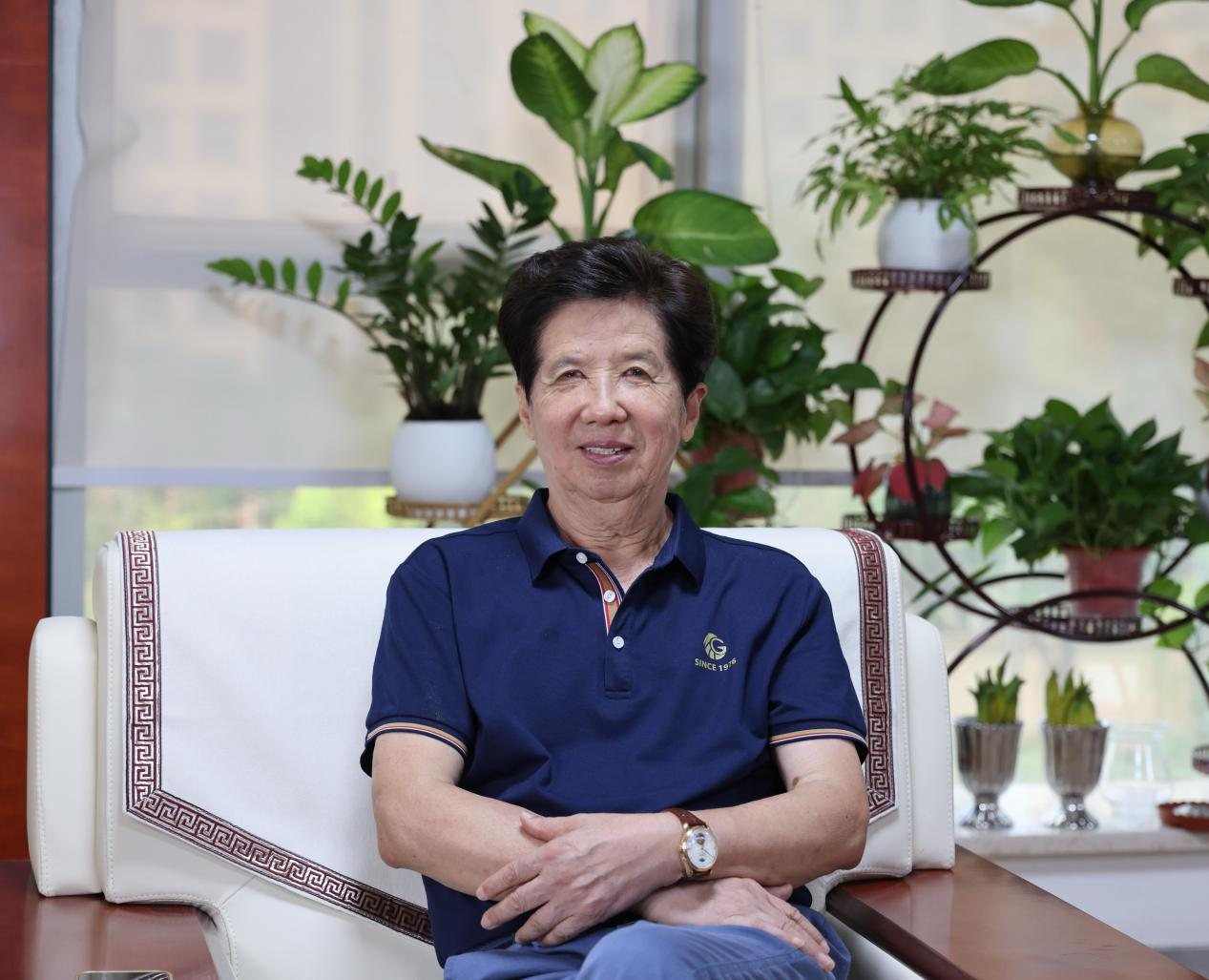
Conversation with the Founder
Unlocking the Secrets to Long-Lasting Mechanical Seals
In the operational system of industrial equipment, mechanical seals act as unsung heroes—quietly guarding the shaft ends of fluid transport equipment. They must prevent media leakage to ensure production safety while reducing friction loss to enhance energy efficiency. This seemingly small component is directly tied to the stable operation of core industrial sectors such as chemical processing, energy, and water treatment. Its technical level is even regarded as a key indicator of the precision and sophistication of equipment manufacturing.
Mr. Tong Hanquan, founder of Jiangsu Golden Eagle Fluid Machinery Co., Ltd., has dedicated 50 years to this field since 1976. Through decades of perseverance, he has witnessed the entire journey of domestic mechanical seals evolving from imitation to independent innovation. Today, we invited Chairman Tong to explore the effectiveness of mechanical seals—from fundamental principles to practical experience—unlocking the “secrets of longevity” for this critical component.
Reporter: Chairman Tong, with five decades in the mechanical seal industry, you have witnessed its development and transformations. Starting with the basics, what is the most critical factor in extending the service life of mechanical seals when operating in liquid media?
Chairman Tong: Ultimately, it all comes down to maintaining the liquid film. Between the friction surfaces of the dynamic and stationary rings in a mechanical seal, a liquid film formed by the medium provides essential lubrication. This film acts as a protective layer—without it, or if it becomes unstable, the seal will quickly fail. At Golden Eagle, we prioritize liquid film stability as a core indicator throughout our design and production processes.
Reporter: What are the different lubrication states between these friction surfaces, and how do they impact seal lifespan?
Chairman Tong: Based on our practice and research, there are four main states:
Dry Friction: The worst scenario, where no liquid enters the friction surface—only dust and oxidized layers remain. This leads to immediate heat generation, wear, and rapid leakage. Early in my career, I encountered many cases where improper installation led to dry friction, causing significant losses
Boundary Lubrication: In theory, sealing surfaces are never perfectly smooth. What appears flat still has microscopic peaks and valleys. When sealing fluid or media enters the gap under pressure, it fills the valleys but not the peaks. The valleys benefit from lubrication, but the peaks experience direct contact and friction, resulting in moderate wear and heat generation.
Semi-Fluid Lubrication: This is the ideal state. By creating “macro-dimples” on the end faces through grooving, a thin but stable liquid film is maintained. This reduces the friction coefficient and ensures effective sealing.
Full Fluid Lubrication: While it may seem ideal with no friction, the excessively large gap leads to leakage—making it counterproductive.
Reporter: It seems semi-fluid lubrication is the ideal state to pursue. What factors must be considered to achieve this?
Chairman Tong: A comprehensive approach is essential. Media properties are fundamental—for example, high-viscosity media form liquid films more easily than low-viscosity ones. Pressure, temperature, and sliding speed are also critical: excessive pressure can rupture the liquid film, high temperatures can vaporize the media, and high speeds can intensify frictional heat.
At Golden Eagle, we conduct detailed calculations of these parameters during customer selection processes. Additionally, factors such as end face pressure adjustment, lubrication structure design, and machining precision of friction surfaces must be optimized. For instance, while a surface roughness of Ra0.8 was once acceptable, our precision grinding now achieves Ra0.02, significantly enhancing liquid film retention.
Reporter: You mentioned lubrication structures—we’ve heard that Golden Eagle has substantial technical expertise in enhancing these. Could you elaborate?
Chairman Tong: Absolutely. Structural design is one of our core competencies.
Eccentric End Faces: By slightly offsetting the center of the dynamic or stationary ring from the axis, lubricant is “dragged” into the friction surface during rotation. However, the degree of eccentricity must be precise—excessive offset causes uneven wear under high pressure, and high speeds require careful design to avoid vibration caused by centrifugal forces. We learned this the hard way with chemical pump seals early on, later resolving it through finite element analysis.
End Face Grooving: In high-pressure, high-speed conditions, grooving effectively mitigates liquid film disruption caused by frictional heat. Groove placement is critical: for externally pressurized seals, grooves should be on the stationary ring to prevent contaminants from entering; for internally pressurized seals, the dynamic ring is preferable, as centrifugal force expels contaminants. The shape, number, and depth of grooves also matter—too many or too deep increases leakage. Our wedge-shaped grooves have improved lubrication efficiency by 30% compared to earlier rectangular designs.
Hydrostatic Lubrication: This involves using an independent fluid source (e.g., a hydraulic pump) to deliver pressurized lubricant directly to the friction surface, providing both lubrication and resistance against media pressure. This design is commonly used in high-pressure reaction kettles.
Reporter: Are lubrication challenges more complex for mechanical seals in gaseous media?
Chairman Tong: Indeed, they are more difficult. Such conditions often involve insufficient lubrication, heat dissipation issues, and susceptibility to leakage, requiring specialized designs to ensure stable operation. We typically use dry gas seals, which utilize micron-level groove patterns (e.g., spiral or T-grooves) to generate hydrodynamic effects, compressing the gas into an ultra-thin film (about 3–5 μm) for non-contact operation. In a retrofit project for a gas compressor manufacturer, this approach extended seal life from 3 months to 18 months.
Reporter: Behind these innovations, were there many trial-and-error experiences?
Chairman Tong: Absolutely. In the 1980s, while working on seals for refinery pumps, we experimented with end face grooving. Initially, too many grooves caused excessive leakage; too few resulted in dry friction. It took over 20 trials to find the optimal parameters. Today, young engineers benefit from computer simulations, reducing much of the guesswork. However, I always emphasize that the gap between lab data and field conditions must be bridged by practical experience. This is why Golden Eagle has stood firm in the industry—we value both theory and practice.
Today’s discussion with Chairman Tong, from liquid film lubrication principles to structural designs enhancing lubrication, has revealed the underlying logic behind mechanical seal longevity. In the next interview, Chairman Tong will dive deeper into practical applications, exploring selection strategies and failure prevention measures for mechanical seals across various industries—including chemical processing, pharmaceuticals, oil refining, and new materials. Stay tuned!